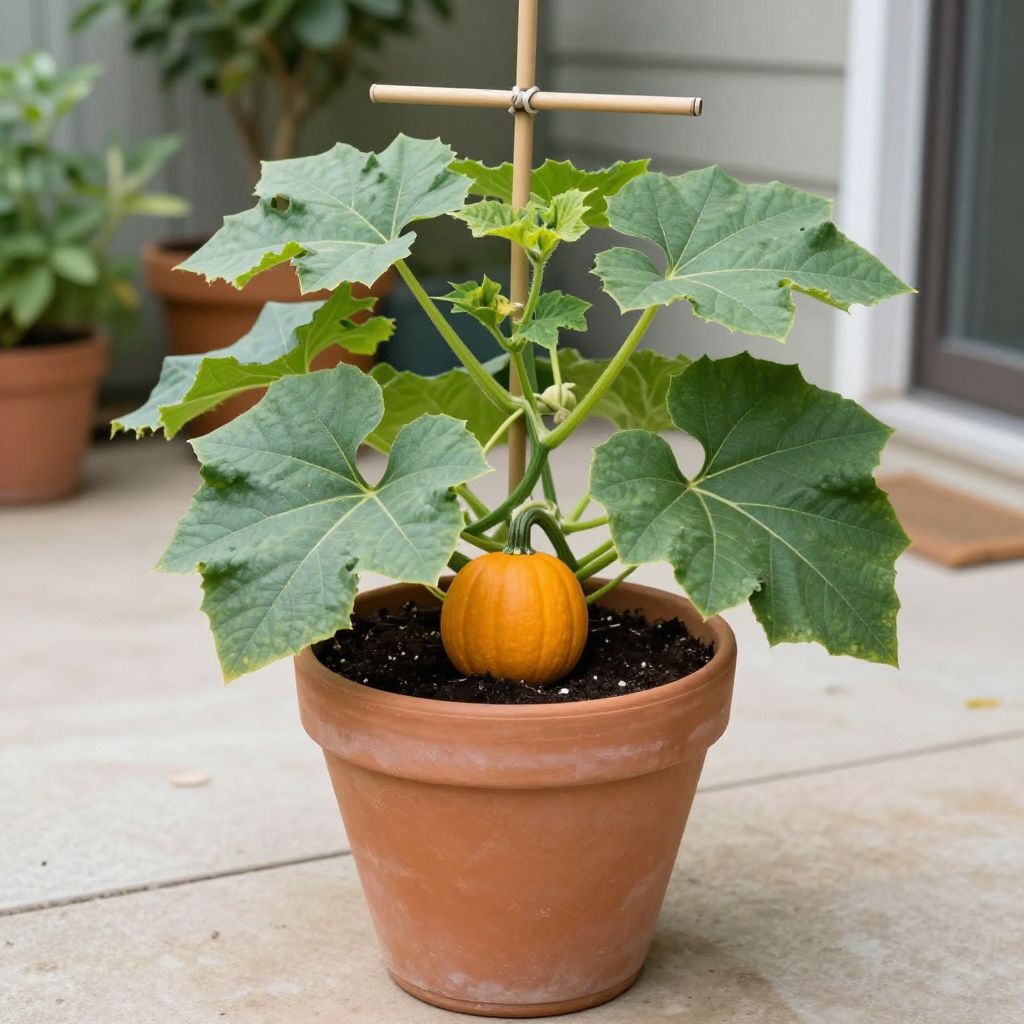
Can you grow pumpkins in a pot? Yes, you can—if you choose a large enough container, give the vine plenty of sun, and stay on top of watering and feeding. Pumpkins are big, hungry plants, but many smaller or bush-type varieties can do well in pots with the right care.
The key is matching the pumpkin’s size and growth habit to the container. A cramped pot, poor drainage, or inconsistent moisture will quickly limit growth, so success depends on good setup and regular maintenance.
Can you grow pumpkins in a pot?
Yes, pumpkins can be grown in pots, especially compact or bush varieties. Use a very large container, rich well-draining soil, and full sun. Most pumpkin plants still need support, frequent watering, and room for vines or fruit to develop, so container growing works best for small-fruited types.
Choosing the right pumpkin variety for containers
Not every pumpkin is suited to a pot. Large vining types can outgrow containers fast, while compact cultivars are much easier to manage.
Best plant types for pots
- Bush or compact pumpkins that stay smaller and produce fewer, more manageable vines.
- Miniature pumpkins for small patios, balconies, or decks.
- Short-season types if your growing season is brief.
If you want a decorative harvest from a pot, choose a variety known for compact growth rather than assuming any pumpkin will fit. Seed packets and plant tags often mention “bush,” “compact,” or “mini” growth habits.
What to avoid
- Very large jack-o’-lantern types in small containers.
- Multiple plants in one pot unless the container is extremely large.
- Varieties that need a long season if your climate cools early.
How big should the pot be?
For one pumpkin plant, use a container that is at least 20 gallons, and larger is often better. A pot about 18 to 24 inches wide and deep is a practical minimum for compact types, while bigger vines need even more root space.
A larger pot holds moisture more evenly and gives roots room to spread. If you use a smaller container, the plant may survive but will usually need much more frequent watering and may produce fewer or smaller fruits.
Good container features
- Drainage holes on the bottom.
- A sturdy material that won’t tip as the vine grows.
- Enough depth for strong root development.
Best soil mix for potted pumpkins
Pumpkins need fertile, moisture-retentive soil that still drains well. Garden soil alone is usually too heavy for pots, and lightweight potting mix alone may not hold enough nutrients for a hungry crop.
Use a high-quality container mix and enrich it with compost. A good blend should feel loose, crumbly, and able to drain without turning soggy.
Soil qualities to aim for
- Rich in organic matter
- Well-draining but not dry too quickly
- Consistently moist, not waterlogged
If your mix dries out too fast, add more compost or a moisture-retaining organic amendment. If it stays wet for too long, improve drainage and avoid overpacking the soil.
How to plant pumpkins in a pot
You can sow seeds directly into the container or transplant a young seedling. Direct sowing is often easiest because pumpkins dislike root disturbance, but transplants can work if handled carefully.
- Fill the pot with moist potting mix, leaving a little space at the top.
- Plant 2 to 3 seeds about 1 inch deep.
- Water gently and keep the soil evenly moist.
- After seedlings emerge, thin to the strongest one.
If starting with a transplant, set it at the same depth it was growing in its nursery pot. Water it in well so the roots settle into the new container.
Spacing in containers
Usually, one pumpkin plant per pot is best. Crowding several plants into one container increases competition for water, light, and nutrients, which can reduce flowering and fruit set.
Sunlight and temperature needs
Pumpkins are sun-loving plants. Give your potted pumpkin at least 6 to 8 hours of direct sun each day for strong growth and fruiting. More sun is often better if temperatures are not extreme.
Warm conditions help pumpkins grow well, but very hot containers can dry out quickly. In intense summer heat, a light-colored pot or a spot with afternoon protection may help prevent stress in some climates.
Where to place the pot
- On a patio, deck, or sunny driveway edge
- Where the vine can trail without being damaged
- Near a wall or trellis only if you can still water easily
Watering potted pumpkins the right way
Container pumpkins usually need more frequent watering than garden-grown pumpkins because pots dry out faster. The goal is steady moisture, not soggy soil.
Check the soil often with your finger. If the top inch feels dry, water deeply until excess drains from the bottom. In hot, windy weather, this may mean watering every day or even more than once a day for smaller pots.
Watering mistakes to avoid
- Letting the pot dry out completely
- Watering lightly and only wetting the surface
- Leaving the pot standing in a saucer of water for long periods
Uneven watering can cause blossom drop, poor fruit development, and split fruit. Consistency matters more than a fixed schedule.
Feeding pumpkins in containers
Pumpkins are heavy feeders, and potted plants use nutrients quickly. Compost in the soil helps, but you may still need to supplement during the growing season.
Once the plant is established, use a balanced fertilizer or a fertilizer suited to fruiting vegetables, following the product label. Avoid overdoing nitrogen, which can push leafy growth at the expense of flowers and fruit.
Signs your plant may need feeding
- Pale leaves despite adequate watering
- Slow growth in warm, sunny conditions
- Few flowers or weak vine development
Too much fertilizer can burn roots or create a lush plant with little fruit. If you are unsure, feed lightly and observe the plant’s response before adding more.
Training and pruning container pumpkins
Pruning is not always required, but it can help in small spaces. If the vine starts sprawling too far, you can guide it along the patio edge, around the container, or onto a small support.
When pruning helps
- The vine is overcrowding a balcony or deck
- You want to focus energy on fewer fruits
- Air circulation is poor around the plant
You can trim overly long runners, but avoid removing too much healthy foliage. Leaves feed the developing fruit, so the plant still needs enough leaf area to photosynthesize well.
Supporting fruit
If fruit is hanging or resting on a hard surface, place cardboard, straw, or a small board underneath it to reduce rot and keep it clean. For larger fruit, a soft sling or support can prevent stress on the vine.
Pollination and fruit set in pots
Pumpkins produce separate male and female flowers, and pollination is needed for fruit to form. Outdoors, bees usually do the job, but container plants on balconies or in low-traffic areas may need a little help.
If flowers are opening but fruits are not setting, hand-pollination can improve results. Use a small brush or transfer pollen from a male flower to the center of a female flower early in the morning.
How to spot female flowers
- Female flowers have a tiny swelling behind the bloom that looks like a miniature pumpkin.
- Male flowers sit on thinner stems without that swelling.
Common problems when growing pumpkins in a pot
Container-grown pumpkins can face the same issues as garden plants, but stress often appears faster in pots. Watch for problems early so you can correct them before they affect the crop.
Wilting leaves
Wilting can mean the soil is too dry, too hot, or sometimes too wet if roots are struggling. Check moisture first, then inspect drainage and container size.
Yellowing leaves
Yellow leaves may signal nutrient deficiency, poor drainage, or natural aging of older foliage. If new growth is pale, the plant may need feeding or better root conditions.
Few flowers or no fruit
This can happen with too little sun, excessive nitrogen, overcrowding, or poor pollination. Increase light, reduce competition, and consider hand-pollination if needed.
Small fruit or fruit drop
Inconsistent watering is a common cause. Potted pumpkins need steady moisture during flowering and fruit development, especially in hot weather.
Pests and diseases to watch for
Container pumpkins can still attract common cucurbit pests and diseases. Good airflow, clean foliage, and careful watering help reduce risk.
Common pests
- Aphids
- Squash bugs
- Cucumber beetles
- Spider mites in hot, dry conditions
Check the undersides of leaves regularly. Early pest control is easier than trying to fix a severe infestation later.
Common diseases
- Powdery mildew
- Root rot from poor drainage
- Leaf spots in crowded, damp conditions
To reduce disease, water at the base of the plant, avoid wetting the leaves late in the day, and keep the pot from sitting in stagnant water. Remove badly affected leaves if needed.
Harvesting pumpkins from a pot
Harvest timing depends on the variety, but pumpkins are usually ready when the skin is firm and deeply colored and the stem begins to dry and harden. Use clean pruners or a sharp knife to cut the fruit from the vine, leaving a short stem attached.
Handle the fruit gently. Even small pumpkins can bruise if dropped, and damaged stems shorten storage life.
Signs your pumpkin is ready
- Deep, even color for the variety
- Hard rind that resists a fingernail
- Drying stem
Best tips for success
If you want the best chance of growing pumpkins in a pot, keep the setup simple and consistent. The plant does not need fancy treatment, but it does need enough space, sun, water, and nutrients.
- Choose a compact or mini variety.
- Use a large container with drainage holes.
- Fill it with rich, well-draining potting mix and compost.
- Give full sun and steady moisture.
- Feed lightly but regularly during active growth.
- Watch for pests, mildew, and pollination issues.
Conclusion
So, can you grow pumpkins in a pot? Absolutely—especially if you choose a compact variety and give it a large container, full sun, and steady care. Start with one plant in a roomy pot, keep the soil evenly moist, and monitor flowers and fruit as the season progresses.
If you want to expand your container vegetable garden, look for more practical advice on growing vegetables in pots and choosing the right container for edible plants.