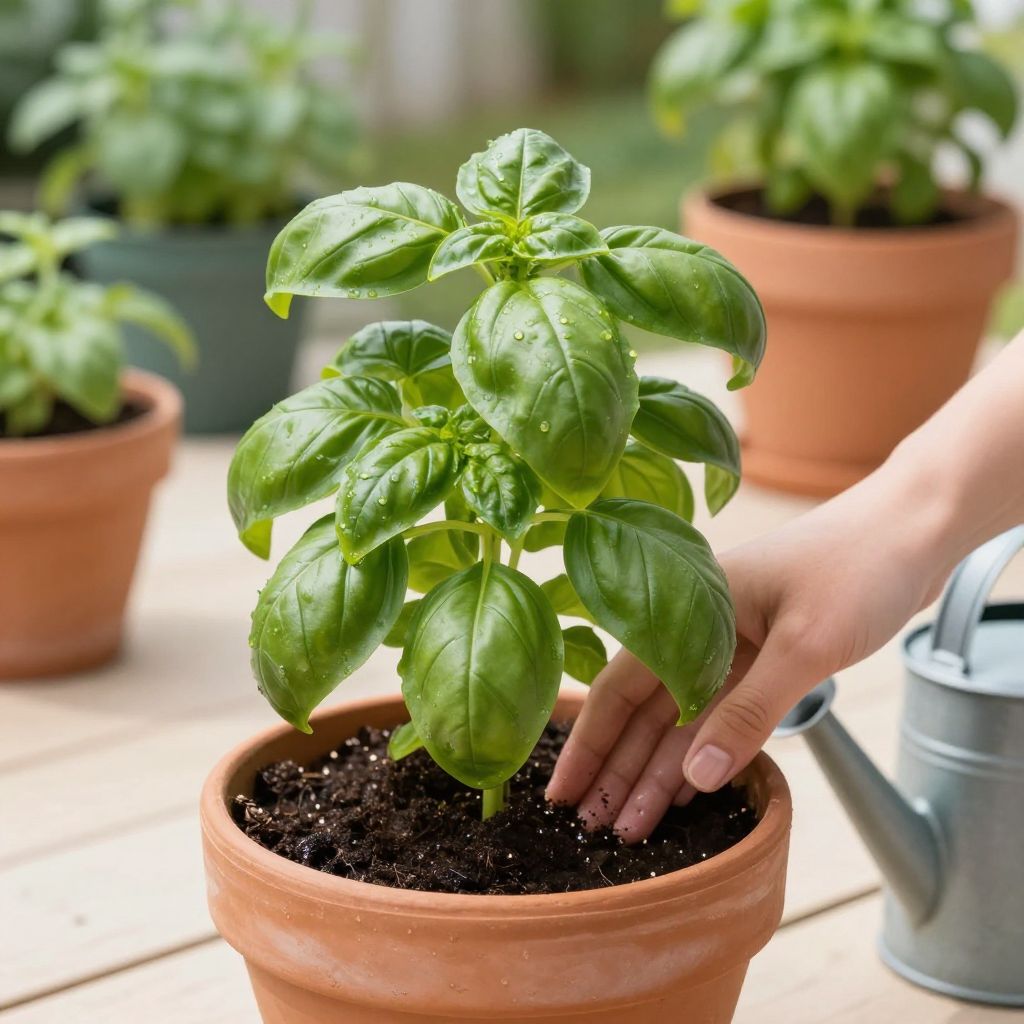
Does basil need a lot of water? Basil likes consistent moisture, but it does not want soggy soil or constantly wet roots. The goal is to keep the root zone evenly moist, then let the surface dry slightly between waterings. Too little water causes wilting and tough leaves; too much can lead to yellowing, weak growth, and root problems.
How often you water basil depends on weather, container size, soil type, and whether the plant is indoors or outdoors. If you learn to check the soil instead of following a fixed schedule, you can keep basil healthier and more flavorful all season.
Does basil need a lot of water?
Basil needs regular water, but not excessive water. It grows best in soil that stays lightly moist and drains well, so the roots never sit in water. In hot weather or containers, basil may need frequent watering; in cool, humid, or clay-heavy conditions, it may need much less.
How much water basil actually needs
Basil is a soft, fast-growing herb with shallow roots, which means it dries out faster than many garden plants. At the same time, it is sensitive to waterlogged soil, so the best approach is steady moisture rather than deep soaking followed by long dry spells.
What “evenly moist” means
- The soil feels slightly damp, not muddy.
- The top 1 inch of soil can dry a little before the next watering.
- Water reaches the roots, then excess drains away.
A good rule is to check the soil with your finger. If the top inch feels dry, water thoroughly. If it still feels cool and moist, wait and check again later.
Best watering habits for basil
Water basil at the base of the plant so moisture goes directly to the roots. Wet leaves are not the main problem, but repeated overhead watering can encourage disease and waste water through evaporation.
For basil in garden beds
Outdoors, basil usually needs more water during warm, windy, or dry weather. In rich soil with compost, it may hold moisture better and need less frequent watering than plants in sandy soil.
- Water deeply when the top inch of soil dries out.
- Use mulch lightly around the plant to slow evaporation, but keep mulch away from the stem.
- Check more often during heat waves or after transplanting.
For basil in pots and containers
Container basil often needs the most attention because pots dry out quickly. Small pots, dark containers, and hanging baskets can dry especially fast in sun and wind.
- Choose a pot with drainage holes.
- Use a quality potting mix, not heavy garden soil.
- Water until a little drains from the bottom, then empty any saucer after a few minutes.
Container basil should never sit in standing water. That is one of the quickest ways to cause root stress and yellowing leaves.
For indoor basil
Indoor basil usually needs less water than outdoor basil because it is protected from wind and direct sun, but it may still dry out quickly near warm windows or under grow lights. Indoor plants also suffer if the pot is too large or the room is cool and dim.
- Check soil every few days rather than watering on a strict schedule.
- Water less in winter when growth slows.
- Make sure the pot drains freely and the plant gets enough light.
Signs basil needs water
Basil gives clear signals when it is thirsty, but you should not wait until it is severely wilted. Mild stress can slow growth and reduce leaf quality.
- Leaves look slightly limp in the afternoon.
- Top leaves droop but recover after watering.
- Soil pulls away from the sides of the pot.
- Plants in full sun perk up quickly after watering.
If basil is wilting even when the soil is wet, the problem may not be underwatering. Poor drainage, root damage, or disease can look similar.
Signs basil is getting too much water
Overwatered basil often looks weak before it looks obviously rotten. The plant may stay limp because the roots cannot get enough oxygen from saturated soil.
- Lower leaves turn yellow.
- Stems feel soft or weak.
- Soil stays wet for days.
- The plant grows slowly despite regular watering.
- A sour smell comes from the pot or soil.
If you see these symptoms, pause watering and improve drainage. In severe cases, repot basil into fresh, airy mix and trim away any blackened or mushy roots.
Soil, drainage, and compost matter as much as watering
Even the right watering routine can fail if the soil holds too much water. Basil grows best in loose, fertile soil that drains well but still holds some moisture.
Good soil for basil
- Garden beds: amend with compost to improve structure and moisture retention.
- Containers: use a light potting mix designed for pots.
- Avoid heavy, compacted soil that stays wet after watering.
Compost helps basil by improving soil texture and feeding the plant slowly over time. A thin layer mixed into the planting area is usually enough for home gardens.
How sunlight affects basil watering
Sun exposure changes how quickly basil dries out. A basil plant in full sun will usually need more frequent watering than one in bright morning sun and afternoon shade.
- More sun usually means faster drying and more frequent watering.
- Less sun means slower growth and less water use.
- Hot, windy spots can dry basil very quickly.
In very hot climates, some afternoon shade can help basil stay productive and reduce water stress. In cooler regions, basil usually needs as much sun as possible to grow well.
Common watering mistakes to avoid
Most basil problems come from inconsistency. A plant that swings between bone-dry and soaked soil will struggle more than one kept steadily moist.
- Do not water on a fixed calendar without checking the soil.
- Do not let pots sit in drained water.
- Do not use containers without drainage holes.
- Do not overwater just because the top of the soil looks dry.
- Do not let basil wilt repeatedly if you can avoid it.
How to water basil the right way
Use this simple method to keep basil healthy in most growing situations.
- Check the top inch of soil with your finger.
- If it feels dry, water slowly at the base of the plant.
- Keep watering until the root zone is moistened evenly.
- Stop when water begins to drain from the bottom of a pot.
- Check again sooner during hot, sunny, or windy weather.
If you are growing several basil plants together, make sure each one gets enough water. Dense plantings can shade the soil, but they can also compete for moisture.
Seasonal watering tips for basil
Basil’s water needs change through the season. Young plants, heat-stressed plants, and actively harvested plants often need more attention than mature plants in mild weather.
After transplanting
Newly planted basil needs consistent moisture while roots settle in. Water carefully so the soil stays evenly moist, but do not keep it soggy.
During hot weather
Check basil daily in containers and every few days in garden beds. Hot spells can dry the soil much faster than expected.
In cooler weather
When growth slows, basil uses less water. Overwatering becomes more likely, especially in shaded or indoor conditions.
Pruning, harvesting, and water use
Regular harvesting helps basil stay bushy, but it can also increase water demand because the plant is actively producing new growth. A well-pruned basil plant often uses water efficiently because it has more balanced growth and less woody stem development.
- Pinch tips to encourage branching.
- Harvest often enough to prevent flowering.
- Water after heavy harvesting if the plant looks slightly stressed.
Flowering basil often becomes less leafy and may seem to need less water, but the real issue is usually reduced vigor. Pinching flower buds helps keep the plant productive.
Pests and diseases linked to watering problems
Too much moisture can invite trouble, especially in crowded or poorly ventilated plantings. Keeping basil watered correctly is one of the easiest ways to reduce disease pressure.
Watch for these issues
- Downy mildew: often worse in humid, crowded, or wet conditions.
- Root rot: caused by persistently soggy soil.
- Aphids: can weaken tender growth, especially on stressed plants.
Good spacing, airflow, and proper drainage matter as much as watering. If your basil keeps declining despite careful watering, inspect the roots and leaves for disease or pests.
Quick answer: how often should you water basil?
There is no single schedule that fits every garden. Instead, water basil whenever the top inch of soil dries out, adjusting for heat, pot size, sunlight, and rainfall. In hot container gardens, that may mean watering often; in cool garden beds, much less often.
Conclusion
Basil does need regular water, but not a lot of water all at once. Keep the soil evenly moist, use well-drained soil, and check conditions instead of guessing. If you want healthier basil, start by testing the top inch of soil before you water today.
If you want to compare basil’s moisture needs with other garden plants, you may also find these guides useful: do hydrangeas need a lot of water and do mums need a lot of water.