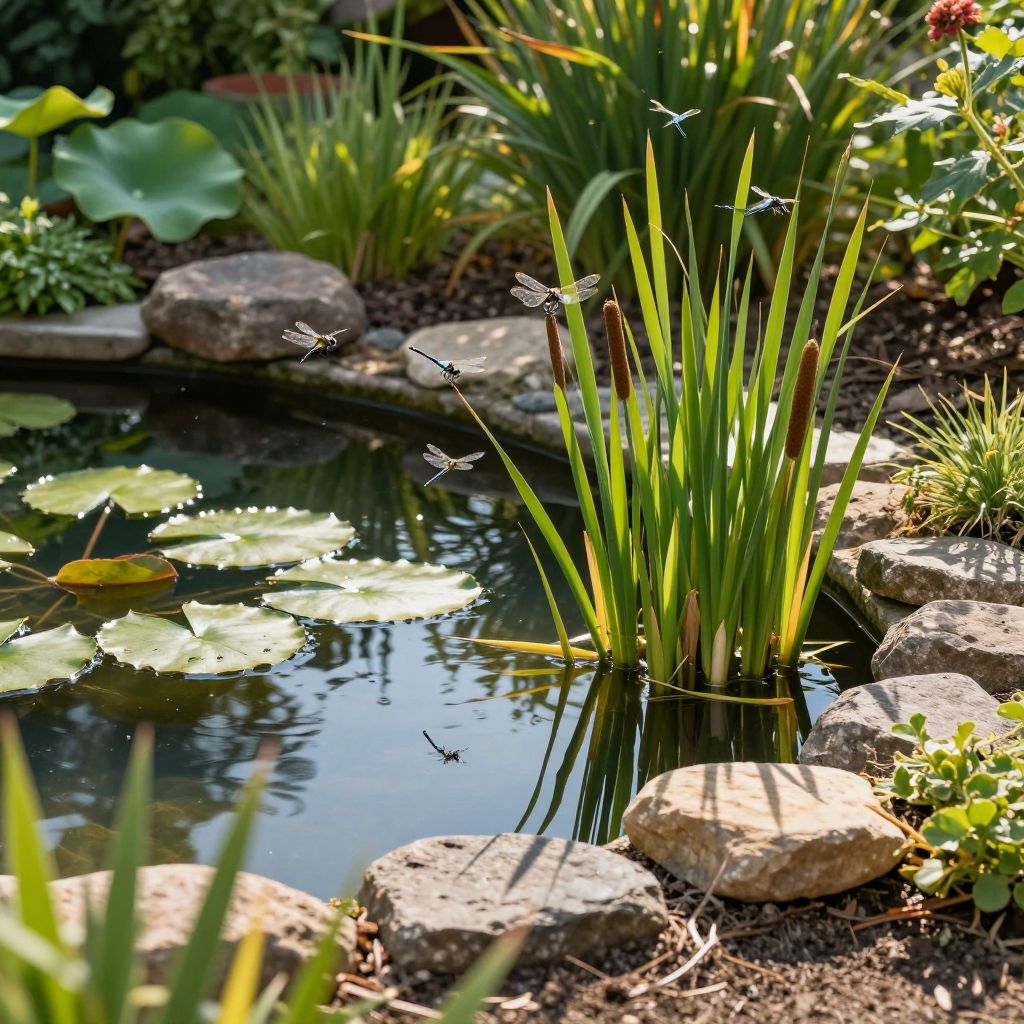
What attracts dragonflies to a garden? If you want these striking insect hunters near your pond, border, or wildlife planting, the answer is usually a mix of water, native vegetation, sunlight, and plenty of smaller insects for them to eat.
Dragonflies are not drawn to “pretty gardens” alone. They need the right habitat to breed, perch, hunt, and rest, and a garden that supports their life cycle will bring far better results than a few random flowers.
What attracts dragonflies to a garden?
Dragonflies are attracted to gardens that offer still or slow-moving water, sunny open spaces, emergent plants, nearby perches, and a healthy supply of flying insects. The best gardens combine a pond or water feature with native marginal plants, minimal pesticide use, and sheltered spots where dragonflies can warm up and hunt.
Why water is the biggest draw
Dragonflies lay eggs in or near water, and their young, called nymphs, live in water for months or even years depending on the species. Without suitable water, you may see adults passing through, but you are unlikely to get a lasting population.
Best water features for dragonflies
- Garden ponds with shallow edges and deeper sections
- Slow-moving water such as a gently circulating pond or wildlife water garden
- Still water that is clean enough for aquatic life, but not sterile
A small pond can work well if it has varied depths, sloped edges, and plants around the margins. Avoid steep-sided tubs or decorative water bowls alone; they may attract drinking insects, but they usually do not support breeding dragonflies.
What kind of pond works best?
Dragonflies prefer ponds with a natural look rather than a highly manicured, fish-heavy setup. Fish can eat dragonfly nymphs, so if your goal is to attract dragonflies, keep fish numbers low or skip them entirely.
Also avoid chlorinated water and frequent complete cleanouts. A pond that is allowed to settle, with some leaf litter and aquatic growth, is much more useful than one scrubbed bare every few weeks.
Plants that help attract dragonflies
Plants matter because they create structure, shelter, and hunting perches. Dragonflies do not feed on nectar, but the right planting scheme supports the insects they do eat and gives them places to rest and patrol.
Use a mix of plant types
- Marginal plants around pond edges
- Emergent plants that rise through or above water
- Tall grasses and perennials nearby for perches
- Native flowering plants that support small flying insects
Good planting choices vary by region, but the principle is the same: create layers. Dragonflies like to sit on stems, fence posts, reeds, and grasses while watching for prey.
Useful planting features
Look for plants that provide vertical stems and open gaps, not a dense wall of foliage. A pond ringed with reeds, sedges, rushes, and a few taller perennials gives dragonflies more landing and hunting spots than a tightly clipped edge.
If you do not have a pond, a rain garden or damp wildlife border can still help attract some species, especially if it includes nearby water sources and sunny open space.
Sunlight and warmth matter more than many gardeners expect
Dragonflies are cold-blooded and need warmth to fly well. Sunny gardens with open flight paths are much more attractive than deep shade, especially in cooler climates.
Choose a site that gets several hours of direct sun if possible. A pond in full shade may still support some life, but dragonflies generally prefer warm, bright conditions where they can hunt efficiently.
How to balance sun and shelter
- Give the pond or water feature sun for much of the day
- Provide nearby shrubs, grasses, or fence lines for shelter from wind
- Leave open airspace above the water for flight
Too much shade can slow warming and reduce insect activity. Too much exposed wind can make the area less usable, so aim for a sunny but not barren space.
Small insects are part of the attraction
Dragonflies are predators, so they gather where gnats, mosquitoes, midges, flies, and other small flying insects are available. A garden that supports a healthy insect community is more likely to attract dragonflies than one kept overly sterile.
This does not mean you should create a nuisance insect problem. It means avoiding practices that remove all habitat, such as excessive pesticide use and over-cleaning every corner of the garden.
How to support the food web
- Plant a range of native flowers to support pollinators and small insects
- Leave some leaf litter and low ground cover in less formal areas
- Use pesticides only when truly necessary, and avoid spraying near water
Many gardeners are surprised that a “clean” garden can be less wildlife-friendly. A little complexity helps dragonflies by supporting the insects they hunt and the aquatic life their young depend on.
How to build a dragonfly-friendly garden
If you want more dragonflies, think in terms of habitat rather than decoration. The goal is to create a place where adults can feed and breed, and where nymphs can develop safely.
- Add water if you do not already have it. A pond is the most effective option.
- Plant the edges with native marginal and emergent plants.
- Leave sunny open space nearby for flight and hunting.
- Reduce pesticide use to protect both dragonflies and their prey.
- Provide perches such as reeds, grasses, stakes, or branches.
- Allow some natural debris in and around the pond, but keep access and safety in mind.
Even a modest wildlife pond can make a noticeable difference if it is planted well and left to function naturally.
Maintenance tips that help, not harm
Dragonfly habitat needs light maintenance, not constant tidying. The trick is to manage the pond and surrounding plants without stripping away the features that make the space useful.
Do
- Remove excess algae if it is smothering the pond
- Thin vigorous plants when they crowd out open water
- Top up water during droughts if needed
- Keep a mix of open water and planted margins
Do not
- Drain and scrub the pond clean on a regular schedule
- Use broad-spectrum insecticides near the water
- Fill the pond with fish that will eat nymphs
- Remove all emergent stems in one go
When pruning pond plants, leave some stems standing through the season. Dragonflies use these as resting places and emergence supports when adults are leaving the water.
Common mistakes that keep dragonflies away
Several common gardening choices can make a pond or wildlife border less appealing to dragonflies, even if it looks attractive to people.
1. Water that is too sterile
A pond that is constantly filtered, scrubbed, or chemically treated may not support the natural life cycle dragonflies need. Aim for clean, healthy water rather than sterile water.
2. Too many fish
Fish may be enjoyable in a pond, but they can drastically reduce dragonfly nymph survival. If dragonflies are a priority, keep fish out or keep the pond lightly stocked.
3. No open space
Dense planting everywhere can leave dragonflies with nowhere to patrol or perch. Balance lush planting with open water and clear flight paths.
4. Heavy pesticide use
Insecticides can reduce the insects dragonflies feed on and may harm dragonflies directly. Use targeted, minimal control methods instead of routine spraying.
5. Deep shade and wind exposure
Cold, shaded, windy sites are less inviting. If possible, place the pond where it gets sun and has some shelter nearby.
Can you attract dragonflies without a pond?
Sometimes, but only to a limited degree. Adults may visit to hunt if your garden has plenty of insects, sunny perches, and nearby water in the landscape. However, if you want them to stay and breed, some form of water is usually essential.
A rain garden, wildlife tub, or small pond can all help, but a true breeding habitat is more reliable than flowers alone. If you live in a dry area, even a modest water feature can make a big difference.
Seasonal expectations
Dragonfly activity changes with temperature, rainfall, and local species. In warm weather, adults are more visible and active, while cooler periods may bring fewer sightings even if the habitat is suitable.
Do not expect instant results. A newly built pond may take time to settle, and dragonflies may appear first as occasional visitors before they begin using the space regularly. Patience is part of wildlife gardening.
Quick checklist for a dragonfly-friendly garden
- Sunny pond or water feature
- Shallow edges and varied depths
- Native marginal and emergent plants
- Open water and open flight space
- Low pesticide use
- Nearby perches and sheltered planting
- Healthy insect life around the garden
Conclusion
If you want to know what attracts dragonflies, focus on one thing first: habitat. Add or improve water, plant the edges, keep the area sunny, and avoid practices that strip away the insects and structure they need.
Start with one pond edge or one wildlife corner of your garden, then observe what changes over the season. For more wildlife-friendly planting ideas, you may also enjoy reading about how to create a pond for wildlife and best native plants for pollinators.