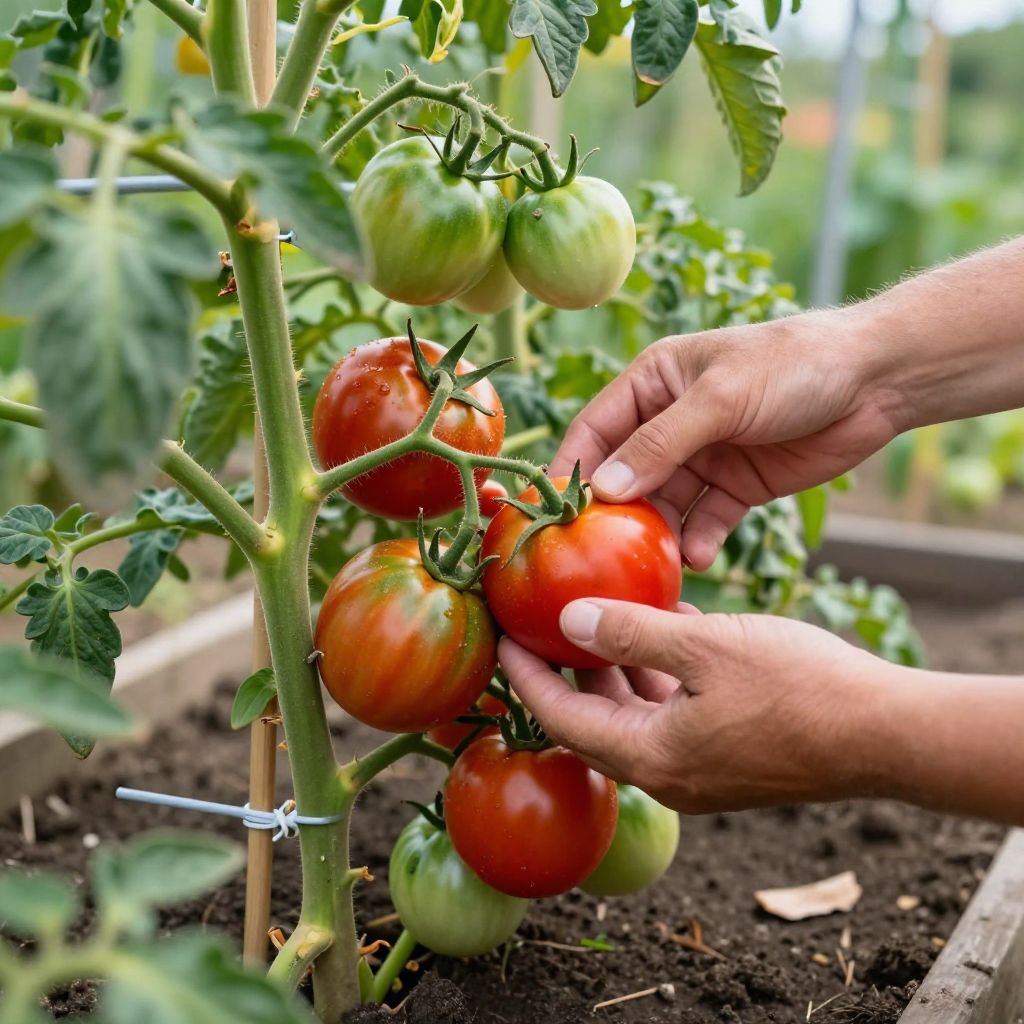
Wondering when to harvest tomatoes so they taste best and don’t split or rot on the vine? The right picking time depends on the variety, weather, and how you plan to use them. Tomatoes can be harvested at several stages, but the best flavor usually comes from fruit that has fully colored and still feels slightly firm.
If you pick too early, tomatoes may never develop full sweetness. If you wait too long, birds, cracking, pests, and disease can spoil the crop, so timing matters.
When to harvest tomatoes?
Harvest tomatoes when the fruit has reached its mature color, feels slightly soft with a gentle squeeze, and comes off the vine with a light twist or snip. For the best flavor, pick at the “breaker” to fully ripe stage, depending on weather, pest pressure, and how soon you want to eat them.
How to tell tomatoes are ready to pick
Tomatoes do not need to stay on the plant until they are mushy. In fact, many are best picked just as they finish coloring and begin to soften.
Visual signs of ripeness
- Color is even and full for the variety: red, pink, yellow, orange, purple, or striped types should look mature and well colored.
- The skin looks smooth and glossy rather than dull green.
- The fruit has filled out its shape and no longer looks hard and angular.
- The blossom end may show a slight softening, especially on larger slicing tomatoes.
Touch and stem signs
- The tomato should give slightly to gentle pressure, not feel rock-hard.
- It should detach with a light twist or clean snip.
- The stem near the fruit often becomes a little less rigid as ripening finishes.
Do not rely on color alone for green-when-ripe varieties such as some heirlooms and specialty types. Learn the mature color and expected size of the specific cultivar you are growing.
Best stage to harvest tomatoes for flavor and storage
Tomatoes can be picked at different stages, and each one has a purpose. The best stage depends on whether you want immediate eating, short-term storage, or to beat bad weather.
Breaker stage
This is when the tomato just begins to change from green to its mature color, usually with a pale blush or a slight color break at the blossom end. It is a smart stage to harvest if birds, cracking, or disease are a concern.
Pink or turning stage
The fruit has started coloring more clearly but is not fully ripe. This is often a good choice if you want tomatoes to finish indoors without losing quality.
Fully ripe on the vine
This is ideal for immediate eating when the weather is dry and the plant is healthy. Vine-ripened tomatoes often have the richest flavor, especially in warm conditions with strong sunlight.
Pick earlier if heavy rain, cool nights, pests, or splitting are likely. In those conditions, a tomato can decline quickly even if it looks nearly perfect.
How weather affects when to harvest tomatoes
Local conditions matter a lot. Tomatoes ripen faster in warm weather and slow down when nights cool, so the same plant may need different harvest timing at different points in the season.
Hot weather
In very hot spells, fruit can ripen quickly and then soften too much on the vine. Harvest often, especially for cherry tomatoes and thin-skinned varieties, to prevent cracking and sunscald.
Cool weather
As temperatures drop, ripening slows. If frost is approaching or nights are consistently cool, harvest tomatoes at the breaker or turning stage and let them finish indoors.
Rain and humidity
Wet weather can cause splitting, blossom-end rot to worsen, and fungal disease pressure to rise. Picking before a long rainy period can save a large portion of the crop.
How to harvest tomatoes properly
Harvesting carefully helps protect the plant and the fruit you have not picked yet. A rough pull can damage stems and nearby clusters.
- Check the fruit from several angles for color and firmness.
- Hold the tomato gently in one hand.
- Twist lightly until it releases, or use clean pruners or scissors.
- Leave a short stem attached if you want to reduce bruising.
- Place tomatoes in a shallow basket or tray, not a deep bucket where they can crush each other.
For larger clusters, especially on indeterminate plants, cutting the stem is often safer than pulling. This reduces tearing and helps keep the plant productive.
Should you pick tomatoes before they are fully ripe?
Yes, in many cases you should. Tomatoes often ripen well off the vine once they have reached the mature green or breaker stage.
When early picking makes sense
- Frost is expected soon.
- Heavy rain may split the fruit.
- Birds, squirrels, or insects are damaging ripe tomatoes.
- The plant is overloaded and needs fruit removed to keep ripening moving.
- You need to harvest for transport or storage.
How to ripen tomatoes indoors
- Pick fruit that is mature green, turning, or breaker stage.
- Keep them at room temperature, out of direct sun.
- Place them stem-side down in a single layer if possible.
- Check daily and remove any fruit that starts to soften unevenly or rot.
Do not refrigerate unripe tomatoes if you want the best flavor. Cold temperatures can reduce aroma and slow ripening in a way that affects taste.
Common mistakes when deciding when to harvest tomatoes
Many gardeners lose flavor or quality by picking too early, waiting too long, or handling fruit too roughly. A few small changes can improve the harvest immediately.
- Harvesting too soon: Green fruit that has not reached mature size or color may never taste fully developed.
- Waiting for perfection in bad weather: Overripe tomatoes can crack, fall, or attract pests.
- Pulling hard on the vine: This can damage stems and nearby fruit clusters.
- Stacking fruit deeply: Pressure causes bruising and soft spots.
- Ignoring disease: If leaves or fruit show blight, rot, or spots, harvest usable fruit promptly and remove affected plant parts.
Special notes for different tomato types
Not all tomatoes ripen the same way. Size, shape, and skin thickness affect harvest timing and handling.
Cherry and grape tomatoes
These usually ripen quickly and should be picked often. They are best harvested when fully colored and just beginning to soften, because they can split fast after rain.
Beefsteak and large slicing tomatoes
Larger fruit may need a little more time on the plant to develop full flavor. Watch for even color and a slight give near the blossom end.
Heirloom tomatoes
Many heirlooms bruise easily and may show color changes that are not as uniform as hybrid types. Use firmness and the variety’s mature color as your guide.
Paste tomatoes
These are usually harvested when fully colored and slightly firm. If you are making sauce or canning, you may want to pick several at once as they ripen in clusters.
How often should you check for ripe tomatoes?
During peak season, check plants every one to two days. In hot weather or when fruit is ripening quickly, daily picking may be best.
Frequent harvesting encourages you to catch fruit at peak quality and reduces the chance of overripening, cracking, or pest damage. It also lets the plant put more energy into ripening the next fruits.
Troubleshooting ripening problems
If tomatoes seem stuck green, look at growing conditions and plant health before assuming the fruit is not ready.
- Too much shade: Plants need strong sun to ripen fruit well. Tomato plants in partial shade often ripen more slowly.
- Too much nitrogen: Lush leafy growth can delay fruit ripening. Balanced feeding and good sunlight are more helpful than extra fertilizer.
- Heat stress: Very high temperatures can slow color development even when fruit is large.
- Plant disease: Yellowing leaves, spotting, or dieback can reduce ripening. Remove diseased foliage and harvest usable fruit promptly.
- Overcrowding: Dense plants hold moisture and shade fruit. Pruning lightly can improve airflow and light exposure.
After harvest: how to store tomatoes
Once picked, handle tomatoes gently and store them based on ripeness. Fully ripe fruit is best eaten soon, while firmer fruit can hold a little longer at room temperature.
- Keep ripe tomatoes on the counter, away from direct sun.
- Use them within a few days for the best texture and flavor.
- Store slightly underripe tomatoes at room temperature until they finish coloring.
- Avoid stacking or crowding them in a bowl if they are soft.
If you have a large harvest, sort the fruit into groups: ripe for immediate use, turning for indoor ripening, and damaged fruit to use first or discard if it is rotting.
Conclusion
The best time to harvest tomatoes is when they are mature, colored, and just slightly soft, or earlier at the breaker stage if weather and pests are a concern. Check plants often, pick gently, and let the remaining fruit keep developing. If you want more tomato help, see when to pick tomatoes and what to plant with tomatoes.