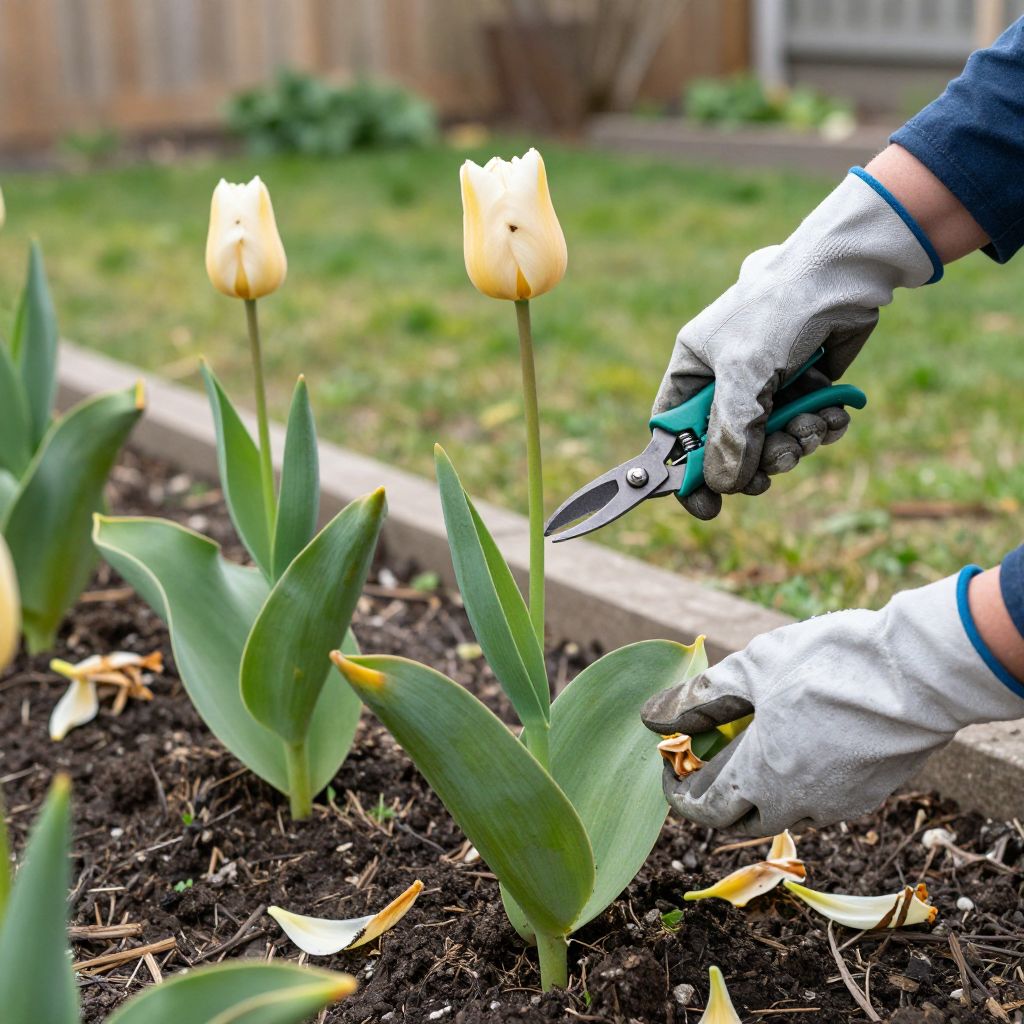
Wondering what to do with tulips after they bloom? The short answer is: let the foliage stay, remove the spent flower, and help the bulb recharge for next year. Tulips need their leaves after flowering to rebuild energy, so the post-bloom period matters just as much as planting time.
With a few simple steps, you can keep tulips healthy, encourage better blooms next season, and avoid common mistakes like cutting the leaves too early or leaving diseased debris in the bed.
What To Do With Tulips After They Bloom?
After tulips finish flowering, deadhead the spent bloom, keep the leaves growing until they yellow naturally, and water only if conditions are dry. If you want the bulbs to return, let the foliage photosynthesize for several weeks before removing it. Then lift, store, or leave the bulbs depending on your climate and garden plan.
Step 1: Remove the spent flower, not the leaves
Once the flower fades, snip off the bloom head before it forms seed. This is called deadheading, and it helps the bulb stop putting energy into seed production.
How to deadhead tulips correctly
- Use clean scissors, pruners, or pinch off the flower head.
- Cut just below the faded bloom.
- Leave the stem and all leaves in place.
Do not cut the foliage back yet. The leaves are still feeding the bulb, and removing them too early is one of the main reasons tulips come back weak or fail to bloom.
Why tulip leaves must stay after flowering
Tulip bulbs store energy for next year’s flowers after blooming. The leaves gather sunlight and send that energy back into the bulb. If you remove the leaves too soon, the bulb may survive but produce smaller flowers, fewer flowers, or no bloom at all.
As a rule, keep the foliage until it turns yellow and begins to collapse on its own. In many gardens, that takes several weeks after bloom, but the timing depends on weather, sunlight, and the tulip type.
Should you water tulips after they bloom?
Watering depends on your soil and weather. Tulips do not like soggy soil, but they do need enough moisture to keep the leaves functioning while the bulb recharges.
Practical watering guidance
- Water lightly if the soil dries out during a warm, dry spring.
- Avoid frequent shallow watering that keeps the soil constantly wet.
- Stop watering once the foliage has yellowed and the bulb is going dormant.
If your tulips are in a bed with good drainage and spring rain is regular, you may not need to add water at all. In heavy clay soil, extra water can do more harm than good.
What to do with tulips after they bloom in pots
Potted tulips need the same post-bloom care as garden tulips, but they dry out faster and are often planted more densely. Deadhead the flowers, keep the leaves in bright light, and water only when the top layer of potting mix starts to dry.
Container care tips
- Move pots to a sunny spot after flowering.
- Keep the mix evenly moist, not waterlogged.
- Do not force the pot to dry out completely while the leaves are still green.
Once the foliage fades, you can either leave the bulbs in the pot to rest, or lift and store them if your climate is hot and wet in summer. Many potted tulips perform best when treated as seasonal display plants rather than long-term container bulbs.
Can you fertilize tulips after they bloom?
In many gardens, tulips do not need heavy feeding after flowering. If your soil is poor, a light top-dressing of compost around the bed can help improve overall soil structure for future bulbs. Avoid strong fertilizer applications late in the season, especially nitrogen-heavy feeds that push soft leaf growth instead of bulb storage.
If you did not amend the soil before planting, focus on improving drainage and soil quality for the next planting cycle rather than trying to rescue this season with a lot of fertilizer.
Should you dig up tulip bulbs after blooming?
Whether you lift tulip bulbs after flowering depends on your climate, soil, and the type of tulip. Some tulips return well in cool, well-drained gardens. Others decline after one season, especially in warm regions or in beds that stay wet in summer.
Leave them in the ground if:
- Your soil drains well.
- Summers are not excessively hot and wet.
- The tulips have bloomed reliably in past years.
Lift them if:
- Your soil stays wet during summer dormancy.
- You want to replant the bed with annuals.
- The bulbs have been declining year after year.
If you dig them up, wait until the foliage has yellowed. Lift the bulbs carefully, brush off loose soil, and let them dry in a cool, airy place before storing them. Keep them out of direct sun and away from excess moisture.
How long should you leave tulip foliage in place?
Leave the leaves until they are mostly yellow, limp, and easy to remove with a gentle tug. That usually means the bulb has had enough time to recover energy for next season.
Do not braid, tie, or bunch the leaves tightly. That reduces the leaf surface exposed to light and can shorten the energy-building period. If the foliage looks untidy, plant companion flowers or perennials nearby next year to mask the fading leaves.
Common mistakes to avoid after tulips bloom
- Cutting the leaves too early and starving the bulb of energy.
- Leaving the spent flower on the stem and letting it set seed.
- Overwatering while the bulb is going dormant.
- Pulling foliage off before it naturally loosens.
- Leaving diseased leaves or stems in the bed.
If your tulips are in a mixed border, resist the urge to “clean up” too aggressively. A little patience now often means better blooms later.
Pests, diseases, and post-bloom cleanup
Healthy tulips usually need little intervention after bloom, but it is smart to watch for problems while the leaves are still present. Fungal issues are more likely in damp, crowded beds, and pests may target bulbs or foliage depending on your area.
Watch for these issues
- Gray mold or rot on leaves or stems in cool, wet weather.
- Chewed leaves from slugs or other garden pests.
- Bulbs that feel soft, smell bad, or collapse when lifted.
Remove badly diseased plant material and discard it rather than composting it if you suspect rot. Good drainage, spacing, and clean tools help prevent repeat problems.
Can you let tulips go to seed?
You can, but it is usually not the best choice if you want strong bulbs for next year. Seed production uses energy that the bulb would otherwise store for future flowering. For most home gardeners, deadheading is the better option.
If you are interested in propagation, tulips are usually propagated more reliably by bulb offsets than by seed. Seed-grown tulips take much longer to flower and may not come true to the parent plant.
What to do with tulips after they bloom if you want them to return
If repeat bloom is your goal, focus on three things: sunlight, foliage retention, and drainage. Tulips perform best when they get enough sun after flowering, stay moderately dry at the roots, and are not disturbed too early.
- Deadhead the flower as soon as it fades.
- Keep the leaves in place until they yellow naturally.
- Water only if spring weather is dry.
- Let the bulbs finish their cycle before lifting or moving them.
- In summer, store lifted bulbs in a cool, dry, airy place if needed.
For many gardeners, the best results come from treating tulips as seasonal bulbs that may improve for a few years, then gradually decline. That is normal, especially in warmer climates or heavier soils.
Aftercare by garden situation
In a border or flower bed
Leave foliage in place and let nearby perennials hide the fading leaves. Avoid digging, edging, or reworking the bed around the bulbs until they are fully dormant.
In a lawn
Do not mow until the tulip leaves have yellowed. Mowing too early weakens the bulbs and reduces next year’s display.
In raised beds
Raised beds drain well, which is helpful for tulips. Still, avoid overwatering after bloom, especially if the bed dries slowly in cool weather.
In pots
Keep the pot in bright light, water sparingly, and accept that potted tulips often do best as a one-season display unless you can give them a proper dormant rest.
Simple post-bloom tulip checklist
- Deadhead the faded flower.
- Keep the leaves until they yellow.
- Water only if the soil is dry and the weather is warm.
- Do not fertilize heavily after bloom.
- Lift bulbs only after foliage dies back, if needed.
- Store bulbs in a cool, dry, airy place if you dig them up.
What to do with tulips after they bloom comes down to one main rule: protect the foliage until it finishes feeding the bulb. If you do that, your tulips have the best chance of returning strong next season. For more bulb care, you may also find it helpful to read about what to do with dead flowers and when to plant tulip bulbs.