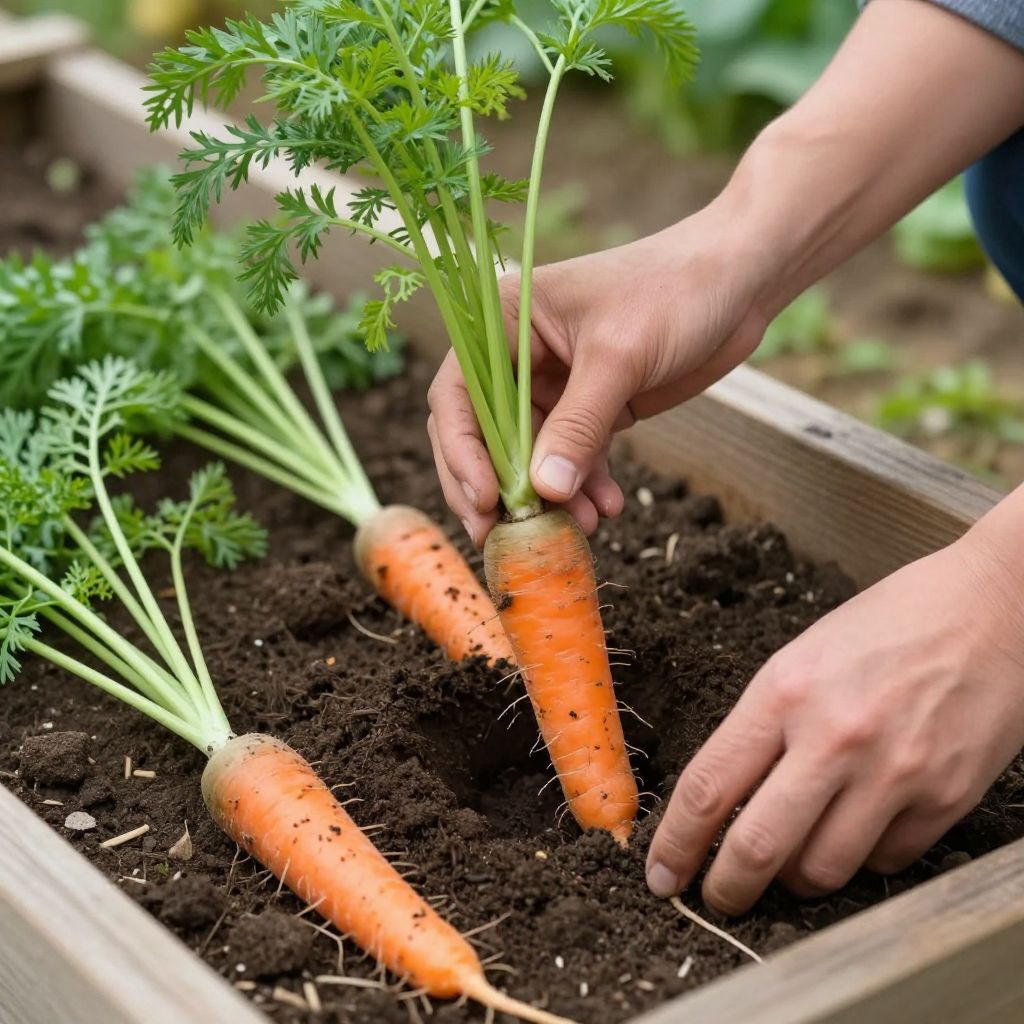
Wondering when are carrots ready to harvest? The best time is when the roots have reached usable size, the shoulders are visible at the soil line, and the flavor is sweet and crisp. Most carrots can be picked in a fairly wide window, so you do not need to harvest all at once unless you want to.
The trick is learning how to judge maturity by variety, weather, and root size. A carrot that is too small can be tender but underdeveloped; one that stays in the ground too long may become woody, split, or lose sweetness.
When are carrots ready to harvest?
Carrots are ready to harvest when the root shoulders are about 1/2 to 1 inch across, depending on the variety, and the tops look full and healthy. Many garden carrots are harvestable 60 to 80 days after sowing, but size and taste matter more than the calendar. Pull a sample root to check color, diameter, and flavor.
How to tell if carrots are mature
Because carrots grow underground, the leaves only tell part of the story. Use a few visual and physical clues together instead of relying on one sign.
Look at the shoulders
The easiest clue is the top of the root, called the shoulder, where it meets the soil. If the shoulder is showing at the surface and looks thick enough for the type you planted, the carrot is often ready.
For many standard garden carrots, a shoulder about the width of your thumb is a good sign. Baby carrots and shorter varieties will be ready sooner and at a smaller size.
Check the foliage
Healthy tops usually mean the plant is still actively growing, but they do not guarantee the root is the right size. A vigorous leafy top can hide a carrot that is already mature, especially in loose soil.
If the foliage starts to yellow, flop, or thin out, the plant may be slowing down. That can be a cue to inspect the roots soon.
Use days to maturity as a guide, not a rule
Seed packets often list days to maturity, but that number is only a starting point. Cool weather, heavy soil, inconsistent watering, and overcrowding can all slow root development.
In warm conditions, carrots may size up faster but can become tough if left too long. In cooler weather, they may stay sweet and usable for a longer period.
Best ways to test a carrot before harvesting
If you are unsure, do not guess based on the leaves alone. A quick test pull is the most reliable method.
- Choose one carrot from a spot where plants are crowded or where the shoulder is visible.
- Loosen the soil beside it with a hand fork or narrow trowel.
- Grasp the foliage close to the crown and pull gently while supporting the soil.
- Brush off the dirt and check the size, shape, and color.
- Taste a small piece if you want to judge sweetness and texture.
If the root is too small, re-cover the soil and wait another one to two weeks before checking again. Carrots can often stay in the ground a while longer if the soil stays evenly moist and temperatures are moderate.
What affects carrot harvest timing?
Several growing conditions change how quickly carrots mature. If you understand these factors, you can make better harvest decisions and avoid pulling them too early.
Variety
Short, round, or early types mature sooner than long storage carrots. Nantes, Chantenay, and Parisian types are often harvested at smaller sizes, while longer varieties need more time and deeper, looser soil.
Soil texture
Loose, sandy, stone-free soil lets roots expand evenly. Heavy clay or compacted soil can slow growth, cause forking, or make carrots look smaller than they really are.
In dense soil, the top may look ready while the root is still misshapen or stunted below ground. That is another reason to test-pull a sample.
Watering consistency
Even moisture helps carrots size up steadily. Dry spells can make roots slow down, become woody, or split after a sudden soaking.
Try to keep the bed evenly moist rather than alternating between very dry and very wet. This is especially important during the main root-growing period.
Temperature and season
Carrots grow best in cool to mild weather. In heat, they may become more bitter or tough, while cool autumn conditions often improve sweetness.
Many gardeners find that carrots harvested after a light frost taste better, but a hard freeze can damage exposed roots if the soil is not protected.
How to harvest carrots without damaging them
Once your carrots are ready, harvest carefully so you do not snap the roots or injure nearby plants. The goal is to lift them cleanly with as little stress as possible.
- Water the bed lightly a few hours before harvesting if the soil is dry.
- Loosen the soil with a fork or trowel a few inches away from the row.
- Pull the carrot by the greens near the crown, not by a single weak leaf.
- If the root resists, loosen more soil instead of yanking harder.
- Shake off excess soil and trim the tops if you plan to store them.
Do not pull carrots from dry, hard soil if you can avoid it. That is when roots snap most often. A little pre-watering and soil loosening makes a big difference.
Can you harvest carrots in stages?
Yes. Carrots do not all need to come out on the same day. You can harvest the largest ones first and leave smaller roots to continue growing.
This staggered approach works well in home gardens because it gives you a longer picking window. It also reduces waste if some roots are ready sooner than others.
When to leave carrots in the ground
Leave smaller carrots if they are still filling out and the weather is mild. They can gain size and flavor for several more weeks.
However, if the bed is crowded, the roots are cracking, or the weather is turning hot, it is better to harvest sooner rather than risk quality loss.
What happens if you harvest too early or too late?
Timing affects both texture and flavor. Pulling too early usually gives you thin, mild roots that are edible but not fully developed. Leaving them too long can make them fibrous, split, or less sweet.
Signs you harvested too early
- Very thin roots with little shoulder width
- Weak flavor
- Short, underfilled carrots
Signs you waited too long
- Woody or pithy texture
- Cracking or splitting
- Hairy side roots
- Greening at the top where the shoulder was exposed
Overmature carrots are still usable for soups, stocks, and cooking, but they are usually less pleasant to eat fresh.
Common problems that confuse harvest timing
Sometimes carrots look ready but are not, or they stay small even after a long season. These issues usually point to growing conditions rather than harvest timing alone.
Forked or twisted roots
Forking often happens in rocky, compacted, or freshly manured soil. The roots may seem large enough to harvest, but their shape can be poor.
To reduce this problem next time, prepare a deep, loose bed and avoid fresh manure or undecomposed organic matter in the root zone.
Small tops, small roots
If the foliage is weak and the roots stay tiny, the plants may be overcrowded or competing with weeds. Thin seedlings early so each carrot has room to size up.
Cracked roots
Cracks usually come from uneven watering. A carrot that grows slowly in dry soil and then suddenly gets a lot of moisture may split as it expands.
Mulch lightly and water steadily to prevent this problem in future plantings.
Storing carrots after harvest
Freshly harvested carrots keep best when the tops are removed and the roots are cooled quickly. Leaving the greens attached pulls moisture from the root and shortens storage life.
- Trim tops to about 1/2 inch above the crown.
- Brush off loose soil, but do not wash unless you are using them soon.
- Store in a cool, humid place, such as a refrigerator crisper drawer.
- Keep them away from ethylene-producing fruits if possible.
If you plan to store carrots in the ground, mulch the bed well and check local winter conditions. In cold climates, frozen soil can make harvesting difficult, so lift what you need before deep freezes arrive.
Quick checklist for deciding when to pick
- The shoulder is visible or nearly visible at the soil line.
- The root looks thick enough for the variety you planted.
- Days to maturity have passed, but you have also checked the actual root size.
- A test carrot tastes sweet and has a firm texture.
- The bed is not showing signs of cracking, crowding, or pest damage.
Final tip
If you are still unsure when are carrots ready to harvest, pull one sample carrot and judge it by size, shape, and taste. That single test tells you far more than the calendar alone. For more help, you may also want to read when to pick carrots and what carrot seedlings look like when they sprout.