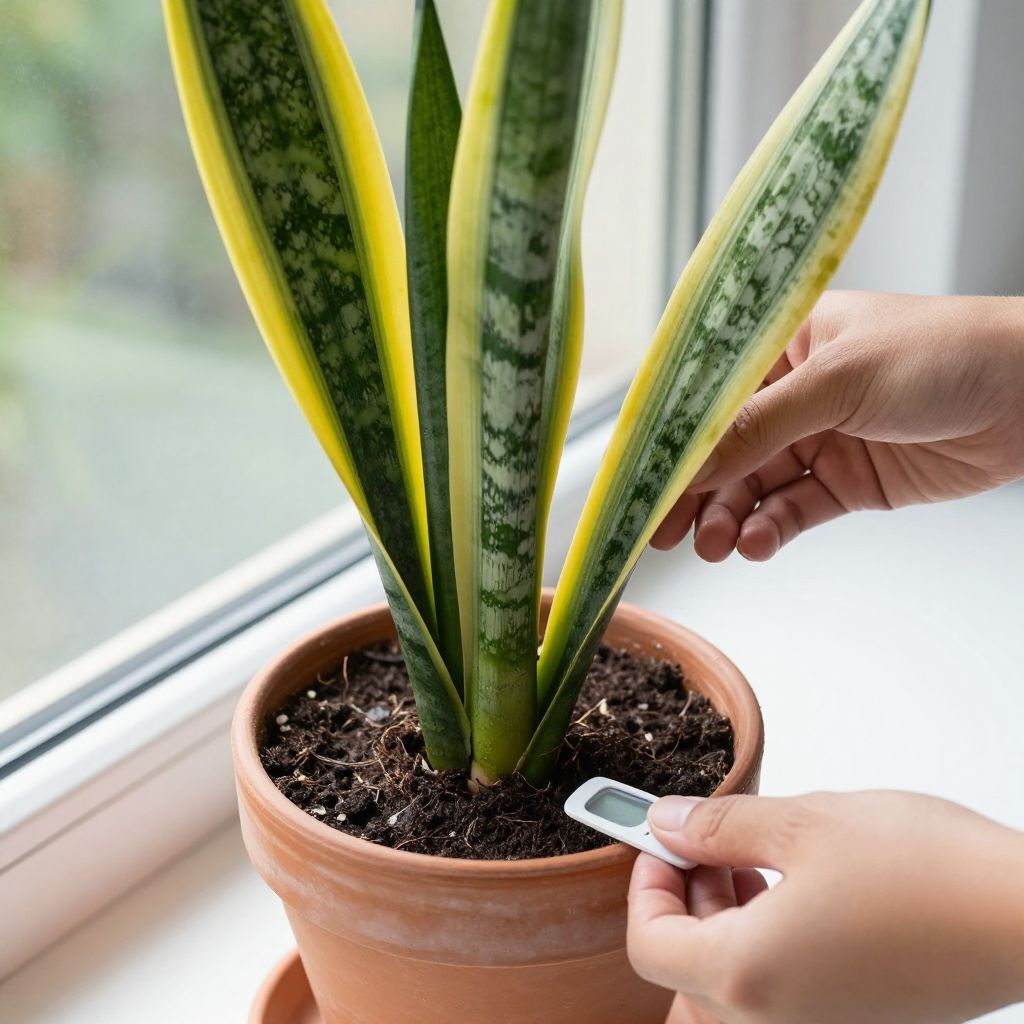
Why is my snake plant turning yellow? In most cases, the answer is too much water, poor drainage, or stress from light and temperature changes. Snake plants are tough, but they dislike wet soil and can yellow quickly when roots stay soggy.
The good news is that yellowing leaves usually give you a clear clue about what is wrong. If you check the soil, pot, roots, and light conditions in the right order, you can often stop the problem early and help your snake plant recover.
Why is my snake plant turning yellow?
Most yellow snake plant leaves are caused by overwatering, compacted or poorly draining soil, or root rot. Less often, the plant is reacting to too much direct sun, cold drafts, pests, old age, or nutrient issues. The fix depends on where the yellowing starts and how the soil feels.
Check the most common causes first
1. Overwatering
This is the most common reason a snake plant turns yellow. Snake plants store water in their leaves, so they need the soil to dry out between waterings.
If the potting mix stays wet for days, the roots can suffocate and begin to rot. Early signs include yellowing leaves, soft bases, a musty smell, and leaves that feel mushy rather than firm.
What to do:
- Stop watering until the top half of the pot has dried out.
- Empty any saucer or cachepot that holds runoff.
- If the soil is still wet after several days, unpot the plant and inspect the roots.
- Trim away black, brown, or mushy roots with clean scissors.
- Repot into a pot with drainage holes and a fast-draining mix.
2. Poor drainage or the wrong soil
Even if you water carefully, a heavy mix can hold too much moisture around the roots. Standard garden soil is usually too dense for indoor snake plants.
A good snake plant mix should drain quickly and still hold a little moisture. A cactus or succulent potting mix works well, or you can blend regular potting mix with perlite, pumice, or coarse sand to improve airflow.
Good drainage matters more than a watering schedule. A plant in airy soil can handle occasional mistakes far better than one sitting in soggy media.
3. Root rot
Root rot often follows overwatering, but it can also happen in pots without drainage holes or in containers that are too large for the root ball. When roots decay, the leaves lose support and often turn yellow from the base upward.
If you suspect root rot, remove the plant from the pot and examine the roots. Healthy roots are firm and pale; rotten roots are dark, soft, and may break apart easily.
How to save it:
- Take the plant out of the pot.
- Remove wet soil and cut away damaged roots.
- Let the roots air-dry for a few hours if needed.
- Repot in fresh, dry, well-draining mix.
- Wait several days before watering lightly.
4. Too much direct sunlight
Snake plants tolerate low light, bright indirect light, and some gentle sun, but intense direct sunlight can bleach or yellow the leaves, especially if the plant is moved suddenly from shade to a hot window or patio.
Sun stress usually shows up as faded, yellowed, or scorched patches on the side facing the light. The leaves may also look dry or crispy at the edges.
Fix: Move the plant to bright, indirect light or filtered sun. If you want to increase light, do it gradually over one to two weeks so the leaves can adjust.
5. Not enough light
Low light does not usually cause a dramatic yellowing by itself, but it can slow growth and make the plant more vulnerable to overwatering. In dim rooms, the soil dries more slowly, which increases the risk of root problems.
If your snake plant is in a dark corner, move it closer to a window with bright indirect light. East- or north-facing windows often work well indoors, depending on your climate and season.
6. Cold stress or drafts
Snake plants prefer warm conditions and can yellow if exposed to cold windows, chilly drafts, or sudden temperature swings. This is especially common in winter when the plant sits near a drafty door or a cold pane of glass.
Leaves affected by cold may become pale, yellow, or limp. In severe cases, tissue can become soft and damaged.
Keep snake plants away from:
- Cold window glass in winter
- Air-conditioning vents
- Heaters that blow hot, dry air directly on the plant
- Outdoor temperatures below the plant’s comfort range
7. Pests
Mealybugs, spider mites, and scale can weaken a snake plant and cause yellowing over time. Pests are more likely when the plant is stressed, dusty, or crowded among other houseplants.
Check the undersides of leaves, the leaf bases, and the crown. Look for sticky residue, white cottony patches, tiny webbing, or raised brown bumps.
What to do:
- Isolate the plant from other houseplants.
- Wipe leaves and stems with a damp cloth.
- Remove visible pests by hand where possible.
- Treat repeated infestations with a houseplant-safe insecticidal soap or horticultural oil, following the label.
8. Natural aging
Older outer leaves sometimes yellow and die off naturally as the plant produces new growth from the center or rhizomes. This is normal if only one or two lower leaves are affected and the rest of the plant looks healthy.
If the yellowing is limited to the oldest leaves and there are no signs of softness, odor, or pests, you may only need to remove the spent leaves once they are fully yellow or dry.
9. Fertilizer issues
Snake plants do not need heavy feeding. Overfertilizing can damage roots and cause leaf yellowing, while very poor nutrition over a long period may slow growth and leave the plant looking weak.
Use a diluted houseplant fertilizer only during active growth if your plant is healthy and rooted in fresh mix. If you suspect fertilizer burn, flush the pot with clean water and let it drain thoroughly, or repot if the soil has a salt buildup.
How to diagnose the problem step by step
If you are not sure why your snake plant is turning yellow, use a simple troubleshooting order. This helps you avoid treating the wrong problem.
- Check the soil moisture. Insert your finger 2 to 3 inches into the mix, or use a moisture meter if you have one.
- Look at the pot. Make sure there are drainage holes and that water is not sitting in a saucer.
- Inspect the leaves. Yellowing from the base and softness often points to overwatering; pale patches on the sun-facing side suggest light stress.
- Smell the soil. A sour or rotten smell can indicate root rot.
- Check for pests. Look closely at leaf joints and undersides.
- Review recent changes. Did you move the plant, repot it, change windows, or water more often than usual?
How to save a yellowing snake plant
Once you identify the cause, act quickly but carefully. Snake plants recover best when you correct the environment before the damage spreads.
If the soil is wet
- Pause watering.
- Improve airflow around the pot.
- Remove the plant and inspect the roots if the soil stays wet too long.
- Repot into a smaller or better-draining container if needed.
If the plant is sun-stressed
- Move it out of harsh direct sun.
- Use sheer curtain light or a slightly back-from-window position.
- Rotate the pot occasionally so one side does not take all the light.
If pests are present
- Wipe down the leaves.
- Treat the plant consistently for several weeks if needed.
- Check nearby plants, since pests spread easily indoors.
If roots are damaged
After trimming rotten roots, let the plant dry slightly before repotting. Use a clean container that is only a little larger than the root mass, because oversized pots hold excess moisture.
Pruning yellow leaves
Yellow leaves will not turn green again. Once a leaf is fully yellow or badly damaged, you can remove it with clean, sharp scissors or pruners.
Cut the leaf near the base, but avoid damaging nearby healthy tissue. If only the tip is yellow or brown, you can trim just the damaged portion for appearance, though the cut edge may still show.
Do not remove too many leaves at once unless the plant is badly damaged. The remaining healthy leaves still help the plant recover.
How to prevent yellowing in the future
Prevention is mostly about steady, simple care. Snake plants do best when you let the pot dry out between waterings and avoid sudden changes.
- Use a pot with drainage holes.
- Choose a gritty, fast-draining mix.
- Water only when the soil is mostly dry.
- Place the plant in bright, indirect light.
- Keep it away from cold drafts and heat vents.
- Repot only when the plant is rootbound or the soil has broken down.
- Inspect for pests during regular houseplant checks.
In warmer months, indoor plants may dry a little faster than in winter, but always check the soil rather than following a fixed calendar. Outdoor snake plants, where climate allows, need extra protection from heavy rain and cold snaps.
When yellowing is a sign of a bigger problem
If multiple leaves are yellowing quickly, the plant is collapsing, or the base feels mushy, act fast. Severe root rot can spread through the rhizomes, and in advanced cases the plant may be difficult to save.
On the other hand, a single old leaf turning yellow is often minor and may simply mean the plant is shedding aging foliage. The key is to compare the yellowing with the plant’s overall firmness, smell, and soil moisture.
Conclusion
If you are asking, “Why is my snake plant turning yellow,” start with the soil. In most cases, the answer is too much moisture, poor drainage, or root stress. Check the pot, roots, light, and temperature, then prune damaged leaves and adjust care as needed.
For more houseplant troubleshooting, you may also find it helpful to read why is my plant turning yellow and why are my monstera leaves turning yellow.