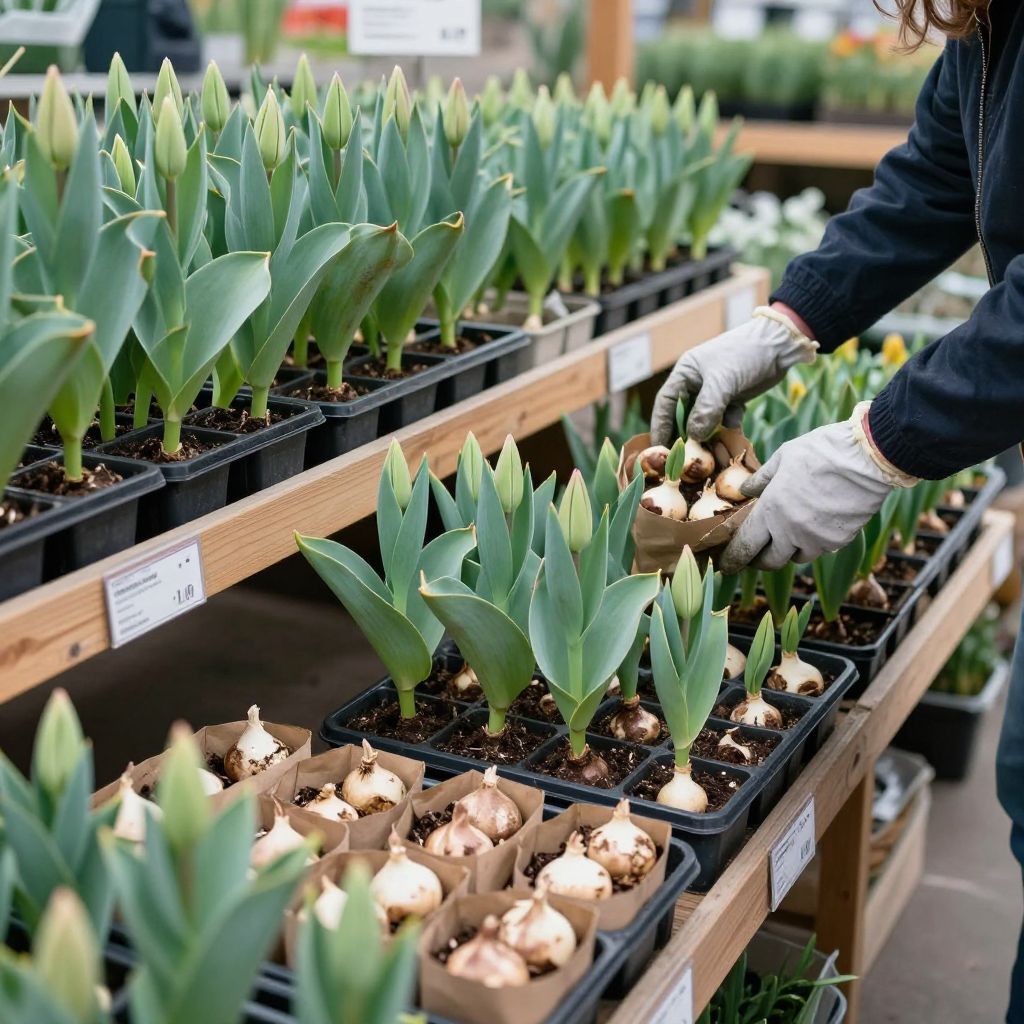
Wondering where to buy tulips for the best quality and the healthiest spring display? The right source matters just as much as the variety you choose, because bulb size, freshness, and storage conditions affect bloom quality and performance in the garden.
You can buy tulip bulbs from local garden centers, reputable online bulb specialists, nurseries, and seasonal retailers. The best option depends on your climate, planting time, and whether you want standard landscape tulips, species tulips, or pre-chilled bulbs for forcing indoors.
Where to buy tulips?
The best places to buy tulips are reputable garden centers, established bulb growers, and trusted online nurseries that sell fresh, firm bulbs in the proper season. Look for bulbs that feel heavy, have intact papery skins, and show no mold, soft spots, or shriveling. Avoid bargain bulbs that look dry or damaged.
Best places to buy tulip bulbs
Not every seller offers the same quality. Some sources are better for convenience, while others are better for selection or bulb freshness.
1. Local garden centers and nurseries
Local garden centers are often the easiest place to start if you want to inspect bulbs before buying. You can check size, firmness, and packaging date, and staff may also help you choose varieties suited to your region.
These shops are especially useful if you want tulips for immediate fall planting in your area. They usually stock bulbs that match local planting windows and climate conditions.
2. Reputable online bulb specialists
Online bulb companies often offer the widest selection, including classic Darwin hybrids, fringed types, species tulips, and unusual colors. This is a good option if you want specific cultivars or need to order early before local stores sell out.
Choose sellers with clear product descriptions, bulb size information, shipping timing, and a strong return policy. Freshness matters, so bulbs should ship during the proper planting season, not months too early.
3. Big-box garden departments
Large retailers can be convenient and affordable, especially for common tulip mixes. The downside is that bulb quality and storage conditions can vary more widely than at specialist nurseries.
If you buy here, inspect packages carefully. Choose bulbs that are dry but not desiccated, and avoid bags with condensation, visible mold, or lots of broken bulbs.
4. Farmers markets, plant fairs, and local bulb sales
These can be excellent sources if the seller is knowledgeable and the bulbs are recently harvested or properly stored. Local sources may also offer varieties that perform well in your climate.
Ask when the bulbs were lifted, how they were stored, and whether they are suitable for your planting zone and soil conditions.
5. Mail-order catalogs and specialty collections
Catalogs are useful if you like planning ahead or want to compare many varieties in one place. They are also a good source for tulips intended for naturalizing, cut flowers, or layered container planting.
Order early if you want first choice. Popular varieties can sell out quickly, especially in regions where fall planting is short.
How to choose healthy tulip bulbs
Healthy bulbs are the foundation of good tulip growth. A good bulb should be firm, dry, and free from obvious damage.
- Choose firm bulbs that feel solid, not soft or spongy.
- Look for intact papery skins where possible.
- Avoid bulbs with mold, blackened areas, or a sour smell.
- Pick larger bulbs when you want stronger flowering potential.
- Reject bulbs that are badly shriveled or cracked.
If you are buying mixed bags, sort through them before planting. Remove any bulbs that look unhealthy so they do not rot in the soil and affect nearby bulbs.
What bulb size means
In general, larger tulip bulbs often produce stronger stems and more reliable blooms than very small bulbs. That said, bulb size is only one factor; storage, planting depth, soil drainage, and climate also matter.
If a seller lists bulb circumference or grade, use that as a comparison tool, but do not assume bigger always means better for every garden situation.
When to buy tulips
The best time to buy tulips is usually late summer through fall, before your local planting window closes. Buying early gives you the best selection, but you should still plant at the right time for your climate.
If you purchase bulbs too early, store them in a cool, dry, well-ventilated place until planting. Do not leave them in a hot garage, in direct sun, or in sealed plastic where moisture can build up.
Buying for outdoor planting
For garden beds and borders, buy tulips in time to plant them in autumn while the soil is still workable but cooling down. Local climate matters, so use your regional planting guidance rather than a fixed calendar date.
Buying for indoor forcing
If you want tulips indoors, look for bulbs labeled for forcing or pre-chilled bulbs if your climate does not provide enough winter cold. Not all tulips are equally suited to forcing, so check the product description before you buy.
Where to buy tulips for different goals
Your best source depends on what you want the tulips to do in your garden.
For borders and mass plantings
Buy from a reputable bulb specialist or local nursery with strong outdoor selections. Look for varieties known for dependable spring display and choose enough bulbs to create a visible drift rather than scattering a few here and there.
For containers
Choose compact or mid-height tulips and buy from sellers that list mature height and bloom time. Container bulbs need good drainage, so quality matters even more because pots can rot bulbs faster than garden soil.
For naturalizing
Species tulips and some perennializing varieties are often better for naturalizing than oversized show tulips. Specialty bulb suppliers usually provide the clearest guidance on which types may return well in suitable conditions.
For cut flowers
If you want tulips for cutting, choose sturdy stems and reliable bloom timing from a trusted supplier. Commercial bulb growers and specialty catalogs often describe stem length and flower form more clearly than general retailers.
How to shop online without getting poor-quality bulbs
Online shopping can be excellent if you know what to look for. The key is to buy from a seller that treats bulbs as live plant material, not as generic merchandise.
- Read the product description carefully.
- Check whether the seller states bulb size, bloom time, and shipping season.
- Look for recent reviews that mention bulb condition on arrival.
- Confirm whether the bulbs are suitable for your climate and planting purpose.
- Make sure the seller ships at the correct time for planting in your region.
Be cautious with unusually cheap bulbs. Low prices can mean small bulbs, old stock, or poor storage, all of which can reduce flowering.
What to avoid when buying tulips
Some buying mistakes lead to disappointing blooms or complete failure. A little caution at purchase time saves a lot of trouble later.
- Do not buy bulbs that are soft, moldy, or heavily damaged.
- Avoid bulbs that have been sitting in warm, sunny displays for too long.
- Do not assume every tulip variety will perennialize in your garden.
- Skip sellers that provide little or no information about bulb size or shipping time.
- Do not buy too early unless you can store bulbs properly.
How to store tulip bulbs before planting
If you buy bulbs before you are ready to plant, storage conditions matter. Tulip bulbs should stay cool, dry, and airy until they go into the ground.
- Keep them in a paper bag, mesh bag, or open box.
- Store them in a cool location with good air circulation.
- Keep them away from ripening fruit, which can release gases that affect bulbs.
- Check them occasionally and remove any that begin to soften or mold.
If you live in a warm climate, buy as close to planting time as possible so bulbs do not deteriorate in storage.
Planting tips after you buy tulips
Once you have healthy bulbs, planting them correctly is what turns a purchase into a good spring display. Tulips do best in well-drained soil and full sun to light shade, depending on your climate and garden layout.
Soil and drainage
Tulips hate soggy soil. If your garden holds water after rain, improve drainage with raised beds, coarse organic matter, or a better-suited planting site.
Compost can help improve soil structure, but do not create a planting hole that acts like a water-filled bucket. In heavy clay, the surrounding soil matters more than the planting mix in the hole.
Sunlight
Choose a site with plenty of light in spring. In hot climates, tulips may benefit from some afternoon shade, especially if spring temperatures rise quickly.
Depth and spacing
Plant bulbs at a depth that is generally about two to three times the bulb’s height, unless your supplier gives a different recommendation. Space them so roots and shoots have room to develop without crowding.
Watering after planting
Water the bulbs once after planting to settle the soil, then rely on natural rainfall unless conditions are very dry. Overwatering is a common cause of rot, especially in containers and poorly drained beds.
Common problems after purchase
Even good bulbs can struggle if conditions are wrong. Watch for these issues after planting.
Bulbs rot before sprouting
This usually means the soil stayed too wet or the bulbs were already damaged. Improve drainage and avoid replanting in the same soggy spot without changes.
Leaves appear but no flowers
This can happen if bulbs were too small, planted too shallowly, shaded too heavily, or stressed by poor storage. Some tulips also need a cold period to bloom well.
Short-lived blooms
Heat, drought, or poor bulb quality can shorten the display. Choose fresh bulbs from a reliable seller and plant them in a site that stays reasonably cool in spring.
Should you buy tulips in mixes or single varieties?
Mixes are convenient and create a varied display, while single varieties give you more control over color, height, and bloom time. If you are planting a border or formal bed, single varieties often look more intentional. If you want a casual spring show, mixes can be a simple choice.
For best results, buy enough bulbs of one or two varieties to create a noticeable group. Tulips usually look better in clusters than as isolated plants.
Conclusion
When deciding where to buy tulips, start with a reputable local nursery or a trusted bulb specialist, then choose firm, healthy bulbs that suit your climate and planting goal. Good bulbs, proper storage, and well-drained soil give you the best chance of a strong spring display.
If you want more practical help, you may also find it useful to read where to buy tulips and when to plant tulip bulbs before you place your order.