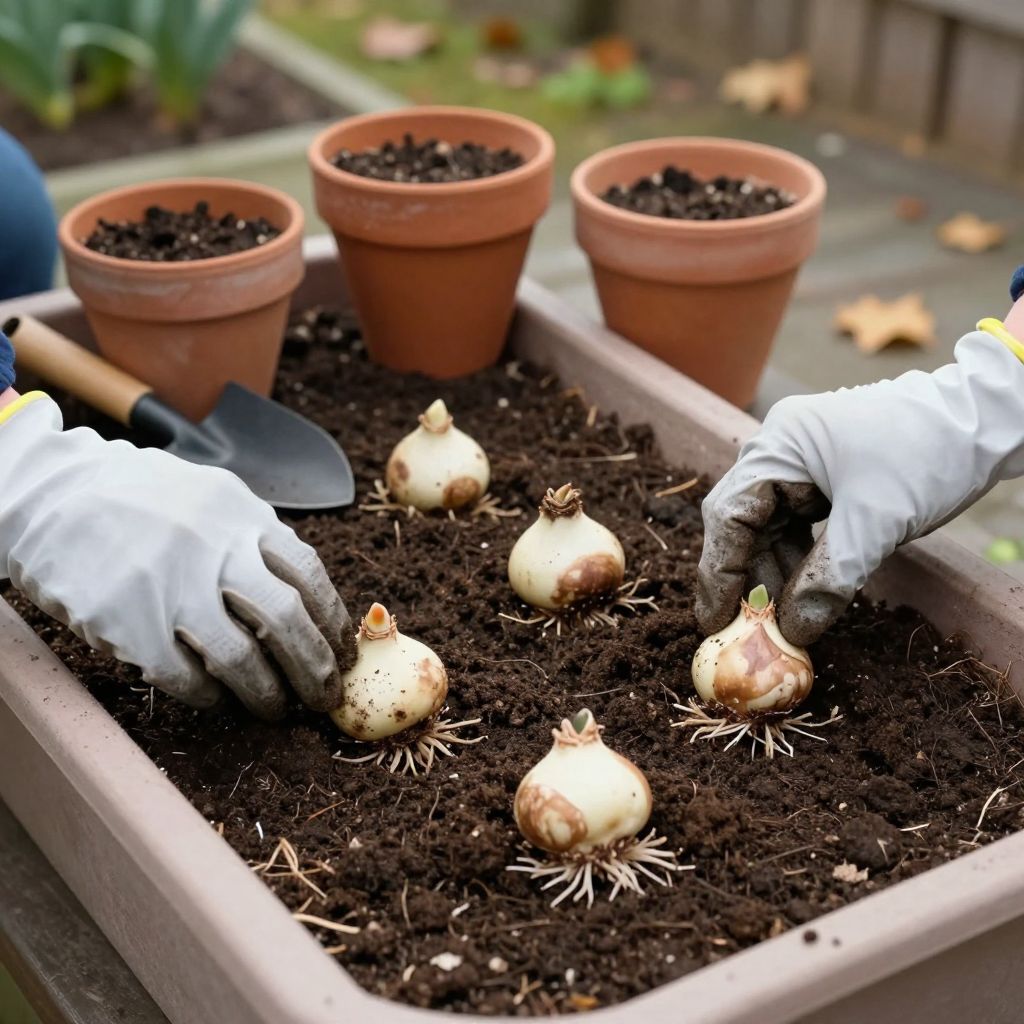
If you’re wondering when to plant tulip bulbs in pots, the short answer is: plant them in autumn, after the weather has cooled but before the potting mix freezes hard. In most climates, that means late fall is ideal, giving bulbs enough time to root before winter without starting top growth too early.
Potted tulips need the same seasonal signal as in-ground bulbs: a period of cold followed by spring warmth. The exact timing depends on your local climate, but the goal is always the same—get the bulbs settled into the pot well before deep winter sets in.
When To Plant Tulip Bulbs In Pots?
Plant tulip bulbs in pots in autumn, usually when nighttime temperatures are consistently cool and before the soil freezes. A good rule is to pot them about 6 to 8 weeks before your area’s ground typically freezes, so roots can develop in cool conditions and the bulbs can receive the cold period they need to bloom well.
Why autumn planting matters for potted tulips
Tulips are spring-flowering bulbs that need a cold dormant period to trigger blooming. If you plant too late, the bulbs may not root properly, and if you plant too early in warm weather, they may sprout before winter and become weak or damaged.
Containers warm and cool faster than garden beds, which makes timing even more important. A pot on a patio can stay warmer than the ground, so bulbs in containers may need extra attention to cold exposure and drainage.
What happens if you plant too early or too late?
- Too early: bulbs may send up shoots before winter, making them more vulnerable to frost, rot, or weak growth.
- Too late: bulbs may not establish roots well enough to support strong spring flowers.
- Just right: bulbs root in cool soil, remain dormant through winter, and bloom more reliably in spring.
How to time planting by climate
Because local weather varies, use your first hard freeze or typical winter chill as your guide rather than a fixed calendar date. Gardeners in colder regions usually plant earlier in fall, while those in milder climates may plant later and may need to chill bulbs artificially if winters are too warm.
Use these general timing cues
- Cold winter climates: plant in early to mid-fall, before the ground becomes difficult to work.
- Moderate climates: plant in mid- to late fall once nights are cool.
- Mild-winter climates: plant late in fall and consider pre-chilling bulbs if your area does not provide enough winter cold.
If you’re unsure, check your local average first frost date and count backward about 6 to 8 weeks. That gives tulip bulbs enough time to establish roots in pots before winter arrives.
Choosing the right pot and potting mix
Successful tulips in containers start with good drainage. Tulip bulbs dislike sitting in soggy soil, especially in winter, when excess moisture can lead to rot.
Container basics
- Drainage holes: essential.
- Depth: choose a pot at least 10 to 12 inches deep for most tulips, deeper if you want layered planting.
- Width: wide pots hold more bulbs and stay more stable in wind.
- Material: frost-resistant containers are best in cold climates.
Best soil for tulips in pots
Use a free-draining potting mix rather than heavy garden soil. A quality container mix blended with a little compost is usually enough, as long as it still drains freely.
- Use a loose, well-aerated potting mix.
- Mix in a small amount of compost for nutrients and structure.
- Avoid waterlogged mixes that stay dense after watering.
Do not add a thick layer of gravel at the bottom of the pot. It does not improve drainage the way many gardeners expect and can actually leave roots sitting in wetter soil.
How to plant tulip bulbs in pots step by step
Planting tulip bulbs in containers is straightforward, but a few details make a big difference. Aim for firm, healthy bulbs and place them at the correct depth so they root well and stay protected from temperature swings.
- Fill the pot partway with fresh potting mix.
- Set the bulbs pointy end up, spacing them close but not touching.
- Cover with soil so the bulbs sit roughly 4 to 6 inches below the surface, depending on bulb size and pot depth.
- Water lightly to settle the mix around the bulbs.
- Place the pot where it will receive the needed winter cold and stay protected from excessive rain or standing water.
For a fuller display, you can plant bulbs closer together in pots than you would in a border. Just avoid crowding them so tightly that air circulation and drainage suffer.
How many bulbs per pot?
That depends on pot size and bulb size, but a general approach is to fit bulbs snugly without forcing them. Larger pots can hold several bulbs for a dense spring display, while smaller pots are better for a few well-spaced bulbs.
Cold treatment and overwintering in containers
Tulips need cold to bloom, but potted bulbs can be more exposed than those in the ground. In cold regions, pots may need some protection from severe freeze-thaw cycles, while in mild regions bulbs may need extra chilling.
If winters are cold where you live
- Leave the pot outdoors in a sheltered spot.
- Keep it away from places where rain will constantly soak the soil.
- Protect the container from extreme freeze damage if your pot is not frost-resistant.
- Insulate the pot with mulch, straw, or by placing it against a wall if needed.
If winters are mild where you live
In areas with insufficient winter chill, tulips may not bloom well unless the bulbs are pre-chilled before planting. Store bulbs in a cool, dry place if recommended for your climate, then plant them in pots once they have received the necessary cold period.
Important: tulip bulbs should be chilled dry, not stored in sealed plastic where moisture can encourage mold.
Watering tulips in pots
Watering is one of the most common problems with container tulips. The soil should be moist after planting, but never saturated for long periods.
Watering guidelines
- Water once after planting to settle the soil.
- After that, water only when the mix begins to dry slightly.
- Reduce watering in winter if the pot stays damp from rain or snow.
- Resume more regular watering in spring as growth begins.
Overwatering is more dangerous than underwatering during dormancy. If the pot is outdoors and exposed to frequent rain, move it under shelter or ensure the container drains freely.
Sunlight and spring care
Once tulips begin to grow in spring, they need bright light to produce strong stems and good blooms. A sunny position is best, though light afternoon shade is usually fine in warmer climates.
During active growth
- Keep the pot in a bright, open location.
- Rotate the container occasionally if one side leans toward the light.
- Protect emerging shoots from hard frost if a late cold snap is forecast.
If spring weather turns unusually warm, potted tulips may bloom and fade faster than those in the ground. This is normal, especially in containers that warm up quickly.
Fertilizing potted tulips
Tulips are not heavy feeders, and too much fertilizer can encourage soft growth instead of sturdy flowers. A modest amount of compost in the potting mix is often enough for one season.
If you want to feed them further, use a light, balanced bulb fertilizer according to the product label, but avoid overdoing it. Excess nitrogen can produce leafy growth with fewer flowers.
Common problems and how to fix them
Potted tulips can run into a few predictable issues. Most are easy to prevent once you know what to look for.
Bulbs rot before spring
- Usually caused by poor drainage or overly wet soil.
- Use a pot with drainage holes and a free-draining mix.
- Move pots out of constant rain if needed.
Weak stems or few flowers
- Often linked to planting too late, insufficient cold, or too little light.
- Plant earlier in fall next time and give the pot a bright spring position.
Bulbs sprout too early
- Warm autumn weather or an overly warm storage spot can trigger premature growth.
- Move the pot to a cooler location and avoid keeping it indoors for long periods.
Animals dig in the pot
- Squirrels and other animals may disturb freshly planted bulbs.
- Cover the surface with mesh, chicken wire, or a layer of mulch until the soil settles.
After flowering: what to do next
Once tulips bloom, deadhead the spent flowers so the plant does not waste energy on seed production. Leave the foliage in place until it yellows naturally, because the leaves recharge the bulb for next year.
In pots, tulips often perform best as a one-season display unless you are prepared to care for them carefully afterward. You can keep them growing until the foliage dies back, then lift and store the bulbs if you want to try replanting them later, though flowering may be less reliable the following year.
Best practices for a strong potted tulip display
- Plant in autumn, not spring.
- Use a pot with excellent drainage.
- Choose a loose, well-drained potting mix.
- Give bulbs enough winter cold.
- Keep soil moist but never soggy.
- Provide bright light once growth starts.
- Let foliage die back naturally after blooming.
Conclusion
The best time for when to plant tulip bulbs in pots is autumn, before the soil freezes and while cool weather still allows root growth. If you match the timing to your local climate, use a free-draining container, and protect the bulbs from excess moisture, you’ll give your tulips the best chance of a strong spring show.
If you’d like to plan the rest of your spring container display, you may also enjoy reading about how to grow spring bulbs in containers and tips for choosing the best potting mix for bulbs.