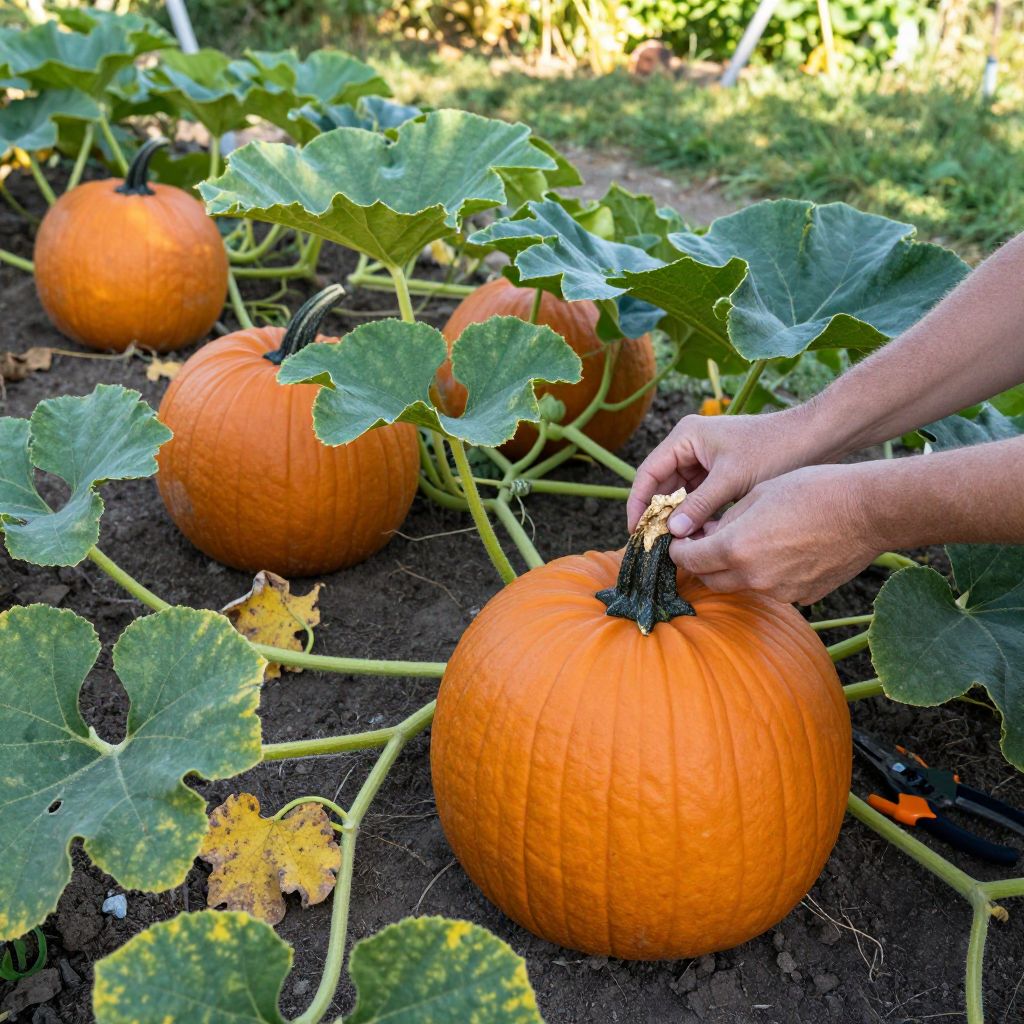
Wondering when are pumpkins ready to harvest? The answer is usually when the fruit has fully colored, the rind has hardened, and the stem has started to dry and cork over. Timing depends on variety, weather, and when you planted, so it’s better to judge by plant and fruit signs than by the calendar alone.
Harvesting too early can leave you with pumpkins that never fully color or store well. Waiting too long can invite frost damage, rot, or pest problems, so learning the right cues makes a big difference.
When are pumpkins ready to harvest?
Pumpkins are ready to harvest when they have reached their mature color, the skin is hard enough that you cannot easily dent it with a fingernail, and the stem is dry, firm, and starting to cork. Most pumpkins are harvested in late summer through fall, but the exact timing depends on variety and local weather.
How to tell a pumpkin is mature
Check the color
A ripe pumpkin usually shows the full color expected for its variety: deep orange, pale tan, white, blue-gray, or another mature shade. The skin should look even and finished, not patchy green unless the variety naturally stays partly green.
Test the rind
Press your fingernail gently into the skin. If it resists and does not puncture easily, the rind is mature. A soft or easily dented rind means the pumpkin needs more time on the vine.
Look at the stem
The stem should be dry, tough, and beginning to turn brown or corky. A green, moist stem often means the pumpkin is still actively developing. Do not carry pumpkins by the stem; even a mature stem can snap and shorten storage life.
Watch the vine and leaves
As pumpkins finish ripening, the vines often start to yellow and decline. This is a helpful clue, but do not rely on vine dieback alone, since disease, drought, or pests can cause early decline before fruit is mature.
How long pumpkins take to ripen
Most pumpkin varieties need roughly 75 to 120 days from planting to harvest, depending on type, weather, and growing conditions. Smaller carving or pie types often finish sooner than giant pumpkins, but the seed packet or plant label is the best starting point for timing.
Use days to maturity as a guide, not a rule
Cool nights, cloudy weather, poor pollination, or stressed plants can slow ripening. Warm, sunny conditions and fertile soil can speed growth. If your season is short, choose early-maturing varieties and start seeds or transplants at the right time for your climate.
Best harvest signs in one quick checklist
- Full mature color for the variety
- Hard rind that resists a fingernail
- Dry, corky, or browning stem
- Vine beginning to yellow and decline
- Fruit sounds hollow when tapped, though this is less reliable than the other signs
What to do if the pumpkins are almost ready
If frost is approaching and your pumpkins are close to maturity, you can help them finish by removing shading leaves around the fruit so they get more sun. Be careful not to strip the plant too much, because the leaves still feed the fruit and protect it from sunscald.
Can pumpkins ripen after picking?
Pumpkins can cure after harvest, but they do not truly continue ripening in storage the way some fruits do. If picked too early, they may color a little more and toughen slightly, but they usually will not develop the same flavor, texture, or keeping quality as a vine-ripened pumpkin.
How to harvest pumpkins correctly
- Choose a dry day if possible.
- Use clean, sharp pruners, a knife, or garden shears.
- Cut the stem, leaving 2 to 4 inches attached to the fruit.
- Lift the pumpkin from underneath rather than by the stem.
- Set it gently on a soft surface to avoid bruising.
Leave a short stem attached because it helps reduce rot and improves storage life. A pumpkin without a stem is more likely to decay sooner.
Curing pumpkins for better storage
Curing helps toughen the skin and heal small surface scratches. After harvest, place pumpkins in a warm, dry spot with good air circulation for about 7 to 14 days. Avoid wet grass, cold floors, and direct rain during this period.
Ideal curing conditions
- Warm temperatures, but not extreme heat
- Dry air and good ventilation
- Fruit kept off damp soil
- No stacking, which can bruise the rind
After curing, store pumpkins in a cool, dry place. Check them regularly for soft spots, mold, or stem rot.
Common mistakes when deciding harvest time
- Picking by size alone: large fruit is not always ripe.
- Harvesting too early: immature pumpkins store poorly and may taste bland.
- Waiting for a hard frost: frost can damage the rind and shorten storage life.
- Pulling the fruit off the vine: this can tear the stem and injure the pumpkin.
- Ignoring disease: if vines are collapsing from mildew or rot, harvest close-to-ready fruit promptly.
What if your pumpkin vine is dying early?
Sometimes the vine declines before the pumpkins are fully mature because of powdery mildew, squash vine borers, drought stress, or nutrient problems. If the fruit is nearly ready, harvest it and cure it. If it is still immature, you may be able to save some quality by giving it as much sun and care as possible for a short time.
Signs of trouble to watch for
- White powdery coating on leaves
- Sudden wilting on part of the vine
- Holes near the base of the stem
- Yellowing leaves far earlier than expected
- Soft spots or rot on the fruit
How growing conditions affect harvest timing
Pumpkins need full sun, steady moisture, and fertile, well-drained soil to mature properly. Poor drainage, compacted soil, or irregular watering can slow development and lead to misshapen or underdeveloped fruit. A layer of compost at planting time can help, but avoid overfeeding with nitrogen late in the season, since that can produce lots of vine growth and fewer ripe pumpkins.
Watering and ripening
Keep watering consistent while the fruit is sizing up. Once pumpkins are close to mature, avoid soaking the foliage and fruit, and do not let the soil swing from very dry to very wet. That kind of stress can cause cracking or poor storage quality.
Harvest timing for different uses
If you want pumpkins for carving, wait until the rind is fully colored and firm, but do not delay so long that frost threatens. For decorative display, choose fruit with strong stems and unblemished skin. For cooking, full maturity matters even more, because underdeveloped pumpkins tend to have watery flesh and weaker flavor.
Final practical tip
If you are unsure, harvest one pumpkin that looks nearly ready and compare it with one left on the vine for another week. That simple side-by-side check can help you learn how your variety behaves in your garden and improve your timing next season.
For more seasonal help, you may also want to read about how to cure winter squash for storage and common squash pests and diseases if those issues are affecting your patch.