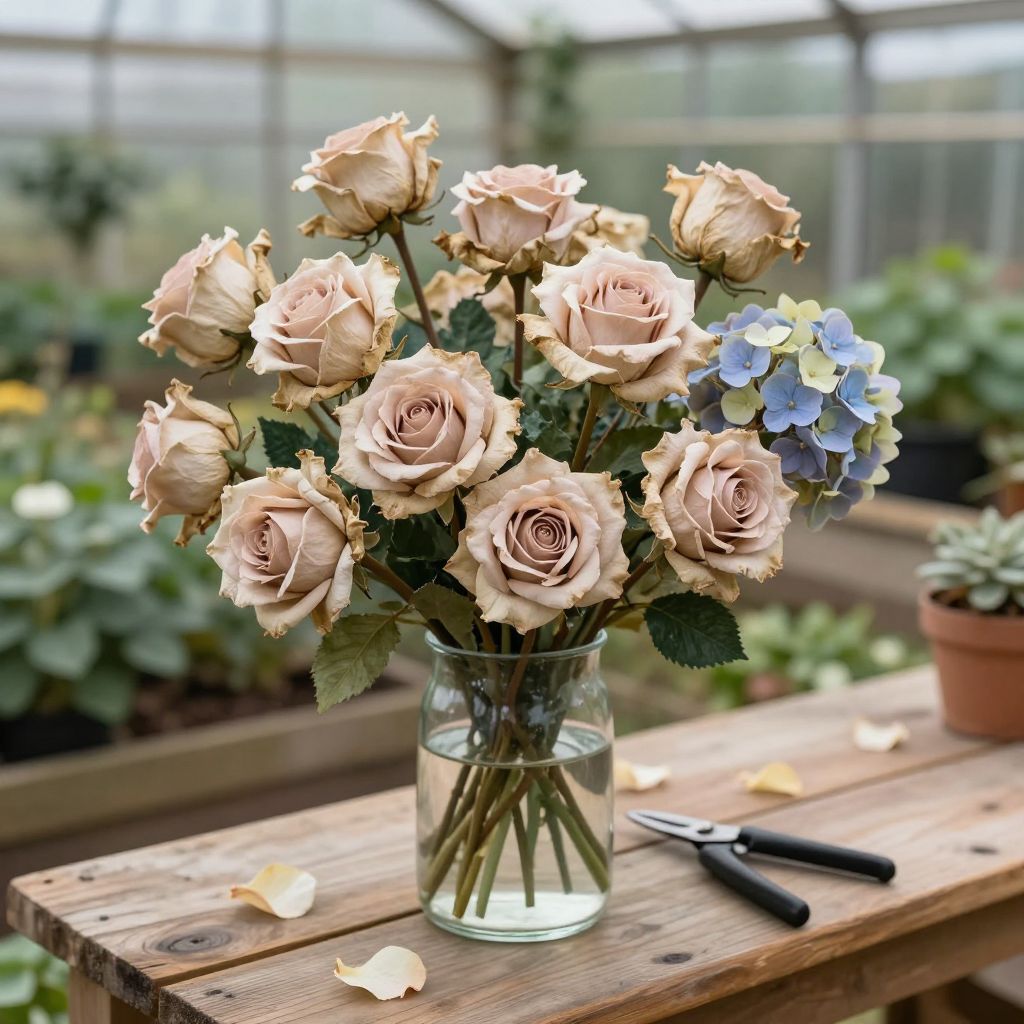
Are you wondering what preserved flowers are and whether they belong in a real garden? Preserved flowers are natural blooms that have been treated to keep their shape and color for decorative use long after cutting, drying, or preserving. They are not living plants, so they don’t grow, root, or need watering like fresh flowers.
If you’re trying to identify them, care for them, or decide how to use them in arrangements, the key is understanding how they differ from fresh or dried flowers. This guide explains what preserved flowers are, how they’re made, how to spot quality pieces, and how to keep them looking good indoors.
What are preserved flowers?
Preserved flowers are real flowers that have been treated after harvest so they keep a soft, fresh-looking appearance for months or even longer. They are no longer living plants, so they do not need soil, sunlight, or watering. They are used for indoor décor, arrangements, and long-lasting displays rather than gardening in the usual sense.
How preserved flowers are made
Preservation methods vary, but most aim to replace the flower’s natural moisture with a preserving solution or to dry the bloom in a way that keeps its shape. The result is a flower that looks more lifelike than a fully dried bloom, though it is still delicate and should be handled gently.
Common preservation methods
- Glycerin preservation: Stems or blooms absorb a solution that helps keep petals and foliage flexible.
- Air drying: Flowers are hung or laid out to dry naturally, which often gives a more rustic look.
- Silica gel drying: Moisture is drawn out quickly, helping preserve shape and some color in delicate flowers.
- Professional floral preservation: Commercial treatments are used for bouquets and display flowers to improve longevity and appearance.
How to identify preserved flowers
Preserved flowers usually feel lighter, softer, and less moist than fresh blooms. They may look almost fresh from a distance, but close inspection often reveals a more matte finish, slightly papery texture, or a firmer, less pliable stem. Unlike living plants, they won’t perk up with water.
Signs you’re looking at preserved flowers
- Petals hold their shape without wilting.
- Color looks muted, even, or slightly altered from a fresh bloom.
- Stems may feel dry, stiff, or treated.
- No roots, no new growth, and no scent similar to a living plant.
- The flower does not respond to watering or misting.
Preserved vs. dried vs. fresh
- Fresh flowers: Living cut blooms with natural moisture and a short vase life.
- Dried flowers: Fully dehydrated flowers, often brittle and more fragile.
- Preserved flowers: Treated blooms that often stay softer and more realistic than dried flowers.
Are preserved flowers a gardening plant?
Not really. Preserved flowers are a floral product, not a plant you grow in the garden after purchase. You can grow the original flower species outdoors or indoors, harvest blooms at the right stage, and preserve them afterward. But once preserved, they are decorative material rather than a living plant.
Which garden flowers are commonly preserved?
Many flowers can be preserved, but some hold their shape and color better than others. Blooms with sturdy petals and a naturally good drying form are often easier to preserve than highly delicate flowers. Gardeners often choose flowers that are already suitable for cutting and arranging.
Common candidates for preservation
- Roses
- Hydrangeas
- Lavender
- Baby’s breath
- Statice
- Strawflower
- Eucalyptus foliage
Success depends on harvest timing, weather, and the flower’s natural structure. Flowers picked too late, after rain, or after insect damage may not preserve well.
How to harvest flowers for preservation
If you want to preserve your own garden flowers, harvest them at the right stage. Pick blooms when they are fresh and dry, ideally in the cool part of the day after dew has evaporated. Avoid flowers that are bruised, fading, or already opening past their best stage.
Step-by-step harvesting guide
- Choose healthy stems with strong color and no disease.
- Cut with clean, sharp pruners to avoid crushing the stem.
- Remove damaged leaves and any foliage that would sit below the waterline if using a vase first.
- Handle blooms gently to avoid bruising petals.
- Preserve them as soon as possible after cutting for the best result.
How to care for preserved flowers indoors
Preserved flowers need protection from moisture, sunlight, and rough handling. They are best displayed indoors in a dry room with stable temperatures. Treat them like a fragile décor item, not a houseplant, and they can remain attractive much longer.
Best conditions for display
- Low humidity: Moisture can soften, stain, or distort preserved petals.
- Indirect light: Bright sun can fade color faster.
- Cool, stable temperatures: Heat can make preserved material brittle.
- Minimal handling: Touching petals repeatedly can cause shedding or breakage.
Cleaning and maintenance
- Dust gently with a soft brush or a cool, low-setting air blower held at a distance.
- Keep them away from bathrooms, kitchens, and steamy windows.
- Do not water, mist, or spray them with leaf shine.
- Rotate arrangements occasionally so one side does not fade faster than the other.
Common mistakes to avoid
Most problems with preserved flowers come from treating them like fresh blooms or houseplants. Once you know they are decorative and delicate, it becomes much easier to keep them looking good.
- Do not water them. Water can cause spotting, collapse, or mold.
- Do not place them in full sun. Strong light fades color quickly.
- Do not store them in damp areas. Humidity shortens their display life.
- Do not bend stems repeatedly. They may crack or snap.
- Do not expect them to root. Preserved flowers cannot be propagated.
Can you grow plants specifically to preserve their flowers?
Yes. Many gardeners grow cut flowers with preservation in mind. The best candidates are healthy, productive plants that bloom on sturdy stems and can be harvested regularly without harming the plant. This is especially useful if you want flowers for dried arrangements, keepsakes, or long-lasting indoor décor.
Good growing practices for preservation-focused flowers
- Give plants the sunlight and spacing they need for strong stems.
- Use well-drained soil so blooms stay healthy and disease-free.
- Water consistently at the root zone, especially during dry spells.
- Deadhead or cut flowers at the right stage to encourage more blooms.
- Watch for pests such as aphids, thrips, and spider mites, which can damage petals.
Problems with preserved flowers and how to fix them
Because preserved flowers are no longer living, “fixing” them usually means improving storage or display conditions rather than treating a plant. If they look poor, the issue is often environmental.
Fading color
Move the arrangement out of direct sun and away from strong indoor lighting. Light exposure is one of the fastest ways to dull preserved petals.
Crumbly or brittle petals
This usually means the flowers are too dry, too old, or exposed to heat. Handle them less, and keep them in a cooler room with stable humidity.
Mold or softness
Moisture is the likely cause. Remove the arrangement from damp areas and discard any pieces that have visibly deteriorated. Preserved flowers that develop mold are usually not salvageable.
Dust buildup
Use a soft brush or gentle air stream. Avoid wiping with a damp cloth, which can damage the finish and texture.
When preserved flowers are worth choosing
Preserved flowers are a good option when you want a long-lasting display without the upkeep of fresh flowers. They can be useful for home décor, event arrangements, keepsakes, and indoor styling where natural-looking blooms are preferred but regular replacement is inconvenient.
They are less suitable if you want fragrance, active plant growth, or a living garden feature. For that, grow the original flower species and enjoy the blooms fresh before harvesting a few for preservation.
Conclusion
Preserved flowers are real flowers that have been treated to last longer as decorative pieces, not living plants that continue to grow. If you want to work with them successfully, keep them dry, out of direct sun, and handled as little as possible. If you’re interested in preserving your own blooms, start by growing sturdy cut flowers and harvesting them at peak quality.
For more practical flower care ideas, you may also want to read about how to dry flowers and cut flower garden basics.