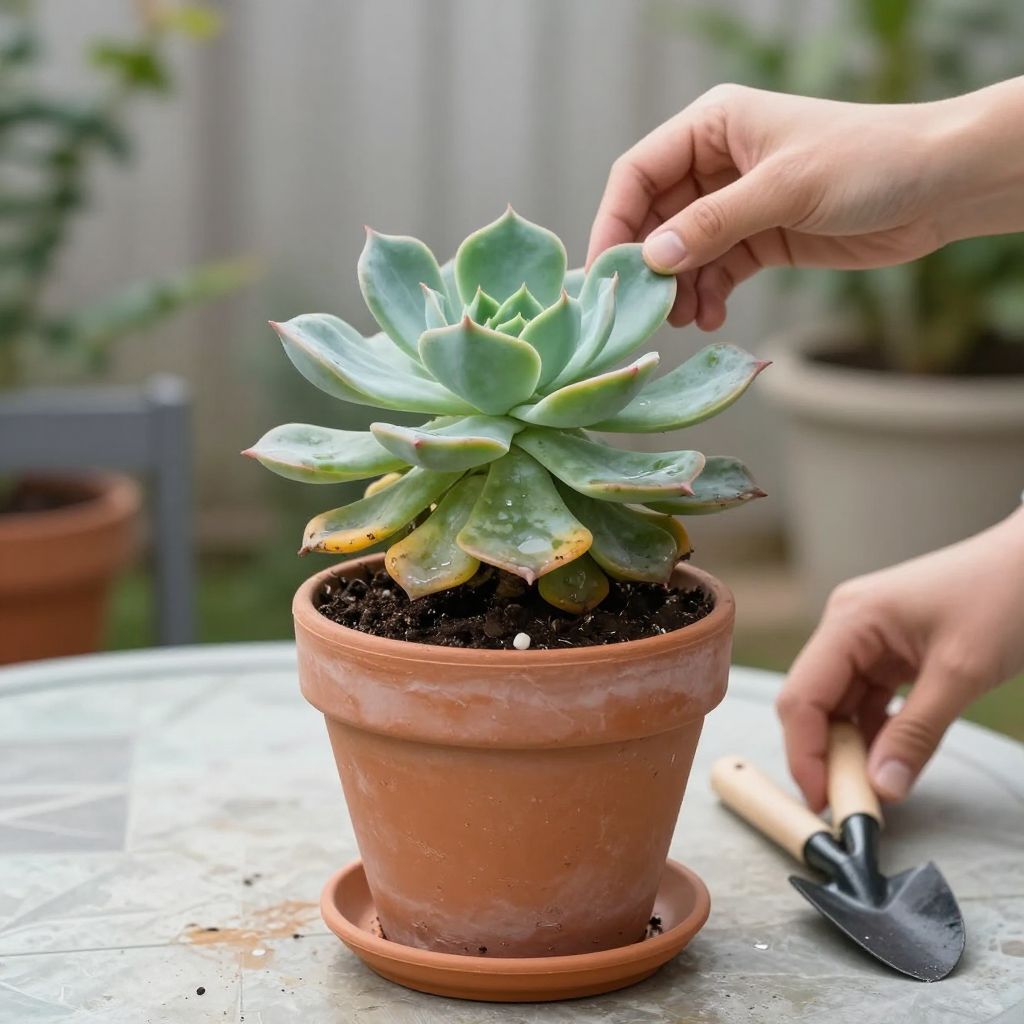
Why is my succulent dying? In most cases, the problem is not mysterious: succulents decline from too much water, too little light, poor drainage, or cold damage. The good news is that many struggling succulents can be saved if you catch the symptoms early and correct the growing conditions.
Start by looking at the leaves, stems, and soil. A succulent that is soft, yellowing, stretched, or dropping leaves is usually telling you exactly what it needs changed.
Why is my succulent dying?
Most dying succulents are suffering from one of four issues: overwatering, insufficient light, poor drainage, or temperature stress. Check the plant’s roots, soil, and placement first. If the leaves are mushy, the soil stays wet, or the plant is stretching toward light, adjust care quickly before rot or severe decline sets in.
How to diagnose the problem
Before you treat the plant, identify the symptom pattern. Succulents often look similar when stressed, but the cause is usually clear once you inspect closely.
Common signs and what they usually mean
- Soft, translucent, or mushy leaves: usually overwatering or root rot.
- Wrinkled, thin, or shriveled leaves: often underwatering, root damage, or a plant that cannot absorb moisture.
- Long, stretched stems with wide gaps between leaves: too little light, also called etiolation.
- Yellowing leaves that drop easily: often excess water, poor drainage, or aging lower leaves.
- Brown, crispy leaf tips: sun scorch, underwatering, or salt buildup from water or fertilizer.
- Blackened tissue or a collapsing stem base: rot, cold damage, or severe infection.
Check the roots and soil
If the plant is declining fast, gently remove it from the pot and inspect the roots. Healthy roots are usually firm and pale, while rotten roots are dark, mushy, and may smell bad. If the soil feels heavy, compacted, or wet for days, the problem is often drainage rather than watering frequency alone.
Overwatering: the most common reason succulents die
Succulents store water in their leaves and stems, so they need soil that dries out between waterings. If the pot stays wet, roots lose oxygen and begin to rot. This is the most common reason people ask, “Why is my succulent dying?”
What overwatering looks like
- Leaves feel soft, swollen, or soggy.
- Lower leaves turn yellow or translucent.
- Stems become brown or black at the base.
- The plant may topple because roots have weakened.
How to fix overwatering
- Stop watering immediately.
- Remove the plant from decorative cachepots or saucers holding water.
- Check the roots and trim away any black, mushy sections with clean scissors.
- Let the plant air-dry for a few hours if the roots were very wet.
- Repot in a dry, fast-draining succulent mix and a container with drainage holes.
Important: Do not move a rotting succulent into a larger pot. Extra soil holds extra moisture and can make the problem worse.
Underwatering and root damage
Although succulents tolerate dry conditions better than many houseplants, they are not immune to drought stress. If the roots have dried out completely, become damaged, or are packed into old compacted soil, the plant may not absorb water even when you do water it.
Signs of underwatering
- Leaves look wrinkled, thin, or deflated.
- Leaf edges dry out and become crispy.
- The plant stops growing.
- Soil pulls away from the pot and water runs through too quickly.
What to do
Water deeply until water drains from the bottom, then let the mix dry out fully before watering again. If the soil has become hydrophobic and water beads or runs through immediately, soak the pot briefly in a tray of water, then allow excess water to drain away.
If the roots are sparse or damaged, repot into fresh mix. A succulent with little root mass may need a smaller pot than you expect so the soil does not stay wet too long.
Not enough light
Many succulents decline indoors because they are not getting enough bright light. Without enough sun, they stretch, weaken, and become more prone to rot because they use water more slowly and grow thin, unstable tissue.
How to tell if light is the issue
- Stems elongate and lean toward a window.
- Leaves spread farther apart than normal.
- Color fades from rich green, red, purple, or blue tones.
- The plant looks “reachy” rather than compact.
How to improve light safely
Move the plant to the brightest spot you have, usually a south- or west-facing window indoors, while avoiding sudden exposure to intense direct sun if it has been in shade. Increase light gradually over 7 to 14 days so the leaves do not scorch.
Outdoors, many succulents do best in bright light with some protection from harsh afternoon sun, especially in hot climates. Morning sun and afternoon shade is often safer than all-day exposure.
Poor drainage and the wrong soil mix
Even careful watering cannot save a succulent planted in dense, moisture-retentive soil. Regular potting mix often holds too much water for these plants, especially in containers without drainage holes.
Best soil conditions for succulents
- Fast-draining, gritty mix.
- Container with drainage holes.
- Loose soil that dries reasonably quickly after watering.
What to avoid
- Heavy garden soil in pots.
- Decorative containers without drainage.
- Constantly damp saucers under pots.
- Overly rich compost that stays wet too long.
If you need to repot, use a cactus and succulent mix or amend regular potting mix with coarse materials that improve drainage. The goal is a mix that drains freely while still holding a little moisture for the roots.
Temperature stress and cold damage
Succulents can be damaged by cold drafts, frost, or sudden temperature swings. Indoor plants placed near chilly windows or outdoor plants exposed to unexpected cold snaps may collapse, darken, or develop water-soaked patches.
Signs of cold stress
- Leaves turn dark, translucent, or blackened.
- Stems soften after a cold night.
- Outer leaves look waterlogged and damaged.
How to respond
Move the plant to a sheltered, stable-temperature location. Remove clearly dead tissue after it dries, but wait before trimming everything back, because some damaged tissue may still dry and separate from healthy growth. If frost has affected the roots or stem base, recovery may be limited.
Pests and diseases that weaken succulents
Insects and fungal problems can make a succulent look like it is dying even when watering and light are fairly good. Mealybugs, scale, and root mealybugs are especially common on houseplants and in greenhouse settings.
Watch for these pests
- Mealybugs: white, cottony clusters in leaf joints and along stems.
- Scale: small brown or tan bumps on stems and leaves.
- Spider mites: fine webbing and speckled leaves, especially in dry indoor air.
Basic pest control
- Isolate the plant from others.
- Remove visible pests with a cotton swab dipped in rubbing alcohol if appropriate for the plant.
- Rinse or wipe leaves gently.
- Inspect the roots if decline continues, especially for root mealybugs.
- Repot in fresh soil if pests are in the root zone.
Soft rot and fungal infections often follow overwatering or poor airflow. If you see spreading black tissue, remove affected parts with a clean blade and improve drying conditions immediately.
How to save a dying succulent step by step
Once you identify the likely cause, take a simple rescue approach. The exact steps depend on whether the plant is too wet, too dry, or stressed by light or temperature.
- Inspect the plant. Check leaves, stems, roots, and soil moisture.
- Remove dead or rotting material. Use clean scissors or a knife.
- Correct the environment. Improve light, drainage, or temperature as needed.
- Repot if necessary. Use a dry, well-draining mix and a pot with drainage holes.
- Wait before watering again. Let the plant settle, especially after root trimming.
- Monitor new growth. Healthy new leaves or firming tissue are good signs.
When to cut and propagate
If the base is rotting but the top is still firm, you may be able to save the healthy portion by taking a cutting. Let the cut end dry and callus before placing it in dry succulent mix. This is often more successful than trying to rescue a badly rotted root system.
Leaf propagation can work for some succulents, but not all leaves root reliably. Choose a healthy leaf, let the break dry, and place it on dry soil with bright indirect light. Avoid misting, which can encourage rot.
How to prevent the problem from returning
Once a succulent has recovered, prevention is mostly about consistency and observation. Small changes in light, pot size, and watering habits make a big difference over time.
Good long-term care habits
- Use pots with drainage holes.
- Choose a gritty, fast-draining mix.
- Water only when the soil has dried appropriately for the plant and season.
- Give more light than you think indoors, but acclimate gradually.
- Empty saucers after watering.
- Check for pests regularly, especially in winter indoors.
Season matters too. Succulents often use less water in cool, low-light months and more in active growth periods. Rather than following a strict calendar, check the soil and the plant’s appearance before watering.
When a succulent is too far gone
Sometimes the plant cannot be saved, especially if the stem base has rotted completely or the roots are dead and the crown has collapsed. If there is no firm, healthy tissue left, it is better to discard the plant and sanitize the pot before reusing it.
That said, many succulents can recover from a rough start if even part of the plant remains healthy. A firm top cutting, a healthy leaf, or a section of stem can often be restarted in fresh, dry mix.
If you want to keep learning, related reading on succulent soil, drainage, and houseplant troubleshooting can help you avoid the same problem next time.