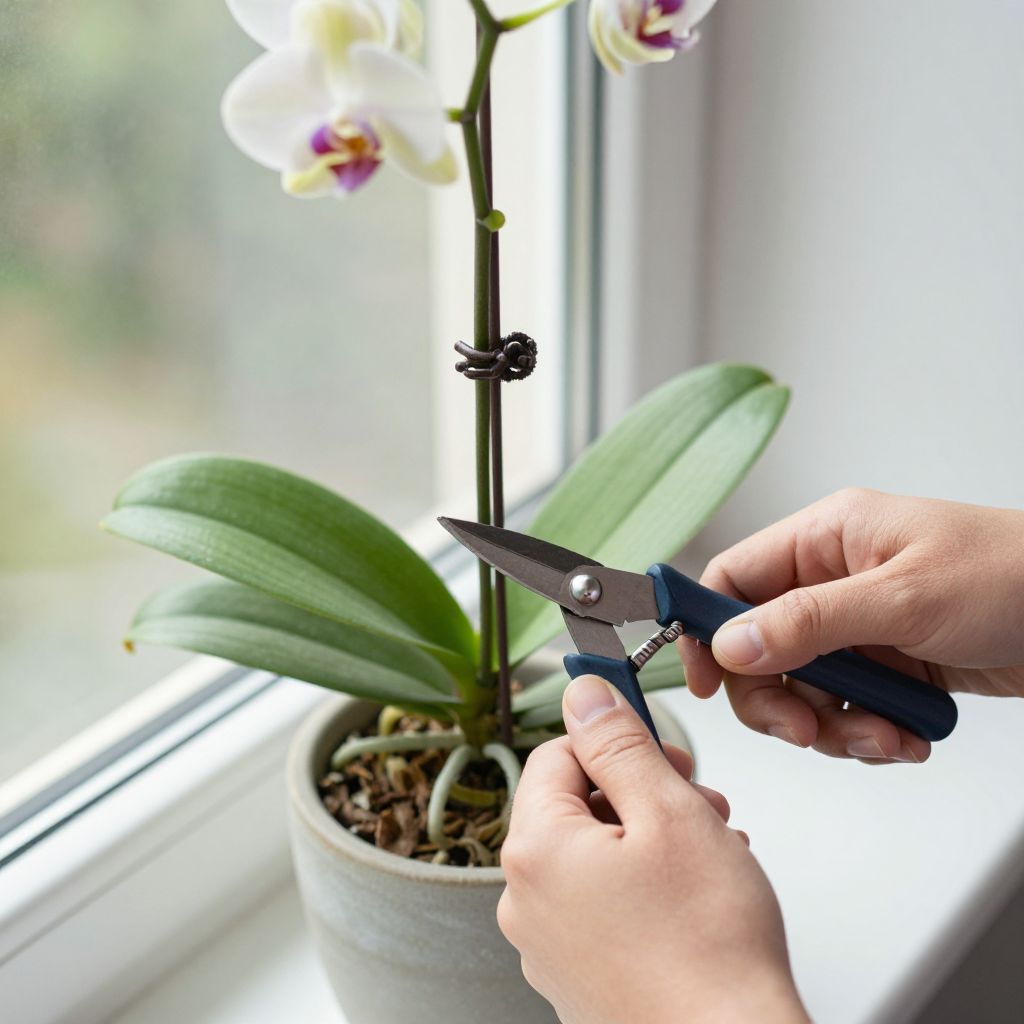
Where should you cut an orchid stem after the flowers fall off? The answer depends on whether the flower spike is still green or has turned brown. For many common orchids, a green spike can sometimes be trimmed above a node to encourage a side branch, while a brown, dried spike should be cut off near the base.
Getting this right helps the plant conserve energy and can improve future blooming. The key is to identify the orchid type, inspect the spike carefully, and make a clean cut with a sterile tool.
Where To Cut Orchid Stem After Flowers Fall Off?
If the flower spike is brown, dry, or papery, cut it off close to the base of the plant, leaving about 1/2 to 1 inch above the crown. If the spike is still green and firm, you can either leave it alone or cut it back just above a visible node, usually the second or third node from the base, depending on the orchid’s condition and your goal.
First, Identify the Type of Orchid Spike
Not every orchid should be pruned the same way. The most common houseplant orchid, Phalaenopsis (moth orchid), often responds well to selective spike pruning, but other orchids may not.
Green spike vs. brown spike
- Green spike: Still alive and may produce a side branch or a keiki in some cases.
- Brown spike: Dead tissue that will not rebloom, so it should be removed.
- Soft or yellowing spike: Often in decline; wait a few days if you are unsure, then trim once it clearly dries or browns.
Why orchid type matters
Phalaenopsis orchids commonly bloom on a long arching spike. Other orchids, such as Cattleya or Dendrobium, may bloom from different canes or pseudobulbs and need different pruning habits. If you are not sure which orchid you have, focus on the spike’s condition and avoid cutting healthy green growth unnecessarily.
How To Cut an Orchid Stem Safely
Use clean, sharp scissors, pruning snips, or a sterilized razor blade. A clean cut reduces the risk of disease and helps the plant heal faster.
- Wash your hands and sterilize the cutting tool with rubbing alcohol or a flame-safe method.
- Look at the spike from the base upward and find the nodes, which are small bumps or joints along the stem.
- If the spike is brown and dry, cut it near the base, leaving a short stub.
- If the spike is green, cut about 1/4 inch above a node if you want to try for a side bloom.
- Remove any dead, shriveled, or diseased tissue from the cut area.
Best cutting points for green spikes
On a healthy green Phalaenopsis spike, the most common pruning point is just above the second or third node from the base. This is a practical compromise: it may encourage a secondary bloom while keeping enough of the spike to support the plant.
However, if the orchid looks weak, has been stressed, or has recently finished a long bloom cycle, it is often better to cut the spike all the way back to the base so the plant can focus on roots and leaves.
When You Should Cut the Spike All the Way Back
Sometimes the best choice is a full removal rather than a partial trim. This is especially true when the orchid needs recovery more than another bloom attempt.
- The spike is completely brown and dry.
- The plant is small, weak, or has few healthy roots.
- The orchid has already bloomed for a long time and looks tired.
- You notice rot, soft tissue, or signs of disease on the spike.
Cutting the spike to the base helps redirect energy into leaf and root growth. That often leads to a stronger bloom later, even if it means waiting longer for the next flower display.
What To Do After Cutting the Orchid Stem
After pruning, keep the plant in stable conditions and avoid overhandling it. Orchids do best when their care is steady rather than dramatic.
Post-pruning care basics
- Light: Bright, indirect light is ideal for most moth orchids.
- Water: Water only when the potting mix is nearly dry, not on a fixed calendar.
- Drainage: Make sure excess water can drain freely from the pot.
- Airflow: Gentle air movement helps reduce rot and fungal problems.
- Fertilizer: Resume light feeding only if the plant is actively growing and healthy.
Do not let water sit in the crown after pruning. Standing moisture around the leaf base can lead to crown rot, which is much more serious than a poorly timed cut.
Should You Cut Back a Green Orchid Spike?
Sometimes yes, sometimes no. Leaving a green spike intact may give you a chance at a side branch or a smaller second bloom, but it also uses energy that could go into root and leaf growth.
Leave it if:
- The orchid is healthy and vigorous.
- You want to try for a possible rebloom from the same spike.
- The plant has strong roots and several firm leaves.
Cut it back if:
- The plant looks stressed or recently repotted.
- The bloom cycle was long and exhausting.
- You want the orchid to recover faster before the next flowering.
There is no single “perfect” answer for every plant. A healthy orchid can often handle a partial cut, but a struggling orchid usually benefits more from a full rest.
Common Mistakes To Avoid
Most orchid pruning problems come from cutting too much, cutting too little, or using dirty tools. A few simple habits can prevent the most common issues.
- Do not cut green leaves or roots unless they are clearly damaged.
- Do not leave a long dead stalk that can collect moisture and rot.
- Do not use dull scissors that crush the stem instead of slicing it cleanly.
- Do not seal the cut with heavy paste or glue unless you are following a specific, trusted orchid-care method.
- Do not increase watering just because the flowers are gone. The plant’s needs depend on light, temperature, potting mix, and root health.
How Orchid Growing Conditions Affect Reblooming
Pruning is only one part of getting orchids to bloom again. The plant also needs the right balance of light, temperature, and root care.
Light
Most indoor moth orchids bloom best in bright, filtered light. Too little light can delay reblooming, while harsh direct sun can scorch leaves.
Temperature
Many orchids respond to a mild drop in nighttime temperature, especially in autumn, which can help trigger flower spikes. The exact conditions vary by orchid type, so observe how your plant behaves in your home or garden space.
Potting mix
Orchids are usually grown in a chunky, airy medium rather than standard garden soil. Bark-based mixes, sphagnum moss, or blends designed for orchids help keep roots oxygenated and reduce rot.
If the mix has broken down into fine, soggy material, repotting may matter more than pruning. A tired potting mix can suffocate roots and weaken the plant even if the spike is cut correctly.
Signs Your Orchid Needs More Than Pruning
Sometimes a flower spike is only part of the story. Check the rest of the plant for signs that it needs broader care.
- Wrinkled leaves: Possible dehydration or root problems.
- Black or mushy roots: Often a sign of rot from excess moisture.
- Yellowing leaves: Can be normal aging, but may also point to stress.
- Sticky residue or tiny pests: Could indicate scale, mealybugs, or aphids.
- Foul-smelling mix: Often a sign the potting medium has broken down.
If you see pests, isolate the orchid before treating it. Healthy pruning will not solve an insect or rot problem on its own.
Can You Propagate From an Orchid Flower Spike?
Occasionally, a green Phalaenopsis spike may produce a keiki, which is a small plantlet. This is not guaranteed, and it should not be the main reason you leave a spike uncut.
If a keiki forms, let it develop roots before separating it from the parent plant. Never force propagation by cutting a weak spike into pieces and expecting it to root like a stem cutting from a typical garden plant.
Quick Guide: Best Cut Location by Spike Condition
- Brown, dry spike: Cut near the base, leaving a short stub.
- Green, healthy spike: Cut about 1/4 inch above a node if you want to try for a side branch.
- Green but weak plant: Cut to the base so the orchid can recover.
- Soft, diseased, or rotting spike: Remove damaged tissue promptly and discard it.
Conclusion
The simplest rule for where to cut orchid stem after flowers fall off is this: cut brown spikes near the base and trim green spikes just above a node only if the plant is strong enough to benefit from it. If you are unsure, prioritize plant health over forcing a second bloom.
For more orchid care help, it can also be useful to read a general guide on repotting and root care so you can support the plant after flowering.