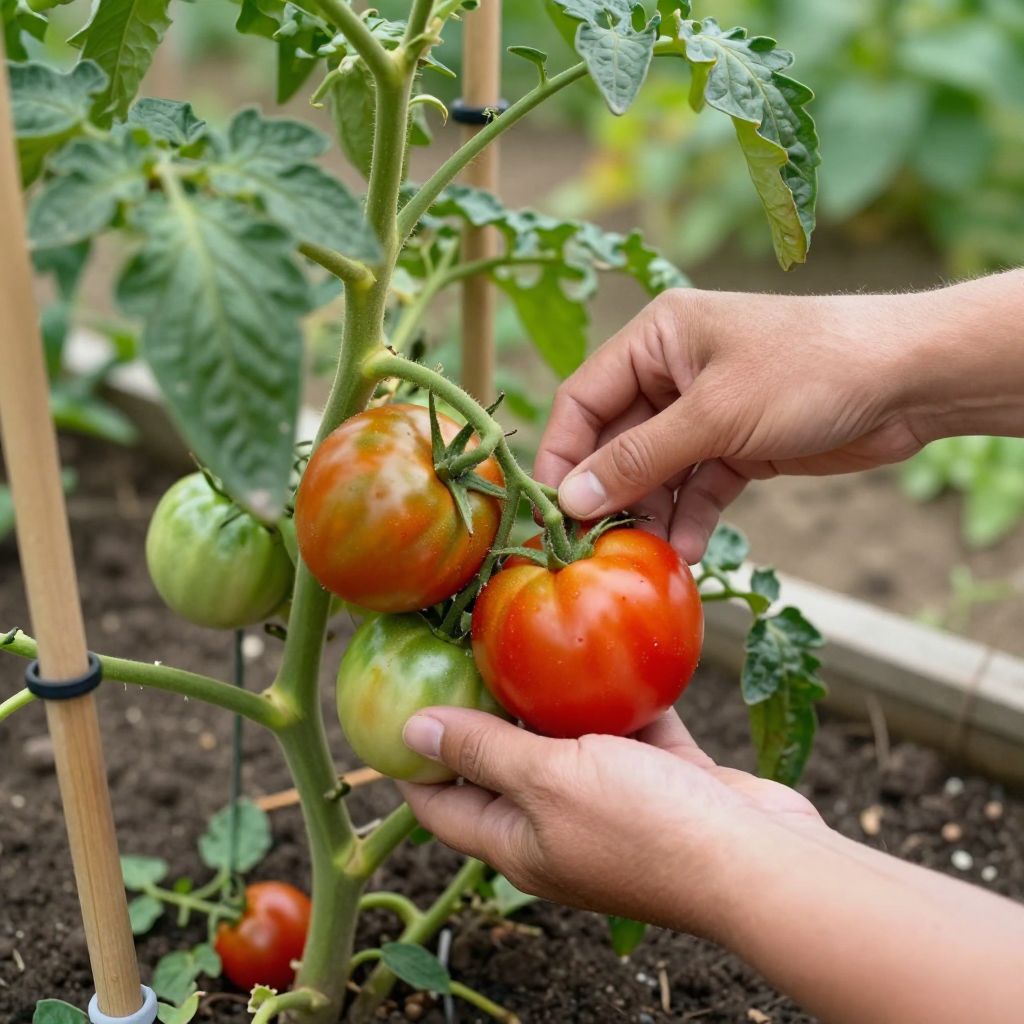
Wondering when to pick tomatoes so they taste sweet, ripen well, and don’t split or rot on the vine? The best harvest time depends on the variety, weather, and how ripe you want them to finish indoors. With a few simple checks, you can pick at the right stage for flavor, storage, and plant health.
Tomatoes are one of the easiest crops to misjudge at harvest. Pick too early and they may stay bland; wait too long and you risk pests, cracking, or overripening.
When to pick tomatoes?
Pick tomatoes when they have reached their mature color stage, feel slightly yielding to gentle pressure, and detach with a light twist or snip. For best flavor, harvest vine-ripened fruit that is fully colored but still firm enough to handle. If frost, heavy rain, or pests are coming, pick mature-green or turning tomatoes and finish ripening indoors.
How to tell tomatoes are ready to harvest
Tomatoes do not always need to be fully soft before picking. The right stage depends on whether you want immediate eating quality or longer storage and safer ripening indoors.
Visual signs of ripeness
- Color change: The fruit has shifted from green to its mature color, whether red, yellow, orange, pink, purple, or striped, depending on the variety.
- Glossy skin: Ripe tomatoes often lose the dull, hard look of immature fruit and become more vibrant.
- Full shoulders: The fruit looks plump and has filled out its shape.
- Variety-specific color: Heirloom and specialty tomatoes may ripen unevenly, so learn the expected mature color for your cultivar.
Touch and stem clues
- Gently squeeze the fruit; it should feel slightly springy, not hard as a marble and not mushy.
- A ripe tomato often releases with a small twist or a snip at the stem.
- If the fruit resists firmly, leave it longer unless weather or pests are forcing an early harvest.
Best ripeness stages for different uses
- Fully ripe on the vine: Best for fresh eating and peak flavor.
- Turning stage: Good for finishing indoors if weather is unstable.
- Mature green: Useful when you need to save fruit before frost or disease damage.
Seasonal timing: what changes through the harvest window
Tomatoes ripen over several weeks, not all at once. The season, temperature, and plant health all affect when you should pick.
Early season
At the start of harvest, fruit may ripen slowly because nights are still cool. Check plants every few days, especially once fruit begins to blush.
Peak season
When temperatures are warm and plants are producing heavily, tomatoes can move from green to ripe quickly. Pick often to reduce splitting, insect damage, and overripe fruit left on the vine.
Late season
As nights cool, ripening slows. If frost is expected, harvest fruit at the mature-green or turning stage and bring it indoors to finish ripening.
Hot weather and ripening
Very hot weather can slow color development, especially when daytime temperatures stay high and nights remain warm. Fruit may stay pale or unevenly colored even when it is physiologically mature.
In that situation, do not assume the fruit is unripe just because color is lagging. Check firmness, size, and the first signs of color change.
How to harvest tomatoes without damaging the plant
Harvesting carefully helps prevent stem breakage and keeps the plant producing. Use clean hands or clean snips, especially if disease is present in the garden.
- Check the fruit for color and firmness.
- Support the cluster or stem with one hand.
- Twist the tomato gently until it releases, or use clean pruners or scissors.
- Leave a short stem attached if possible, especially for storage.
- Place fruit in a shallow container to avoid bruising.
Do not yank tomatoes off the vine. Pulling can tear stems, damage nearby fruit, and reduce the plant’s ability to keep ripening.
Picking tomatoes at the right stage for your climate
If you garden in a short-season or cool-summer area, you may need to harvest earlier and ripen fruit indoors. In long, warm seasons, you can often leave tomatoes on the vine longer for better flavor.
Cool or short-season gardens
Watch for the first blush of color and pick fruit once it reaches the turning stage. Indoors, tomatoes can continue ripening if they are mature enough.
Warm or long-season gardens
You can usually wait for fuller vine ripening, but still harvest regularly. Leaving overripe fruit on the plant can attract pests and slow new fruit development.
Rainy periods
Heavy rain can cause cracking, especially in nearly ripe fruit. Harvest tomatoes that are close to ready before storms when possible.
How to ripen tomatoes indoors
Indoor ripening is a practical backup when weather, pests, or disease threaten the crop. It works best with fruit that is already mature, not tiny green tomatoes.
Steps for indoor ripening
- Pick fruit at the mature-green or turning stage.
- Remove damaged, cracked, or diseased tomatoes from the batch.
- Keep tomatoes at room temperature in a single layer or loosely grouped.
- Store them out of direct sun in a dry spot with good air circulation.
- Check daily and remove any fruit that softens or shows rot.
For faster ripening, place tomatoes near other ripe fruit in a paper bag or enclosed container. This can help, but avoid trapping moisture, which encourages mold.
Refrigeration is not ideal for unripe tomatoes. Cold temperatures can reduce flavor and slow the ripening process. Use the fridge only for fully ripe fruit if you need to hold it briefly.
Common mistakes when deciding when to pick tomatoes
Most harvest problems come from waiting too long, picking too early, or storing fruit incorrectly. A few simple habits can prevent disappointment.
- Picking too green: Very immature tomatoes may never develop full flavor.
- Waiting for perfect softness: Overripe fruit bruises easily and may split or attract pests.
- Ignoring weather: Frost, heavy rain, and extreme heat can all damage fruit that would otherwise ripen well.
- Leaving damaged fruit on the plant: Rotting tomatoes can invite insects and disease.
- Storing in a cold refrigerator too soon: This can dull flavor and texture.
What to do if tomatoes are not ripening
If fruit seems stuck green on the vine, the issue is often environmental rather than a lack of care. Light, temperature, and plant balance all matter.
Check these common causes
- Too much shade: Tomatoes need full sun for strong fruiting and ripening.
- Excess nitrogen: Too much leafy growth can delay fruit maturity.
- Overcrowding: Dense foliage can shade fruit and slow ripening.
- High heat or cool nights: Extreme temperatures can interrupt color development.
- Heavy crop load: A plant carrying many fruits may ripen them more slowly.
Helpful adjustments
- Remove a few excess leaves around clusters if airflow is poor, but do not strip the plant heavily.
- Harvest mature fruit regularly so the plant can focus on remaining tomatoes.
- Use balanced feeding rather than pushing leafy growth.
- Make sure plants receive consistent moisture, not drought followed by flooding.
Pests, diseases, and harvest timing
Sometimes the best time to pick tomatoes is earlier than you planned because pests or disease are already affecting the crop. Harvesting promptly can save usable fruit.
Watch for these problems
- Birds and squirrels: They often target nearly ripe fruit first.
- Insect damage: Holes, feeding marks, or soft spots can spread quickly.
- Blight and rot: Diseased fruit should be removed and discarded, not left on the vine.
- Cracking and splitting: Usually caused by uneven watering or sudden rain after dry weather.
If fruit shows only minor cosmetic damage, harvest it early and use it soon. If it has rot or mold, discard it to protect the rest of the crop.
How often should you check tomatoes?
During peak season, inspect plants every one to three days. In hot weather or when fruit is changing color quickly, daily checks are even better.
Frequent harvesting helps you catch fruit at the best stage and reduces losses from overripening, cracking, and wildlife damage.
Quick harvest checklist
- Has the fruit reached its mature color stage?
- Does it feel slightly soft, but not mushy?
- Is the weather about to turn hot, cold, wet, or frosty?
- Are pests, birds, or disease starting to affect the crop?
- Do you want to eat it now or finish ripening it indoors?
Conclusion
When to pick tomatoes comes down to mature color, gentle firmness, and the weather around your garden. Harvest often, handle fruit carefully, and bring in nearly ripe tomatoes before frost or storms if needed. If you want more success next season, review your tomato care and harvest habits now so you can time picking even better next year.
For more practical tomato growing help, you may also want to read about how to prune tomato plants and common tomato diseases and how to prevent them.