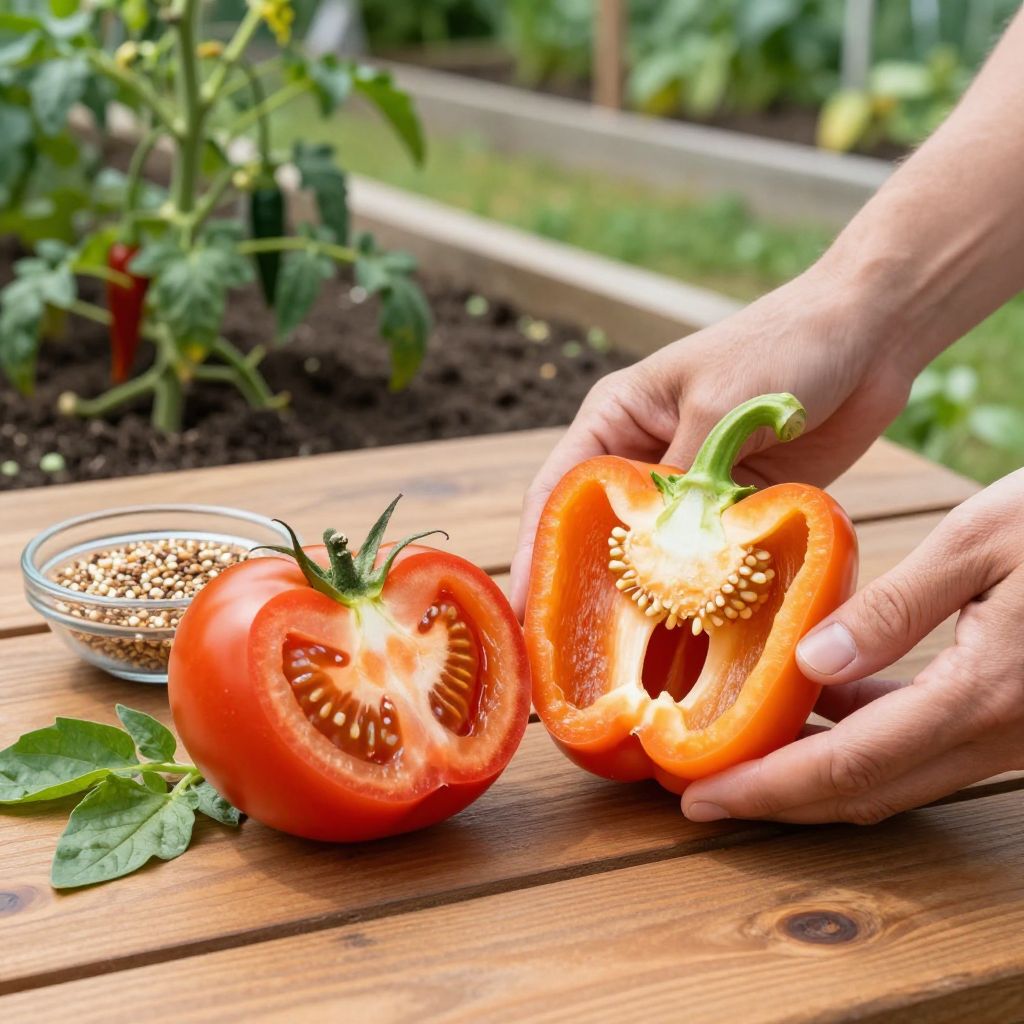
You’re probably asking this because you’ve found a vegetable with seeds inside and wondered whether all vegetables work that way. The short answer is: many do, but not all vegetables are “seeded” in the same sense, and some edible parts are actually roots, stems, leaves, or flower buds.
Understanding where the seeds are helps you harvest at the right time, save seed from open-pollinated plants, and avoid common growing mistakes. It also tells you whether a vegetable is best started from seed, transplants, tubers, sets, or cuttings.
Do vegetables have seeds?
Many vegetables do have seeds, especially fruits like tomatoes, peppers, cucumbers, squash, beans, and peas. But some vegetables are grown for roots, leaves, stems, or flower parts, so the edible portion may contain few seeds or none at all. In gardening, “vegetable” describes the crop you eat, not one plant part.
Which vegetables have seeds, and where are they?
In seed-bearing vegetables, the seeds are usually inside a fruit or pod, or attached to the flowering structure. If you let these crops mature fully, the seeds develop for reproduction. If you harvest earlier for eating, the seeds may be soft, immature, or barely noticeable.
Common vegetables with seeds inside the edible part
- Tomatoes – seeds are inside the fleshy fruit.
- Peppers – seeds are attached to the inner core.
- Cucumbers – seeds form in the center as the fruit matures.
- Squash and pumpkins – seeds are inside the cavity.
- Beans and peas – seeds are the edible beans or peas themselves.
- Eggplant – mature fruits contain many small seeds.
Vegetables that usually do not have noticeable seeds in the part you eat
- Leaf crops such as lettuce, spinach, kale, and chard.
- Roots such as carrots, beets, radishes, and turnips.
- Stems and shoots such as celery, asparagus, and rhubarb stalks.
- Flower parts such as broccoli and cauliflower.
- Bulbs such as onions and garlic.
Even these crops still produce seeds somewhere on the plant if they are allowed to flower. The edible part just isn’t the seed-bearing structure.
Why some vegetables seem seedless
Some vegetables are harvested before seeds fully form, which is why they seem seedless or nearly seedless. Others are bred to have fewer seeds, softer seeds, or seedless fruit under certain conditions. In most home gardens, though, the “seedless” effect is usually just a matter of harvest stage.
Harvest stage matters
Younger fruits and pods are often eaten before the seeds mature. For example, green beans are picked when pods are tender, while dry beans are left to mature until the seeds harden.
The same idea applies to cucumbers and summer squash. If you leave them on the plant too long, the seeds get larger and the flesh can become tough, watery, or bitter.
Some crops are naturally bred for fewer seeds
Seedless grapes and some seedless fruits are common in fruit gardening, but most vegetables are not truly seedless in the same way. In home vegetable gardening, you’ll usually deal with normal seed development rather than completely seedless forms.
How vegetable seeds affect planting and propagation
If a vegetable has seeds, you can often grow it from seed rather than buying transplants. That makes seed-saving, succession planting, and variety selection easier. But not every vegetable is best started this way, and some are more reliable from sets, slips, crowns, or divisions.
Best ways to start common vegetables
- Direct sow outdoors: beans, peas, carrots, radishes, beets, corn, many greens.
- Start indoors, then transplant: tomatoes, peppers, eggplant, broccoli, cabbage.
- Plant sets or bulbs: onions, garlic, shallots.
- Use tubers, crowns, or slips: potatoes, asparagus crowns, sweet potato slips.
- Use divisions or crowns: rhubarb and some perennial vegetables.
Knowing whether a vegetable has seeds helps you choose the right propagation method. For example, carrots are grown from seed because the root is the harvestable part, while potatoes are planted from seed pieces or tubers, not from true botanical seed in most gardens.
How to save seed from vegetables
If you want to collect seed from your garden, choose healthy, open-pollinated plants and let the crop fully mature. Hybrid plants may grow fine, but their saved seed often won’t produce plants identical to the parent. That matters if you want predictable flavor, shape, or ripening time.
Basic seed-saving steps
- Choose the healthiest, best-performing plant.
- Let the fruit, pod, or flower head mature fully on the plant.
- Harvest when seeds are hard, dry, or fully developed.
- Clean the seed and remove pulp or chaff.
- Dry thoroughly in a cool, airy place.
- Store in a labeled envelope or jar in a dry location.
For wet-seeded crops like tomatoes and cucumbers, the seeds usually need rinsing and drying after extraction. For dry-seeded crops like beans and peas, you can often shell them once the pods are crisp and dry.
Important seed-saving caution
Cross-pollination can change the offspring. This is especially important with squash, pumpkins, and some brassicas. If you are saving seed from these crops, keep in mind that nearby varieties may cross and produce unexpected results.
Growing vegetables for good seed development
If your goal is to harvest seed, the plant needs enough time, sunlight, water, and nutrition to flower and mature properly. A stressed plant may produce fewer flowers, poor pollination, or underdeveloped seed. Good seed starts with good plant health.
Growing conditions that support seed formation
- Sunlight: Most fruiting and seed-producing vegetables need full sun, usually 6 to 8 hours or more.
- Soil: Use fertile, well-drained soil enriched with compost.
- Water: Keep moisture even, especially during flowering and fruit set.
- Drainage: Avoid waterlogged beds, which can reduce root health and flowering.
- Pollination: Some crops need insects or wind to move pollen.
Compost is especially useful because it improves soil structure and supports steady growth without forcing the plant into weak, leafy growth. If your soil is heavy clay, raised beds or added organic matter can improve drainage and make seed crops perform better.
Common problems when vegetables do not form seeds well
When a vegetable fails to produce seed, the issue is often environmental rather than genetic. Heat, cold, poor pollination, nutrient imbalance, or harvesting too early can all interfere with seed development. The fix depends on the crop and the stage of growth.
Typical problems and practical fixes
- Poor pollination – Hand-pollinate flowers if bees are scarce, or plant pollinator-friendly flowers nearby.
- Too much shade – Move the crop to a sunnier site or thin nearby plants.
- Inconsistent watering – Water deeply and regularly so the plant doesn’t abort flowers or fruit.
- Excess nitrogen – Too much leafy growth can reduce flowering; use balanced compost-based feeding instead of overfertilizing.
- Harvested too early – Leave seed crops on the plant until seeds are mature and dry enough for the crop type.
For fruiting vegetables like tomatoes and peppers, blossom drop can happen when temperatures are too high or too low for pollination. For beans and peas, poor pod fill may point to heat stress, drought, or pest damage.
How to tell when vegetable seeds are mature
Seed maturity varies by crop, but the general rule is that mature seed looks full, firm, and dry. If you squeeze a seed and it dents easily, it is probably not ready. For wet fruits, the surrounding flesh may also change color and soften as the seeds mature.
Signs of mature seed by crop type
- Beans and peas: pods turn dry, papery, and brittle.
- Tomatoes: fruit is fully ripe, and seeds are gel-coated and developed.
- Peppers: fruit is fully colored and seeds are cream to tan and firm.
- Cucumbers and squash: fruit is overripe for eating and seeds are hard.
- Greens and brassicas: seed pods or seed heads dry on the plant.
If you are saving seed for next season, patience matters. Harvesting too soon is one of the most common reasons gardeners end up with weak germination later.
Should you eat vegetables after seeds form?
Yes, but quality changes by crop. Some vegetables become less tender, more fibrous, or less flavorful once seeds mature. Others are still useful for cooking even when overmature. Knowing the crop helps you decide whether to eat it, compost it, or save seed from it.
What happens as seeds develop
- Cucumbers and zucchini can become large, seedy, and tough.
- Beans can be eaten young as pods or left to dry for shelling beans.
- Peas can be harvested young for sweetness or mature for dry peas.
- Tomatoes usually stay usable, though texture and flavor vary with ripeness.
If a crop is past its best eating stage, you do not necessarily need to throw it away. You may be able to use it for seed saving, composting, or as a sign to harvest earlier next time.
Practical mistakes to avoid
Many seed-related gardening problems come from timing and variety choice. A few simple habits can save you frustration and improve both harvest quality and seed viability.
- Do not assume every vegetable is grown from the same type of seed or plant part.
- Do not save seed from diseased, weak, or poor-performing plants.
- Do not let wet seed sit in storage before drying.
- Do not harvest seed crops too early just because the fruit looks large enough to eat.
- Do not ignore pollination needs for fruiting vegetables.
Conclusion: use the seed to guide your gardening
So, do vegetables have seeds? Many do, but not all vegetables are grown for seed-bearing parts, and some are harvested long before the seeds fully mature. Once you know which type you’re growing, you can plant, harvest, and save seed more successfully.
Next time you garden, check whether your crop is a fruit, root, leaf, stem, or flower part, then adjust your care and harvest timing accordingly. For related vegetable-growing guidance, you may also find vegetable growing advice and home vegetable gardening resources helpful.