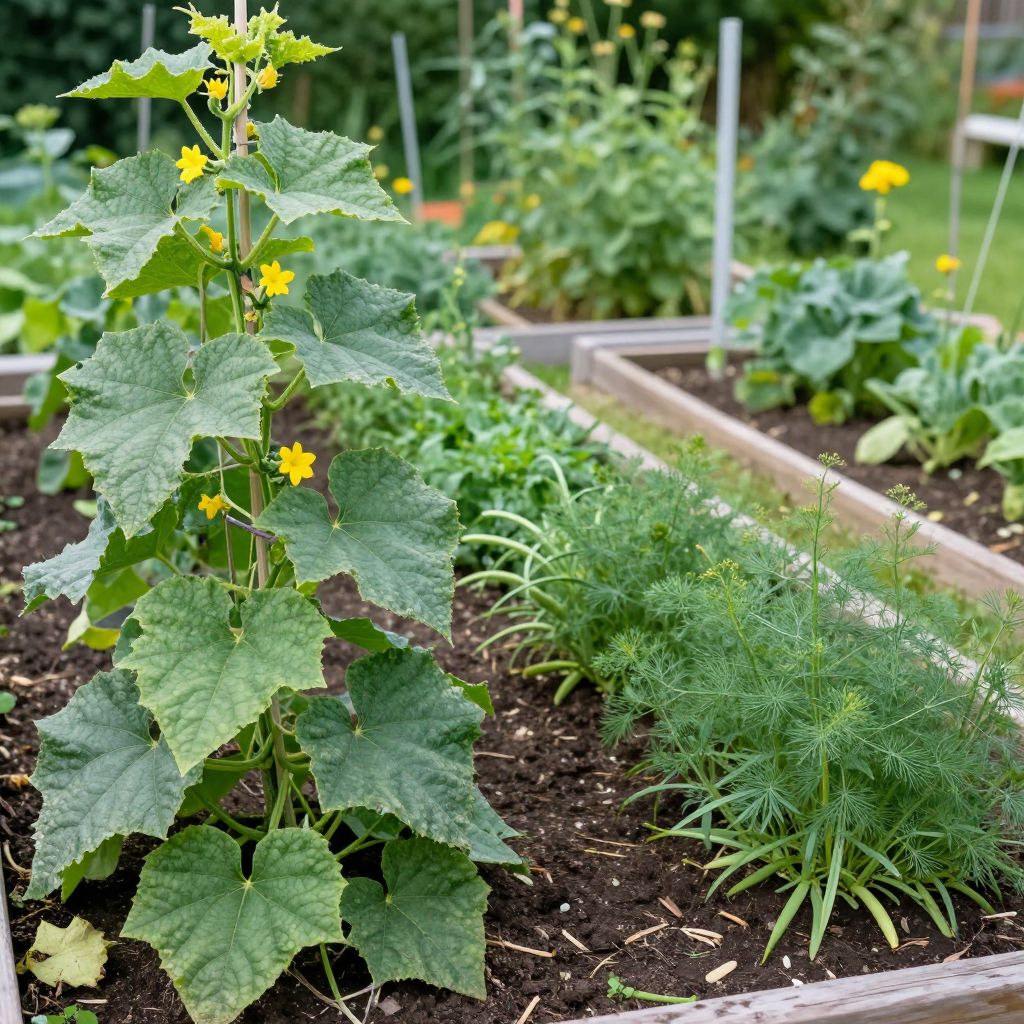
Wondering what to plant with cucumbers so they grow well and make the most of your garden space? Companion planting can help you use sunlight, shade, and soil more efficiently while supporting pollinators and confusing some pests.
The best companions for cucumbers are plants that share similar growing needs or help the vines indirectly, such as beans, dill, nasturtiums, radishes, lettuce, and marigolds. Avoid pairing cucumbers too closely with plants that compete heavily for space, light, or water, and always leave enough airflow to reduce disease.
What to plant with cucumbers?
Plant cucumbers with crops that enjoy warm weather, similar moisture, and moderate feeding, such as bush beans, peas early in the season, lettuce, radishes, dill, borage, nasturtiums, and marigolds. These companions can improve space use, attract beneficial insects, or act as living mulch, while keeping the cucumber bed productive and easier to manage.
Best companion plants for cucumbers
Beans and peas
Beans are one of the most useful companions for cucumbers because both like full sun and well-drained soil. Bush beans are usually easier to manage near cucumber rows than pole beans, which can create too much competition and shade.
Peas can be a good early-season companion in cooler climates, but they often finish before cucumbers reach their peak growth. That makes them a useful spring crop in the same bed if you plan the timing carefully.
Lettuce and leafy greens
Lettuce, spinach, and similar greens work well near cucumbers because they grow quickly and appreciate partial shade once summer heat arrives. Cucumber vines can help protect these tender crops from intense afternoon sun in warmer regions.
These greens are best planted at the edge of the cucumber bed or between young plants before the vines spread. Harvest them early so they do not become crowded.
Radishes
Radishes mature quickly and can be tucked into open spaces before cucumber vines take over. They are especially useful as a short-term filler crop while cucumbers are still small.
Because radishes are harvested fast, they do not usually compete heavily with cucumbers for long. Sow them in small patches rather than dense blocks if your cucumber plants are vigorous.
Dill and other insect-friendly herbs
Dill is a classic cucumber companion because its flowers attract beneficial insects such as hoverflies and parasitic wasps. Those insects can help keep aphids and other small pests in check.
Let some dill bloom if you want the pollinator benefit, but do not let it crowd young cucumber plants. A few well-spaced plants are usually enough.
Nasturtiums
Nasturtiums are often planted near cucumbers because they trail along the ground, fill empty spaces, and can attract aphids away from more valuable crops. They also add color to the garden edge.
Use them as a border or at the corners of a bed, not right on top of cucumber crowns. Good airflow still matters more than dense ground cover.
Marigolds
Marigolds are a popular companion for many vegetables, including cucumbers, because they can help support a diverse planting scheme and attract beneficial insects. They are not a cure-all for pests, but they are a practical, low-maintenance addition.
Choose compact types for small beds so they do not shade cucumber seedlings. Keep them outside the main vine path.
Borage
Borage is valued for attracting pollinators, especially when cucumbers are flowering heavily. More pollinator visits can mean better fruit set in gardens where bee activity is limited.
Because borage can grow large, give it room at the edge of the bed rather than between cucumber plants. It is best used as a support plant, not a filler in tight spaces.
Plants to avoid near cucumbers
Not every plant belongs beside cucumbers. The main problems are competition, shading, and disease pressure, especially in crowded beds where airflow is poor.
- Potatoes and other heavy feeders can compete strongly for nutrients and moisture.
- Strongly sprawling crops can tangle with cucumber vines and make harvesting difficult.
- Plants that create dense shade can reduce cucumber growth and flowering.
- Anything that encourages poor airflow can increase mildew and leaf disease.
In a small garden, the biggest mistake is planting too many companions too close together. Cucumbers need space to breathe, especially once the leaves are full-sized.
How to arrange companion plants around cucumbers
Use the edges first
The safest place for companion plants is usually the border of the bed or the outer row. That keeps the cucumber root zone open and makes it easier to weed, water, and harvest.
If you are growing cucumbers on a trellis, you can use the space beneath and beside the support more efficiently. If they are allowed to sprawl, leave even more room around them.
Match plant size to cucumber growth
Small plants such as radishes and lettuce can fit in the early season before cucumber vines spread. Larger companions like borage should be placed where they will not shade the cucumbers or block access.
A simple rule: if the companion plant will be hard to reach once the cucumbers grow, it is probably too close.
Leave room for airflow
Cucumbers are prone to fungal problems when leaves stay damp and crowded. Good spacing is one of the most effective ways to reduce powdery mildew and other leaf issues.
Even when companion planting, keep enough open space that you can see soil between plants and move air through the bed.
Growing conditions cucumbers and companions share
Most good cucumber companions prefer the same basic conditions: full sun, fertile soil, and steady moisture without waterlogging. That makes bed planning easier, because you do not need to create separate zones for each crop.
- Sunlight: Aim for at least 6 to 8 hours of direct sun for cucumbers and sun-loving companions.
- Soil: Loose, rich soil with plenty of organic matter works best.
- Drainage: Soil should drain well so roots do not sit in water.
- Moisture: Keep the bed evenly moist, especially during flowering and fruiting.
Before planting, work in compost to improve soil structure and water retention. If your soil is heavy clay, raised beds or mounded rows can help prevent soggy roots.
Planting cucumbers with companions step by step
- Choose the main cucumber layout. Decide whether you will grow cucumbers on a trellis or let them sprawl.
- Prepare the soil. Add compost and remove weeds so young plants do not compete immediately.
- Plant taller or longer-season crops first. If using beans or borage, place them where they will not crowd the cucumber row.
- Fill gaps with quick crops. Sow radishes or lettuce in open spaces while cucumbers are still small.
- Mulch lightly once seedlings are established. Mulch helps conserve moisture and suppress weeds, but keep it away from stems.
- Monitor growth weekly. Thin crowded seedlings, redirect vines, and remove any plant that starts blocking airflow.
Watering, feeding, and care in mixed plantings
Cucumbers and their companions generally do best with consistent moisture. Irregular watering can lead to bitter fruit, stressed plants, and poor yields, especially in hot weather.
Water at the base of the plants rather than overhead when possible. This helps keep leaves drier and lowers disease risk in mixed beds.
Feeding without overdoing it
Cucumbers like fertile soil, but too much nitrogen can produce lots of leaves and fewer fruits. If you add compost before planting, that is often enough for a home garden bed.
If the plants look pale or growth stalls, use a balanced, gentle feeding approach based on your soil and local conditions rather than a fixed schedule. Companion crops such as lettuce and radishes usually need less feeding than cucumbers.
Pests and diseases in companion-planted cucumber beds
Companion planting can help, but it does not replace basic pest management. Watch for cucumber beetles, aphids, powdery mildew, and downy mildew, especially in warm, humid weather.
- Cucumber beetles: Use row covers early in the season if pollination is not yet needed, then remove them when flowers open.
- Aphids: Encourage beneficial insects with dill, marigolds, or borage, and rinse small infestations off with water.
- Powdery mildew: Improve spacing, water at soil level, and remove badly affected leaves.
- Root stress: Avoid soggy soil and do not let companion plants crowd the cucumber crown.
If disease pressure is high in your area, prioritize airflow over dense companion planting. A slightly less crowded bed is usually healthier than an overly full one.
Container growing: what works with cucumbers in pots
If you are growing cucumbers in containers, choose compact companions carefully. A large pot can support one cucumber plant plus a small border crop, but overcrowding happens quickly.
Good container companions include lettuce, radishes, and a small marigold or nasturtium at the edge of a very large pot. Avoid trying to pack multiple large plants into one container, because root competition becomes severe fast.
Use a container with excellent drainage and rich potting mix. In pots, companion planting should enhance the space, not force plants to compete for every inch of moisture and nutrients.
Common mistakes to avoid
- Planting companions too close to the cucumber crown.
- Using tall or sprawling companions that shade the vines.
- Ignoring airflow and creating a humid tangle of leaves.
- Mixing too many crops with different water needs in one bed.
- Forgetting that cucumbers need room to harvest easily.
When in doubt, plant fewer companions and give the cucumbers more space. Healthy vines usually produce better than crowded ones.
Conclusion
If you are deciding what to plant with cucumbers, start with simple, compatible companions like beans, lettuce, radishes, dill, nasturtiums, marigolds, or borage. Arrange them around the edges, keep the bed airy, and match your choices to your local climate and garden size. For more practical vegetable-growing guidance, you may also want to read about how to grow beans and companion planting basics.