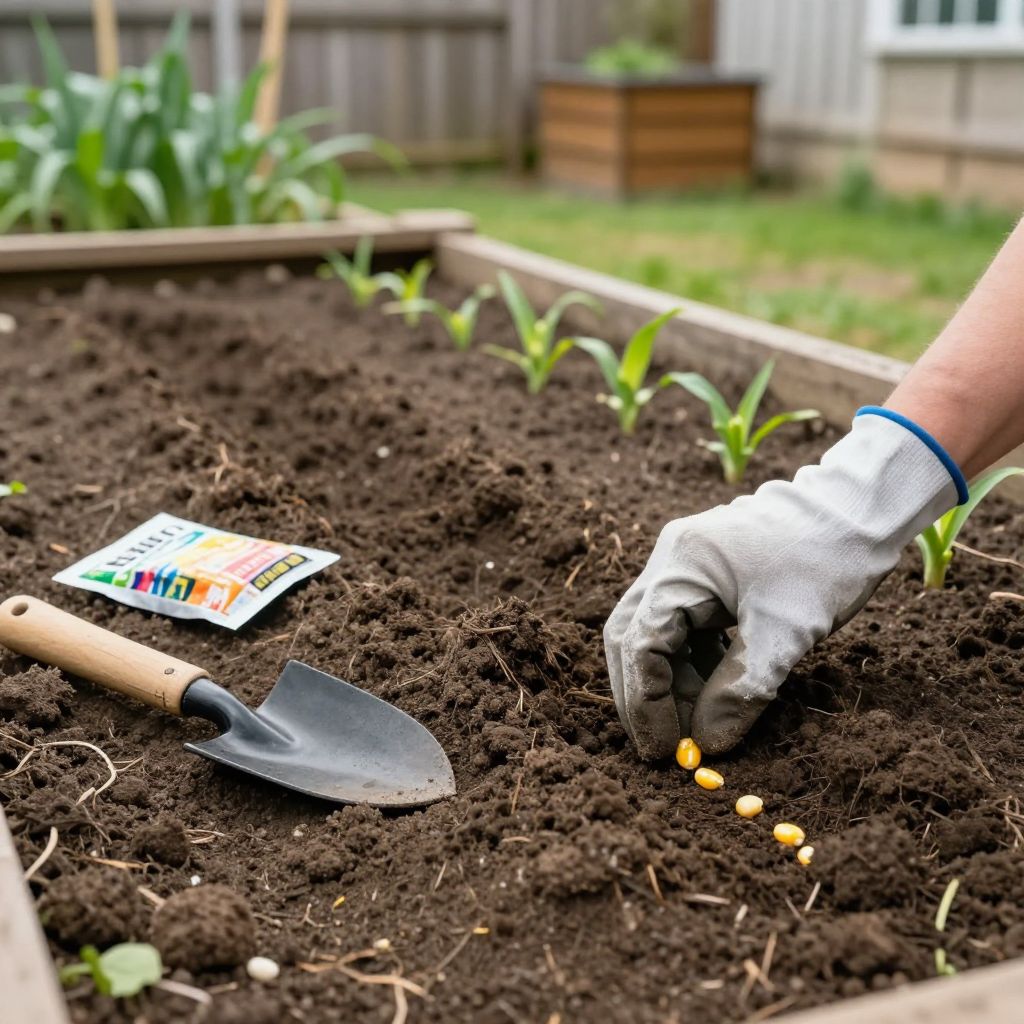
Wondering when to plant corn so it grows fast, fills out well, and tastes sweet at harvest? Timing matters because corn is sensitive to cold soil and slow starts. Plant too early and seeds may rot or stall; plant too late and hot, dry weather can reduce pollination and ear fill.
The best planting time depends on your local frost dates and soil temperature, not just the calendar. Once you know what corn needs, you can sow it at the right moment and give it the warm, fertile conditions it prefers.
When to plant corn?
Plant corn outdoors after the danger of frost has passed and when soil temperature is at least 60°F, with 65–70°F being even better for quick germination. In many gardens, that means late spring. Corn grows best in full sun, warm soil, and steadily moist, fertile ground.
Why timing matters for corn
Corn (Zea mays) is a warm-season crop. It germinates slowly in cold soil, and seedlings can be damaged by frost or chilly nights.
If you plant too early, the seed may sit in the ground and rot, or emerge weakly. If you plant too late, summer heat and drought can interfere with pollination, which affects ear development.
Soil temperature is more important than the date
Use a soil thermometer if you can. Check the top 2 to 4 inches of soil in the morning for several days in a row.
- 60°F: Minimum for planting corn
- 65–70°F: Better for faster, more even germination
- Cold, wet soil: Higher risk of poor emergence and seed rot
How to choose the right planting window
Your best planting window is usually after your average last frost date, once the soil has warmed and the weather is settling into spring. In cool climates, that may be late spring or even early summer. In warm climates, corn may be planted much earlier.
Because location matters so much, use local frost-date information, then adjust for your actual garden conditions. A sheltered, south-facing bed may warm sooner than a low, shaded spot.
Signs the garden is ready
- Soil feels warm, not just air temperatures
- Night temperatures are staying consistently mild
- The bed drains well after rain
- You can work the soil without it clumping heavily
How to plant corn for the best start
Corn is usually direct-sown outdoors because it dislikes root disturbance. Transplanting is possible, but direct sowing is simpler and often more reliable for home gardeners.
- Prepare a sunny bed with loose, fertile soil.
- Work in compost if the soil is poor or compacted.
- Sow seeds about 1 to 1½ inches deep.
- Space seeds 6 to 12 inches apart in blocks or short rows.
- Water thoroughly after planting.
Plant corn in blocks, not one long single row, whenever possible. Corn is wind-pollinated, and block planting improves pollination and ear fill.
Row and spacing basics
Exact spacing depends on variety and your garden layout, but a practical home-garden approach is to grow several short rows side by side rather than one long row alone. Keep rows close enough for pollination, but leave enough room to weed and water.
Soil, compost, and drainage needs
Corn is a heavy feeder. It performs best in fertile soil with plenty of organic matter and good drainage.
- Soil type: Loose, moisture-retentive, well-drained soil
- pH: Slightly acidic to neutral is generally suitable
- Organic matter: Compost helps improve both fertility and moisture-holding capacity
If your soil is sandy, compost helps it hold water and nutrients. If it is heavy clay, compost improves structure and drainage. Avoid planting in waterlogged ground, which can stunt roots and increase disease pressure.
When to add compost
Mix compost into the bed before planting, or top-dress established plants if needed. Fresh manure is not a good substitute unless it has been fully composted, because it can burn seedlings and create excess nitrogen imbalance.
Watering corn after planting
Corn needs steady moisture from germination through ear development. Uneven watering can lead to patchy stands, poor pollination, and small ears.
Water deeply after sowing, then keep the soil evenly moist while seeds germinate. Once plants are growing, aim for consistent moisture rather than alternating drought and flooding.
What to watch for
- Dry topsoil and slow emergence
- Leaf curling during hot afternoons
- Wilting during tasseling and silking
- Cracked soil around young plants
If your area gets dry spells, mulch lightly after seedlings are established to help conserve moisture. Keep mulch a little away from the stems so air can circulate.
Sunlight and temperature requirements
Corn needs full sun, meaning at least 6 to 8 hours of direct light daily. More sun generally means better growth and stronger pollination.
Warm weather helps corn grow rapidly, but extreme heat combined with drought can reduce pollen viability and interfere with silk development. If your summers are very hot, consistent watering becomes especially important.
Should you start corn indoors?
You can start corn indoors in biodegradable pots or cell packs, but it is usually not necessary for home gardens. Direct sowing is often easier because corn grows quickly and does not like root disturbance.
If you do start indoors, transplant carefully and move seedlings out while they are still young. Harden them off gradually so they adjust to outdoor light and temperature.
When indoor starts make sense
- Your spring is short and cool
- You want a small head start in a cold region
- Soil stays cold long after frost has passed
Even then, avoid letting seedlings become rootbound. Corn that is too mature in small pots often transplants poorly.
Common mistakes when planting corn
Most corn problems start at planting time. A few simple mistakes can reduce stand quality and harvest size.
- Planting too early: Cold soil slows germination and may rot seed
- Planting in a single row: Poor pollination can mean missing kernels
- Letting soil dry out: Uneven moisture weakens growth
- Using poor soil: Corn needs fertility to perform well
- Overcrowding: Plants compete for light, water, and nutrients
Pests and diseases to watch for
Healthy timing and good spacing help reduce many corn problems, but it is still worth checking plants regularly.
Common pest issues
- Birds digging up seed or pulling seedlings
- Cutworms clipping young plants
- Corn earworms later in the season
Use row cover early if birds or insects are a problem, but remove it before tasseling so pollination can happen. Keep the bed weed-free, since weeds compete for water and can shelter pests.
Common disease issues
- Seed rot in cold, wet soil
- Fungal leaf spots in crowded, humid plantings
- Stunted growth from poor drainage or nutrient stress
Good airflow, proper spacing, and rotating corn to a different bed each year can help reduce disease pressure.
How to know when corn is ready to harvest
Harvest timing matters almost as much as planting timing. Sweet corn is usually picked when the silks have turned brown and dry, the ears feel full, and a pierced kernel releases a milky liquid.
Pick promptly once it reaches peak ripeness. Corn can lose sweetness quickly after harvest, especially in warm weather.
Harvest tips
- Check ears regularly as they near maturity
- Harvest in the cool part of the day if possible
- Use a twisting motion to remove ears cleanly
Simple seasonal planning guide
Instead of relying on a fixed date, use this approach:
- Find your average last frost date.
- Wait until soil is at least 60°F.
- Make sure the bed is sunny and drains well.
- Direct sow in blocks for better pollination.
- Keep moisture steady through germination and flowering.
This method works better than guessing, because corn responds strongly to local weather and soil conditions.
Conclusion
The best answer to when to plant corn is simple: sow it after frost when the soil is warm enough, then give it full sun, fertile soil, and consistent moisture. If you time planting well and grow corn in blocks, you give your crop the best chance to pollinate and fill out properly.
For more seasonal growing help, you may also want to read related guides on how to grow corn and vegetable garden soil preparation.