Wondering when to harvest cucumbers so they taste crisp instead of bitter, seedy, or overripe? The best picking time depends on the cucumber type, variety, and what you want to use them for, but most are best harvested young and tender before the skin hardens and seeds enlarge.
If you wait too long, cucumbers often become dull, yellow, and watery. If you pick too early, they may be small but still perfectly usable, especially for pickling or very tender slicing.
When to harvest cucumbers?
Harvest cucumbers when they reach the size recommended for their variety and still feel firm, smooth, and evenly colored. Most slicing cucumbers are best at 6 to 8 inches long, while pickling types are usually picked at 2 to 4 inches. Check plants every day or two, because cucumbers can size up very quickly in warm weather.
How to tell cucumbers are ready to pick
Look at size, color, and skin texture
Size is the easiest clue, but it should be paired with appearance. A ripe cucumber for harvest is usually uniformly green, firm, and glossy, with skin that has not turned dull or yellow.
- Firmness: The fruit should feel solid, not soft or spongy.
- Color: Deep, even green is usually ideal for most garden cucumbers.
- Seeds: Smaller, undeveloped seeds mean better texture and flavor.
- Skin: If the skin feels tough or waxy, the cucumber may be overmature.
Check the plant’s growth stage
Cucumbers are usually ready to harvest soon after flowering, once fruits size up rapidly. In warm conditions, fruit can go from perfect to oversized in just a few days, so frequent checking matters more than a calendar date.
Use your fingertips, not just your eyes
Gently press the cucumber. A good harvest cucumber should feel crisp and springy, not soft. If it bends easily or the blossom end looks wrinkled, it is likely past peak quality.
Harvesting time by cucumber type
Slicing cucumbers
Slicing cucumbers are generally harvested when they are medium-sized and still tender, often around 6 to 8 inches long, depending on the variety. Some types are best a little smaller, so the seed packet or plant tag is worth checking.
Pickling cucumbers
Pickling cucumbers are usually picked smaller, often 2 to 4 inches long. If they get too large, they can become seedy and less crisp, which makes them less ideal for pickles.
Burpless and specialty types
Some burpless or specialty cucumbers are bred to stay tender at larger sizes, but they still taste best when harvested before the skin toughens. When in doubt, pick one and taste it. Flavor and texture are the final test.
Why timing matters for flavor and texture
Harvesting at the right time keeps cucumbers crisp, mild, and less bitter. Overripe cucumbers often develop larger seeds, thicker skin, and a more watery or bland texture. They can also slow the plant down if left on the vine too long.
Regular picking encourages more fruit production. If you leave mature cucumbers on the plant, it often signals the vine to slow down and shift energy toward seed production instead of making new fruit.
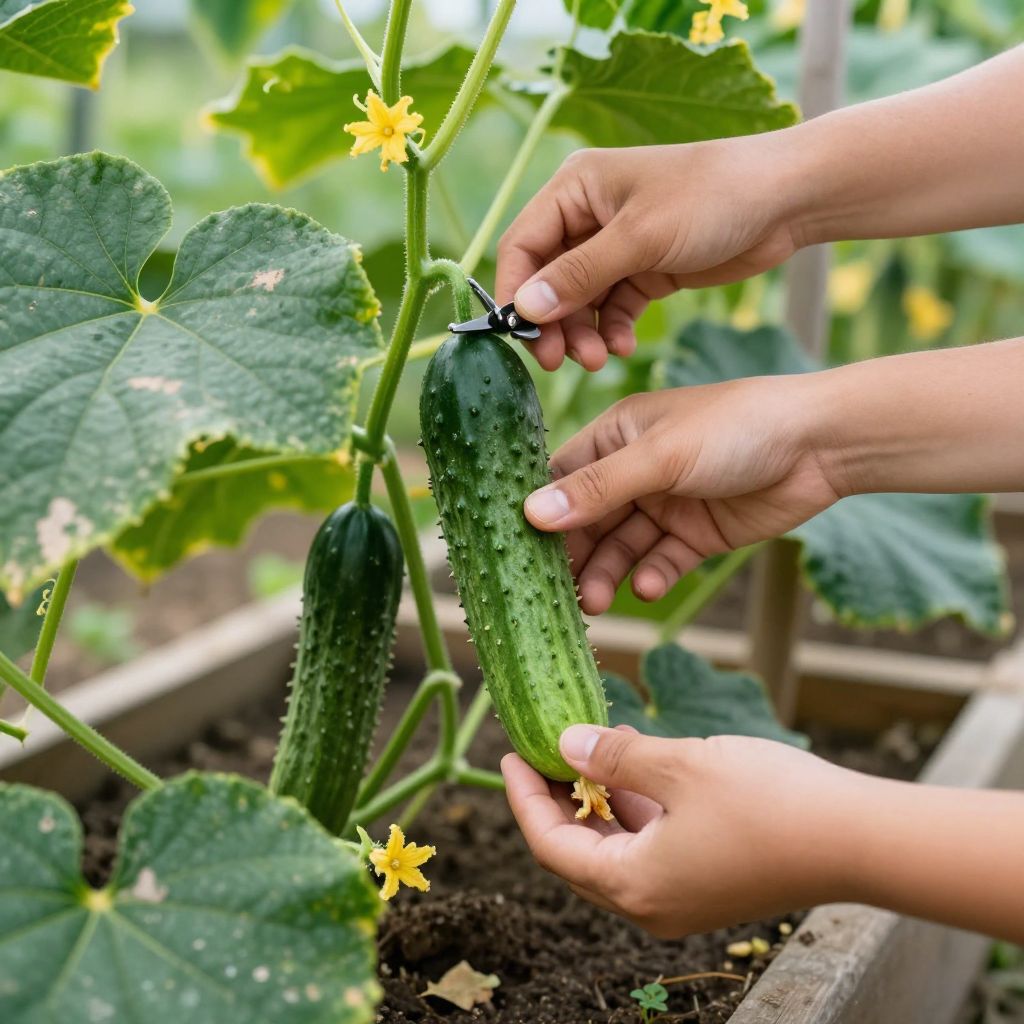
How to harvest cucumbers correctly
- Check vines early in the day if possible, when fruits are cool and firm.
- Choose cucumbers that match the right size and color for the variety.
- Hold the fruit gently with one hand to support the vine.
- Cut the stem with clean scissors, pruners, or a knife, leaving a short stem attached.
- Place harvested cucumbers in a shaded basket or container right away.
Do not twist or yank cucumbers off the vine. Pulling can damage stems, tear the plant, or break nearby fruit and flowers.
Best tools for harvesting
Use clean, sharp pruners, garden snips, or a small knife. Clean tools reduce the chance of spreading disease between plants, especially if you are harvesting frequently.
How often should you harvest?
During peak season, check plants every day or every other day. In hot weather, cucumbers can grow very quickly, and a fruit that looked perfect yesterday may be oversized today.
If your plants are producing heavily, frequent harvesting also helps prevent misshapen fruit and keeps the vine productive longer.
What happens if you harvest too late?
Common signs of overripe cucumbers
- Fruit turns yellow or pale
- Skin becomes tough, thick, or dull
- Seeds become large and hard
- Flavor turns bitter or bland
- The cucumber feels swollen or puffy
Overripe cucumbers are still usable in some cases, especially for seed saving, but they are usually not at their best for fresh eating. If the fruit is yellowing, remove it promptly so the plant can keep producing.
What if cucumbers are small but flowering well?
Small fruit can happen for several reasons, including poor pollination, heat stress, inconsistent watering, or nutrient imbalance. If the plant is flowering but fruit is not sizing up, check moisture, sunlight, and pollinator activity before assuming harvest time has arrived.
Pollination problems
Cucumbers produce separate male and female flowers, and fruit forms only after pollination of female blooms. If you see flowers but tiny fruits shriveling, pollination may be the issue rather than harvest timing.
Water stress
Uneven watering can make cucumbers bitter or stunted. Keep soil evenly moist, especially while fruits are forming and swelling. Avoid letting the soil dry out completely and then soaking it heavily.
Harvesting cucumbers in containers and raised beds
Cucumbers in containers or raised beds often mature quickly because the soil warms faster and can dry out faster. That means you may need to harvest even more often than in in-ground plantings.
Container-grown cucumbers should be checked daily once fruit begins forming. Small containers can also increase stress, so keep an eye on fruit size and plant health closely.
How to store cucumbers after harvest
Freshly picked cucumbers keep best when handled gently and cooled soon after harvest. Store them in the refrigerator, ideally in the crisper drawer, and avoid leaving them in hot sun or a warm kitchen for long.
- Do not wash them until you are ready to use them.
- Keep them dry to reduce rot.
- Use bruised or oversized cucumbers first.
Cucumbers are sensitive to chilling injury in very cold storage, so extremely cold spots in the refrigerator can sometimes damage texture. A moderate fridge temperature is usually best.
Practical tips for a better cucumber harvest
- Pick often to keep vines producing.
- Harvest at the right size for the variety you planted.
- Use clean cutting tools to avoid plant damage.
- Watch for yellowing as a sign of overripeness.
- Keep plants evenly watered to support steady fruit growth.
- Check hidden fruit under leaves, where cucumbers can be overlooked.
Common mistakes to avoid
Waiting for cucumbers to get “bigger”
Many gardeners assume larger means better, but cucumbers are usually best before they become oversized. Once they pass peak size, texture often declines fast.
Harvesting too infrequently
Missing a day or two in warm weather can mean several overgrown cucumbers. Frequent picking is one of the simplest ways to improve quality.
Pulling fruit from the vine
Tugging can damage the plant and reduce future production. Always cut the stem cleanly.
Ignoring variety differences
Not all cucumbers are harvested at the same length. Read the seed packet or plant label so you know the expected harvest size for your specific variety.
When to harvest cucumbers for the best flavor
The best time to harvest cucumbers is when they are young, firm, and fully sized for their variety, but before the skin toughens or the fruit yellows. If you stay consistent and check plants often, you will get better flavor, better texture, and more cucumbers over the season.
If you want to improve your harvest further, read more about how to grow cucumbers successfully and common cucumber pests and diseases so you can keep vines healthy from planting to picking.