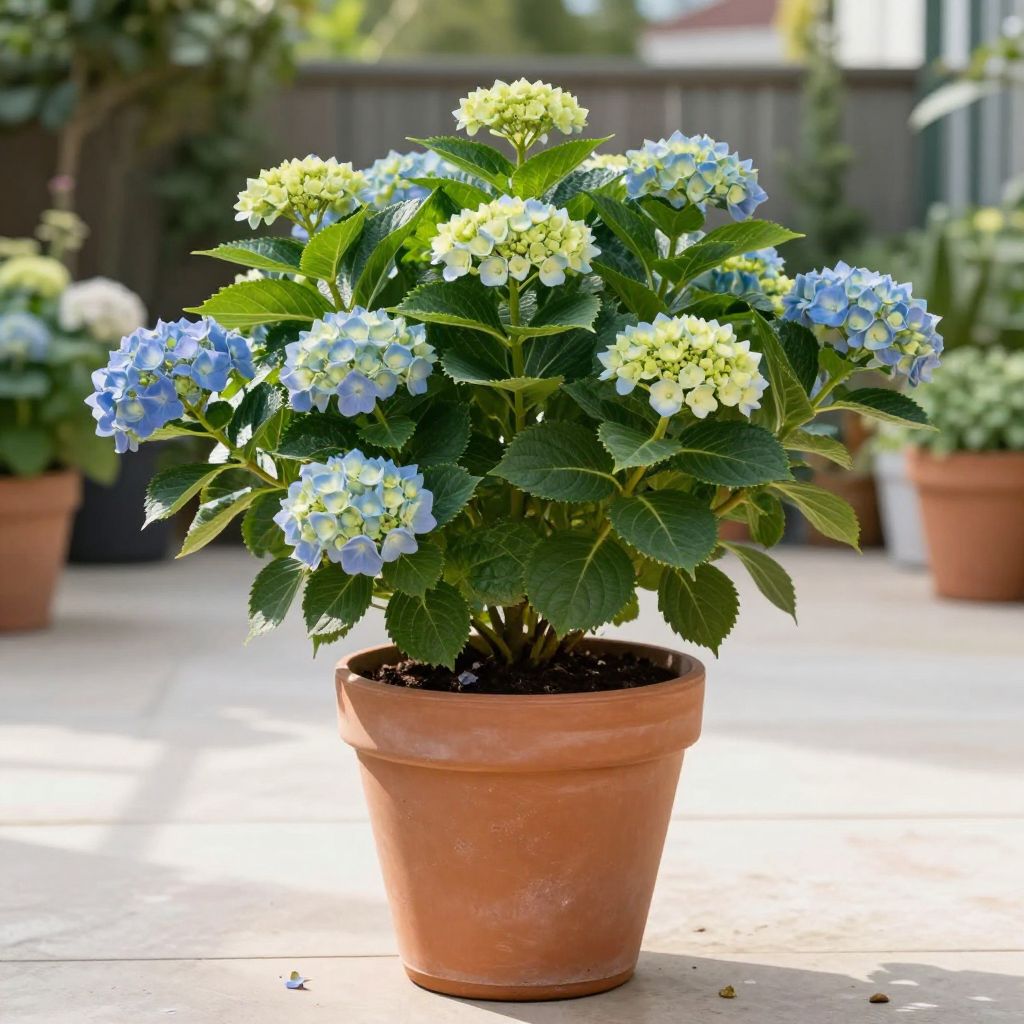
Can hydrangeas grow in pots? Yes, they can—and many gardeners find container growing easier to manage than planting in the ground. The key is choosing the right hydrangea, giving it a large enough pot, and keeping moisture, drainage, and light conditions steady.
Container-grown hydrangeas need a little more attention than in-ground plants, but they can still produce full, colorful blooms on a patio, balcony, or front step. If you match the pot size and care to your climate, you can grow a healthy hydrangea in a container for years.
Can hydrangeas grow in pots?
Yes, hydrangeas grow well in pots if the container is large, drains freely, and the plant gets consistent water and the right amount of light. Compact varieties are usually the best choice. In pots, hydrangeas dry out faster than garden plants, so regular monitoring is essential.
Which hydrangeas are best for containers?
Not every hydrangea is equally suited to pot culture. Smaller, more compact types are easier to manage because their roots have less room to outgrow the container and their top growth is less likely to become unwieldy.
Good container candidates
- Bigleaf hydrangea (Hydrangea macrophylla) compact cultivars
- Mountain hydrangea (Hydrangea serrata) for smaller spaces
- Panicle hydrangea (Hydrangea paniculata) dwarf or compact forms
Bigleaf and mountain hydrangeas are often chosen for their mophead or lacecap flowers, while panicle hydrangeas are generally more tolerant of sun and a bit more forgiving in containers. If your climate is hot and dry, a panicle type may be easier to keep happy outdoors.
What to avoid
Very vigorous or large-growing hydrangeas can quickly become rootbound in a pot. If a variety is known for making a large shrub in the landscape, it may need frequent repotting and pruning to stay manageable in a container.
How big should the pot be?
For most hydrangeas, start with a container that is at least 18 to 24 inches wide and deep, with several drainage holes. A larger pot holds moisture more evenly and gives roots room to grow, which reduces stress during hot weather.
If you buy a small nursery plant, you may be tempted to use a small decorative pot. That usually backfires because hydrangeas dislike drying out. A roomy container is one of the easiest ways to improve success.
Best pot materials
- Plastic or resin: lighter and holds moisture longer
- Glazed ceramic: attractive and slower to dry than unglazed clay
- Terracotta: breathable, but dries out quickly and may need more frequent watering
Whatever material you choose, make sure the pot has drainage holes. Decorative cachepots without drainage are risky unless you keep the plant in a plastic nursery pot inside and empty excess water carefully.
What soil do potted hydrangeas need?
Hydrangeas in pots do best in a rich, moisture-retentive potting mix that still drains well. Use a quality container mix rather than garden soil, which can become compacted and waterlogged in a pot.
A good potting blend should feel airy but not dry out instantly. Many gardeners improve standard mix with a little compost to help hold moisture and support steady growth.
Simple potting mix approach
- Use a high-quality all-purpose potting mix
- Blend in a modest amount of compost for organic matter
- Avoid heavy soil from the garden bed
If your mix seems too dense, the roots may struggle for oxygen. If it is too light and barky, the pot may dry too fast. The goal is a balance of moisture retention and drainage.
How much sun do container hydrangeas need?
Most hydrangeas in pots prefer morning sun and afternoon shade, especially in warm climates. In cooler regions, they can often take more sun, but container plants generally need more protection than those planted in the ground.
Too much hot afternoon sun can scorch leaves and cause wilting, even when the soil is moist. Too little light can reduce flowering and make the plant leggy.
Light tips by situation
- Cool climates: more sun is often acceptable
- Hot climates: protect from harsh afternoon sun
- Balconies and patios: watch reflected heat from walls, paving, and railings
If your hydrangea wilts in the afternoon but recovers at night, the location may be too hot rather than too dry. Move the pot to a slightly shadier spot and reassess before increasing water dramatically.
How do you plant a hydrangea in a pot?
Planting is straightforward, but the details matter. A hydrangea should sit at the same depth it grew in its nursery pot, with the root ball covered but not buried too deeply.
- Choose a pot with drainage holes.
- Add a layer of potting mix to the bottom.
- Remove the hydrangea from its nursery container and loosen circling roots gently.
- Set the plant so the top of the root ball is level with the soil surface.
- Fill around the roots with potting mix and firm lightly.
- Water thoroughly until excess drains out.
After planting, keep the pot in bright shade or gentle morning sun for a few days if the weather is hot. This helps the plant settle in and reduces transplant stress.
How often should you water potted hydrangeas?
Container hydrangeas need regular, careful watering because pots dry out faster than garden soil. The best rule is to check the soil often and water when the top 1 to 2 inches feel dry, rather than following a fixed schedule.
In warm or windy weather, a pot may need water more than once a day. In cooler, cloudy periods, it may stay moist much longer. Size of pot, plant size, sun exposure, and container material all affect how quickly moisture disappears.
Watering signs to watch
- Underwatered: leaves droop, soil pulls from the pot edge, blooms fade quickly
- Overwatered: leaves yellow, soil stays soggy, growth slows
Water deeply until it runs from the drainage holes. Shallow sprinkling only wets the top layer and encourages weak roots near the surface.
Do potted hydrangeas need fertilizer?
Yes, but lightly. Potted plants rely on you for nutrients because potting mix contains limited natural fertility. A balanced, slow-release fertilizer or a diluted liquid feed during active growth is usually enough.
Avoid overfeeding. Too much nitrogen can produce lush leaves with fewer flowers, especially in container plants that already grow quickly. If you use compost in the mix, you may need less fertilizer than you expect.
Feeding guidelines
- Feed only during active spring and summer growth
- Use a product suited to flowering shrubs or container plants
- Stop feeding as growth slows in late season
If your hydrangea is healthy but not blooming, excessive fertilizer may be part of the problem. In that case, reduce feeding and make sure the plant is getting enough light.
How do you care for hydrangeas in pots through the seasons?
Seasonal care makes a big difference. Container hydrangeas are more exposed to heat, cold, and drying winds than garden-planted shrubs, so they need extra attention as the weather changes.
Spring
Refresh the top layer of potting mix if needed, check for root crowding, and begin feeding once new growth starts. If the plant has outgrown its container, spring is a good time to repot.
Summer
Watch moisture closely and protect the pot from intense afternoon sun. Mulching the soil surface with a thin layer of bark or compost can help slow evaporation, but keep mulch away from the stems.
Autumn
Reduce feeding and let the plant slow down naturally. In cooler climates, move the pot to a sheltered spot if early frost is likely.
Winter
Container roots are more vulnerable to cold than in-ground roots. In colder regions, insulate the pot, place it near a protected wall, or move it to an unheated but sheltered area if the variety and climate require it.
Should you prune hydrangeas in pots?
Yes, but pruning depends on the type of hydrangea you have. Some bloom on old wood, some on new wood, and some on both. Pruning at the wrong time can remove flower buds.
General pruning advice
- Remove dead, damaged, or weak stems anytime
- Lightly shape the plant after flowering if needed
- Avoid heavy pruning unless you know the bloom habit of your variety
Panicle hydrangeas are usually more forgiving about pruning than bigleaf hydrangeas. If you are unsure which type you have, keep pruning minimal until you can identify the plant more confidently.
Common problems with potted hydrangeas
Most container issues come from water stress, heat stress, or root crowding. Catching problems early makes them much easier to fix.
Wilting
Wilting can mean the plant is thirsty, but it can also happen in hot sun even when the soil is moist. Check the soil before watering again. If the pot is wet and the plant still wilts, move it to a cooler location.
Yellow leaves
Yellowing often points to overwatering, poor drainage, or nutrient imbalance. Make sure the pot drains freely and that roots are not sitting in water.
Poor flowering
Too much shade, too much nitrogen, or incorrect pruning can reduce blooms. Give the plant brighter light and avoid overfeeding.
Rootbound plants
If roots circle the pot or poke from drainage holes, the plant may need repotting. Move it into a slightly larger container with fresh mix, or root-prune carefully if you want to keep the same pot size.
Pests and diseases to watch for
Container hydrangeas can still get common garden pests and diseases, especially if air circulation is poor or foliage stays wet for long periods.
- Aphids: cluster on soft new growth and flower buds
- Spider mites: more likely in hot, dry conditions
- Powdery mildew: can appear in humid, crowded situations
- Leaf spots: often worse when leaves stay wet
Good spacing, morning watering, and removing badly affected leaves can help. If you see persistent pest pressure, inspect the undersides of leaves regularly and act early before the problem spreads.
Can you change hydrangea flower color in pots?
Some bigleaf hydrangeas can shift flower color based on soil chemistry, especially in acidic conditions with available aluminum. However, color change is variety-dependent, and not all hydrangeas respond the same way.
If you want to experiment, use a soil test first rather than guessing. In containers, soil conditions can change faster than in the ground, so any adjustments should be made gradually and carefully.
When should you repot a hydrangea?
Repot when roots fill the container, water runs through too quickly, or growth slows despite good care. Many potted hydrangeas benefit from moving up one pot size every couple of years, depending on vigor and container size.
Choose a pot only slightly larger than the current one. Going drastically bigger can leave too much wet soil around the roots, which increases rot risk.
Conclusion
Can hydrangeas grow in pots? Absolutely. With a roomy container, well-draining mix, steady moisture, and the right light, you can grow a beautiful hydrangea on a patio, balcony, or porch. Start with a compact variety, watch watering closely, and repot before the plant becomes rootbound.
If you want to keep learning, you may also find this guide helpful: can you grow hydrangeas in a pot and this related article on when to plant hydrangea.