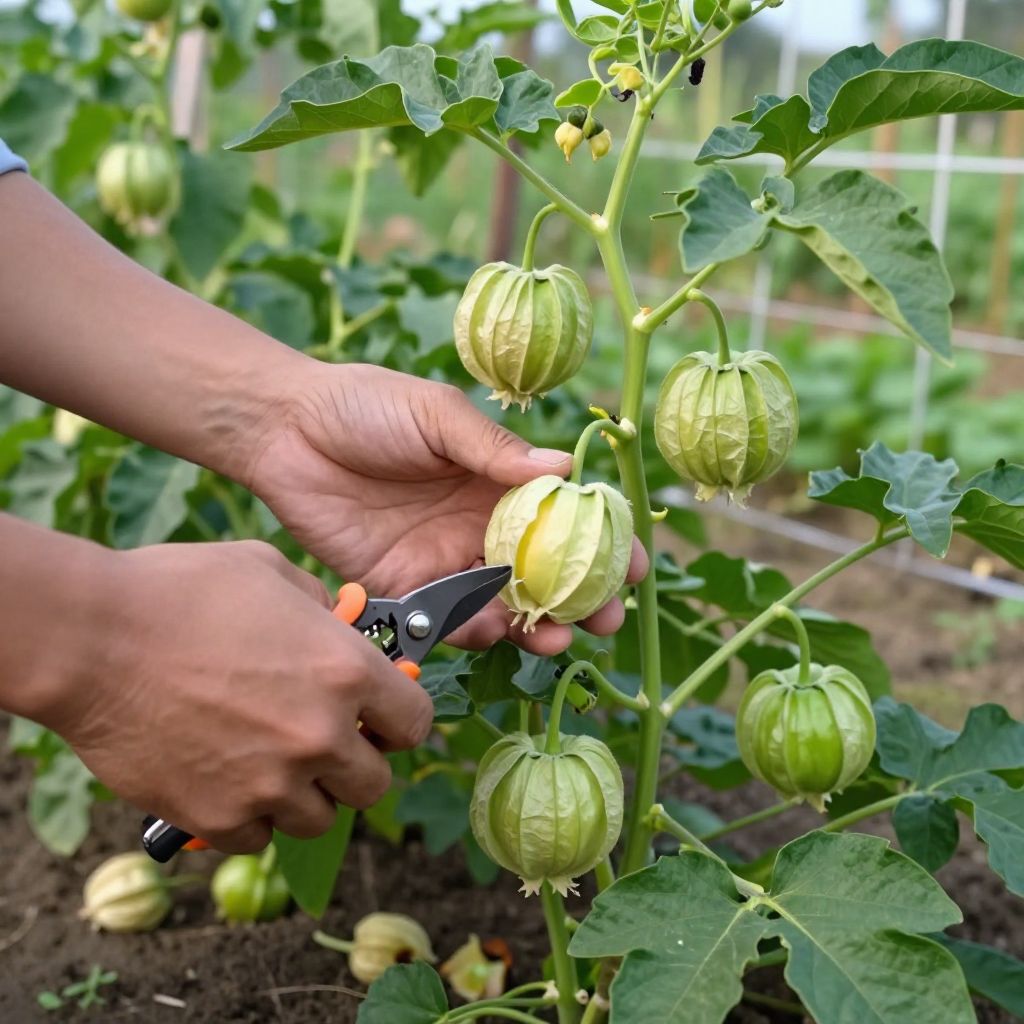
Wondering when to harvest tomatillos? The right time is usually when the fruits have filled their husks and the husks begin to dry, split, or loosen. At that stage, tomatillos are firm, bright green, and ready for the best flavor and texture.
Pick them too early and they can taste sharp and underdeveloped; wait too long and they may become overly soft or drop to the ground. The good news is that tomatillos are easy to judge once you know what to look for.
When to harvest tomatillos?
Harvest tomatillos when the fruit has completely filled the papery husk, the husk starts to split open, and the fruit feels firm to the touch. Most are ready about 75 to 100 days after transplanting, but the best indicator is the fruit itself, not the calendar.
How to tell tomatillos are ready
Tomatillos develop inside a papery husk called a calyx. As the fruit matures, it pushes against that husk until the husk splits or loosens.
Look for these signs
- Filled husks: The fruit should nearly or fully fill the husk.
- Splitting husks: A split husk often means the fruit is mature.
- Firm fruit: Ripe tomatillos should feel firm, not soft or squishy.
- Color: Most are harvested green, though some varieties turn yellow, purple, or pale as they mature.
- Easy release: The fruit should come away with a gentle twist or snip.
If the husk is still tight and the fruit feels small, it is usually not ready yet. If the fruit is yellowing heavily or the husk is dry and brittle, you may be past the peak for fresh use, though still usable if the fruit is sound.
What ripe tomatillos feel like
Ripe tomatillos are typically about the size of a golf ball, though size varies by variety and growing conditions. More important than size is firmness and a husk that has stopped tightly hugging the fruit.
The best harvesting window
The best harvest window is when tomatillos are firm, bright, and just beginning to outgrow the husk. At this stage, they have the balanced flavor most gardeners want. If you prefer a tangier taste, you can harvest slightly earlier; for a milder flavor, wait until the fruit is fully developed but still firm.
Try to harvest before fruits become overripe and start dropping. Tomatillos that fall to the ground may still be edible if they are intact, but they can bruise, split, or attract pests.
Harvesting at different stages
- Small and tight in husk: Too early for most uses.
- Husk splitting, fruit firm: Ideal harvest stage.
- Fruit enlarging, husk dry: Still usable, but check quality carefully.
- Fruit soft or discolored: Past peak; sort and use promptly if sound.
How to harvest tomatillos without damaging the plant
Tomatillos are easy to harvest, but the stems can be a little brittle. Use a gentle hand so you do not break branches or knock off unripe fruit.
- Lift the husk and check that the fruit is full and firm.
- Hold the stem with one hand to steady the plant.
- Twist the fruit gently or snip it with clean pruners or scissors.
- Place harvested fruits in a basket or shallow container to avoid bruising.
If the fruit resists, do not yank it. A clean cut is better than tearing the stem or stripping the branch.
Should you harvest with the husk on?
Yes, it is usually best to harvest tomatillos with the husk attached. The husk helps protect the fruit during handling and storage. You can remove it later when you are ready to use the fruit.
How often to check for ripe fruit
Once tomatillos start producing, check plants every few days. In warm weather, fruits can move from nearly ready to overripe surprisingly fast, especially on vigorous plants with lots of fruit set.
Frequent picking also encourages the plant to keep producing. If mature fruit stays on the plant too long, it can slow new flowering and fruit development.
What if the tomatillos are still green but not fully sized?
Green color alone does not tell you much, because tomatillos are normally harvested green. What matters is whether the fruit has filled the husk and feels firm. If the fruit is still small, give it more time unless frost or weather damage is approaching.
Reasons tomatillos stay small
- Not enough sunlight
- Inconsistent watering
- Poor pollination
- Overcrowding or weak growth
- Low soil fertility or depleted compost
Tomatillos usually grow best in full sun, in well-drained soil amended with compost. If plants are healthy but fruits remain small, check for pollination issues or stress from heat, drought, or nutrient imbalance.
Can you harvest tomatillos after frost?
If frost is forecast, harvest any mature or nearly mature tomatillos before temperatures drop. Frost can damage the fruit and foliage, and cold weather can stop ripening altogether. Even green fruits that are close to ready are worth picking if frost is coming.
Unripe fruits harvested before frost may not develop full flavor, but they can still be used if they are firm and healthy. Avoid storing damaged or split fruit, since it spoils faster.
How to handle tomatillos after harvest
After picking, remove the husks if you want to inspect the fruit. The fruit often feels sticky, which is normal. Rinse it with cool water and dry it before storing.
Short-term storage tips
- Keep sound fruits in the refrigerator for several days to a couple of weeks, depending on freshness.
- Store them dry to reduce mold and softening.
- Discard any fruit that is mushy, split, or moldy.
If you harvest a lot at once, sort the crop into firm, usable fruits and any that need to be used first. That simple step helps prevent one bad fruit from affecting the rest.
Common mistakes when harvesting tomatillos
Most harvest problems come from judging by appearance alone or waiting too long. A few simple habits can help you avoid disappointment.
- Harvesting too early: Small, tight fruits usually lack full flavor.
- Waiting for the fruit to turn soft: Tomatillos are best when firm, not soft.
- Ignoring split husks: A split husk is often your cue to pick soon.
- Pulling fruit off roughly: This can damage stems and nearby clusters.
- Leaving fruit on the ground: Fallen fruit can bruise or rot quickly.
Do tomatillos ripen after picking?
Tomatillos do not ripen in the same way many fruits do. They may continue to soften slightly after harvest, but they should already be mature and firm when picked. For the best quality, harvest when they are fully sized and still in good condition.
If you pick them too early, they usually will not improve much in flavor. That is why checking the husk and firmness is more reliable than hoping they will finish ripening indoors.
Practical tips for a better harvest
Good harvest timing starts with good plant care. Healthy plants are easier to read because they set fruit more evenly and produce fewer misshapen or undersized tomatillos.
- Give plants full sun for strong growth and fruiting.
- Use well-drained soil enriched with compost.
- Water consistently, especially during flowering and fruit fill.
- Support plants if they sprawl or become heavy with fruit.
- Check for pests such as aphids, hornworms, and flea beetles.
Tomatillos are often grown like tomatoes, but they can be more sprawling and benefit from staking or cages. Better support keeps fruit cleaner and makes harvesting easier.
What to do with unripe or overripe fruit
If you have fruit that is close but not quite ready, leave it on the plant and check again in a few days. If cold weather threatens, harvest it anyway and use it promptly if it is firm and healthy.
Overripe fruits that are still firm can sometimes be used, but sort carefully. Discard any that are soft, leaking, or badly discolored.
Final check before you pick
Before harvesting, ask yourself three quick questions: Is the fruit full-sized? Is the husk splitting or loosening? Does the fruit feel firm? If the answer is yes to all three, it is time to harvest tomatillos.
For more harvest timing help in the vegetable garden, you may also find these guides useful: when to pick cherry tomatoes and when to harvest cucumbers.