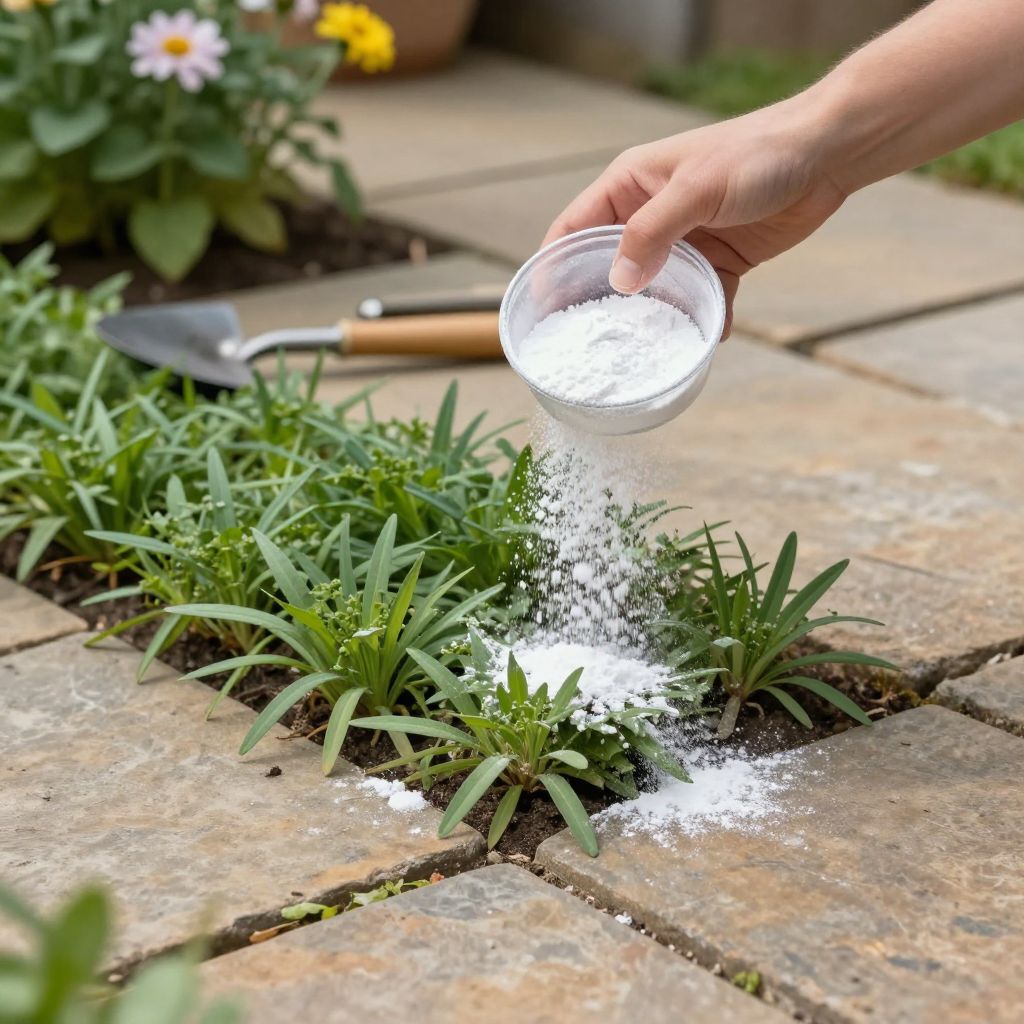
Does baking soda kill weeds? It can, but only in a limited, spot-treatment way. Sodium bicarbonate may dry out tender weed tissue on contact, yet it does not reliably kill established weeds down to the roots, and repeated use can harm nearby soil and plants.
If you want a weed control method that actually fits your garden, it helps to know when baking soda is useful, when it fails, and what safer, more effective options work better in beds, paths, and cracks.
Does baking soda kill weeds?
Baking soda can scorch small, young weeds by drawing moisture from leaves, but it is not a dependable long-term weed killer. It works best on tiny weeds in dry cracks or paving gaps, and even then it usually affects only the top growth. For most garden weeds, you will need repeated removal or a better control method.
How baking soda works on weeds
Baking soda, or sodium bicarbonate, is mildly alkaline. In concentrated contact with soft plant tissue, it can cause leaf burn and dehydration. That is why some gardeners see quick browning on very small weeds after application.
The problem is that weeds are often tougher than they look. Many have growing points below the soil surface, strong crowns, or spreading roots that survive a surface treatment and regrow.
Where it may help
- Very small seedlings in sidewalk cracks
- Annual weeds with soft stems and shallow roots
- Dry, sunny hardscape areas where you can target individual plants
Where it usually disappoints
- Established perennial weeds
- Deep-rooted weeds such as dandelions and dock
- Weeds growing in lawns, vegetable beds, or around ornamentals
- Areas where repeated use could affect soil health
Why baking soda is not the best weed-control choice
Even when it browns weeds, baking soda is not selective. It can damage grass, flowers, vegetables, and soil microbes if overused. Sodium buildup is especially concerning in confined spaces, containers, and garden beds where rainfall cannot dilute it easily.
It also does not solve the root problem. If the weed’s crown or roots remain alive, the plant can return after a short recovery period.
Common risks to watch for
- Soil sodium buildup that can stress plants over time
- Leaf burn on nearby desirable plants from drift or runoff
- Temporary results instead of true control
- Patchy performance depending on weed size, weather, and application
When to use baking soda, and when not to
If you are trying to clean up a few weeds in a patio crack or between pavers, baking soda may be worth testing on a tiny area. If you are dealing with weeds in a lawn, mixed border, or vegetable patch, skip it and use a method that removes the whole plant or suppresses new growth.
Better uses for baking soda
- Small, isolated weeds in hardscape joints
- Very light maintenance between paving stones
- As a temporary helper while you plan a more durable fix
Do not rely on it for
- Large infestations
- Weeds with taproots or rhizomes
- Areas planted with ornamentals, herbs, or vegetables
- Any place where soil quality matters long term
How to use baking soda more safely
If you decide to try it, use the smallest effective amount and keep it off desirable plants. Apply only to dry foliage on a calm day so it does not drift or wash into planting beds.
- Pull or cut back larger weeds first so you are treating only small regrowth.
- Choose a dry day with little wind.
- Sprinkle a light dusting directly onto the weed foliage or into the crack where the weed is growing.
- Keep it away from soil in beds, lawns, and container plants.
- Check the area over the next few days and remove any surviving growth by hand.
Important: More is not better. Heavy use increases the chance of soil damage without guaranteeing better weed control.
What works better than baking soda for weeds
For most gardeners, the most reliable weed control is a combination of physical removal, mulching, and prevention. These methods take a little more effort up front, but they protect your soil and give longer-lasting results.
1. Hand-pulling or digging
For small weeds, pull after rain or after watering the area lightly so the soil loosens. Use a hand fork, weeding knife, or trowel to lift the roots out cleanly.
- Best for annual weeds and young perennials
- Most effective when done early
- Repeat regularly before weeds set seed
2. Mulching garden beds
A 2 to 4 inch layer of organic mulch helps block light and reduce weed germination. Keep mulch a little away from stems and trunks to prevent rot and pest problems.
- Use shredded bark, leaf mold, composted wood chips, or similar materials
- Top up as the mulch breaks down
- Weed first, then mulch for best results
3. Smothering and edging
In paths or neglected areas, cardboard, landscape fabric, or thick organic mulch can suppress weeds. Clean edging also helps prevent grass and creeping weeds from invading beds.
4. Boiling water or flame weeding for cracks
For weeds in pavement cracks, boiling water can work on small plants, and flame weeding can damage top growth. Use caution, keep away from dry mulch and flammables, and expect regrowth from established roots.
How to prevent weeds from coming back
Weed control is easier when you reduce the conditions weeds love: bare soil, compacted ground, and unused spaces. Prevention is especially important in vegetable gardens, newly planted beds, and around young perennials.
- Cover bare soil with mulch or groundcovers
- Water only where needed so you do not encourage weed seed germination everywhere
- Remove weeds before they flower and set seed
- Improve soil structure with compost to help desirable plants compete
- Inspect paths and bed edges regularly so small weeds do not spread
Special considerations for lawns, beds, and containers
Lawns
Do not use baking soda across turf. It can injure grass and leave patches of stressed soil. In lawns, the better approach is to improve turf density through mowing at the right height, overseeding where appropriate, and pulling broadleaf weeds by hand or using a lawn-safe control if needed.
Vegetable and flower beds
Stay away from sodium-based weed treatments in planted beds. Use mulch, cultivation, and hand removal instead. Around shallow-rooted plants, even small amounts of sodium can create unnecessary stress.
Containers
Container soil is limited and can be affected quickly by repeated sodium exposure. If weeds appear in pots, remove them promptly by hand and refresh the potting mix if the container becomes crowded with weed roots.
Common mistakes to avoid
- Using baking soda on large, mature weeds and expecting full kill
- Applying it near desirable plants without a barrier
- Overusing it in the same spot and building up sodium
- Leaving dead weeds in place and allowing seeds to drop
- Ignoring the root cause, such as bare soil or poor edging
Troubleshooting: if the weeds come back
If weeds return after a baking soda treatment, that usually means the roots or crown survived. Switch to a more complete method: dig out the plant, cut off regrowth, or smother the area depending on where the weed is growing.
For persistent perennial weeds, repeated removal is often necessary. Each time you remove new top growth, you weaken the root system. In beds, follow up with mulch to stop fresh seedlings from taking over the open space.
Bottom line
Baking soda can brown tiny weeds on contact, but it is not a dependable weed killer for most garden situations. If you want lasting results, use it only as a limited spot treatment and rely on hand-pulling, mulching, and prevention for real weed control.
For more practical garden maintenance ideas, you may also want to read about mulching techniques for weed suppression and safe ways to control weeds in garden paths.