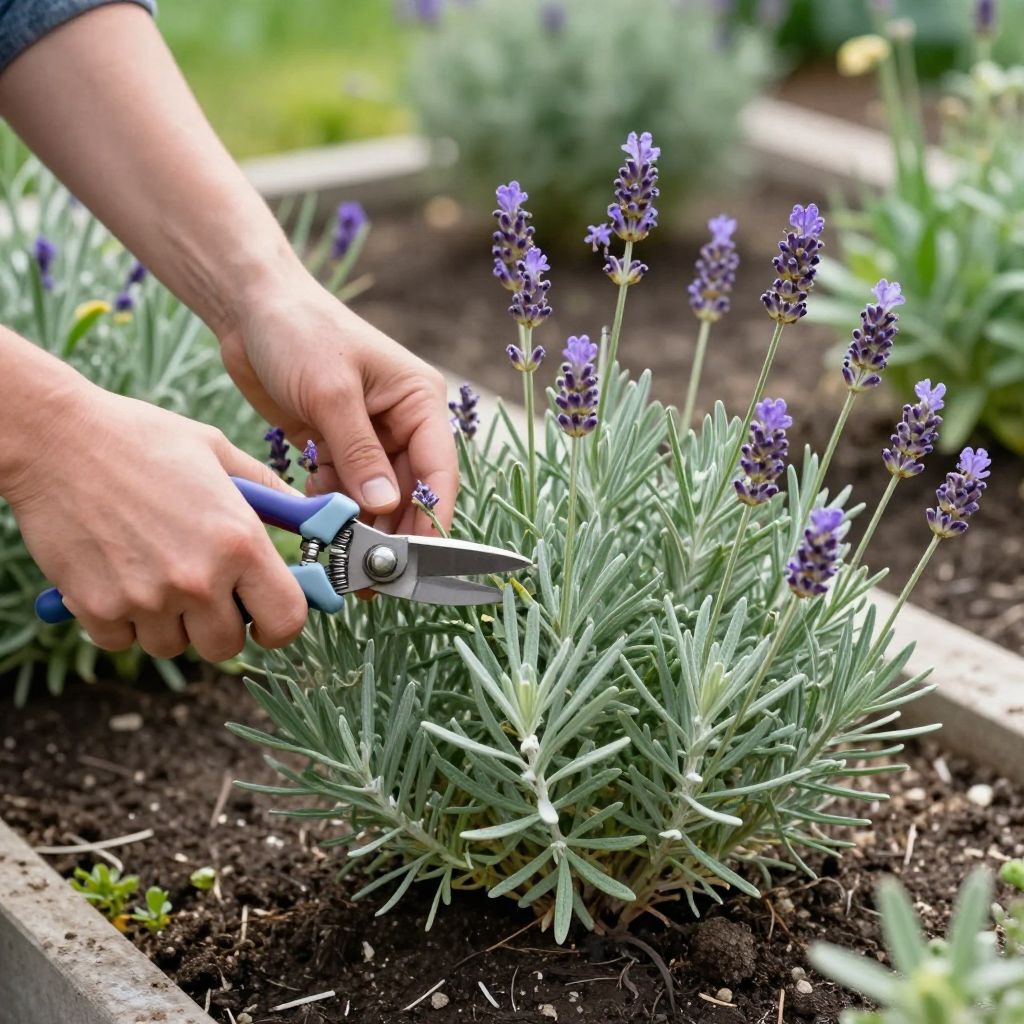
If you’re wondering when to prune lavender, the short answer is: prune lightly after flowering, then do a more careful shaping cut in late summer or early spring depending on your climate. The goal is to keep the plant compact, leafy, and productive without cutting into old, woody stems that may not regrow well.
Lavender rewards regular pruning, but timing matters. Prune too early and you can lose flowers; prune too hard or too late into woody growth and the plant may struggle to recover.
When to prune lavender?
The best time to prune lavender is usually right after the main flowering flush, when blooms fade and before the plant puts energy into making seeds. In colder regions, many gardeners also do a light spring cleanup after frost danger passes. Avoid heavy pruning in late fall, and never cut deeply into old woody stems with no leaves.
Why pruning lavender matters
Lavender naturally wants to grow into a rounded shrub, but without pruning it can become leggy, open in the middle, and more likely to split or flop. Regular trimming helps maintain shape, encourages fresh growth, and often improves flowering the following season.
Pruning also helps you remove spent flower stems, which keeps the plant tidy and can reduce self-seeding in types that set seed readily. For many gardeners, it is one of the simplest ways to keep lavender attractive in borders, hedges, and containers.
What happens if you skip pruning?
- The plant may become woody and sparse at the base.
- Flowering can shift to the tips, leaving the center bare.
- Older stems may split under wind, snow, or heavy rain.
- The shrub can look ragged and less balanced over time.
Best pruning timing by season
After flowering in summer
This is the most reliable time to prune most lavenders. Once the flowers fade, trim back the spent stems and shape the plant while it is still actively growing. In many climates, this is the main pruning window for both English lavender (Lavandula angustifolia) and many ornamental varieties grown outdoors.
Summer pruning gives the plant time to produce fresh growth before cold weather arrives. That new growth helps the plant stay full and healthy.
Late winter to early spring
In colder areas, a light spring pruning can be safer than a fall cut. Wait until the worst frost has passed and you can see where winter damage occurred. Then remove dead tips and lightly shape the plant.
This is especially useful if your lavender suffered winter dieback. You can see which stems are alive before you cut, which reduces the risk of overpruning.
Why fall pruning is risky
Late-season pruning can push tender new growth at the wrong time. That soft growth is more vulnerable to frost, and the plant may enter winter less protected. If you must tidy the plant in fall, keep it very light and avoid major shaping.
How to prune lavender correctly
Good pruning is more about timing and restraint than cutting hard. The safest approach is to remove spent flower stems and shorten the leafy growth by about one-third, or just enough to keep the plant rounded and compact.
- Use clean, sharp hand pruners or hedge shears for larger plants.
- Cut off faded flower stalks first.
- Trim the green growth back to just above leafy nodes.
- Keep some green leaves on every stem you cut.
- Step back often and check the shape as you work.
How far can you cut back?
As a rule, do not cut into bare brown wood unless there are healthy green shoots lower down. Lavender usually resprouts from leafy growth, not from old, leafless stems. If you cut too deep, those sections may not recover.
A safe guideline is to leave at least a few inches of green growth on each stem. If the plant is very overgrown, reduce it gradually over one or two seasons instead of trying to reshape it all at once.
Pruning young lavender vs. mature lavender
Young plants
Newly planted lavender benefits from light pruning to encourage branching. Pinch or trim the tips after the first flush of growth so the plant fills out from the base. This helps create a denser, longer-lived shrub.
Do not let a young plant flower heavily in its first season if you want strong structure. A little early shaping usually pays off later.
Mature plants
Established lavender can be pruned more confidently, but still not into old wood. Mature plants often need annual trimming to prevent the center from opening up. If the shrub is already woody, reduce it gradually and focus on preserving healthy leafy sections.
If a mature plant has become badly leggy, you may need to accept a looser shape or replace it rather than forcing a hard rejuvenation cut.
Common pruning mistakes to avoid
- Cutting into bare wood with no visible leaves or shoots.
- Pruning too late in the season and triggering frost-tender growth.
- Shearing into a tight ball that removes too much leafy growth.
- Ignoring dead stems that should be removed cleanly.
- Waiting too many years between prunings, which leads to woody, sparse plants.
If you are unsure how much to remove, start conservatively. You can always trim a little more, but you cannot put leafy growth back once it is cut.
How to tell if your lavender needs pruning now
Look for faded flowers, long floppy stems, or a plant that is starting to spread open in the center. If the shrub is still blooming strongly, wait until the flowers begin to fade. If winter has damaged the tips, wait until new growth shows where the plant is alive.
Container-grown lavender often needs pruning a bit earlier than plants in the ground because pots dry out faster and growth can become uneven. Outdoor plants in windy or rainy sites may also need more frequent shaping.
What to do after pruning
After pruning, give the plant a little care to help it recover. Lavender prefers lean, well-drained conditions, so avoid heavy feeding or overwatering after a cut.
- Water lightly only if the soil is dry.
- Make sure the plant has full sun and good air circulation.
- Remove clippings from around the base so moisture does not build up.
- Check that mulch is not piled against the crown.
If your soil stays wet for long periods, pruning alone will not solve poor growth. Lavender needs drainage more than rich soil, and soggy roots can cause decline even on a well-shaped plant.
Special notes for different growing conditions
Cold climates
In areas with harsh winters, avoid late-season pruning that could stimulate tender growth. A light spring trim is often safest, with the main shaping done after flowering if the plant has enough time to recover before frost.
Mild climates
Where winters are gentle, you have more flexibility. Many gardeners prune after flowering and again lightly in late winter if needed. Even so, keep the cuts modest and avoid removing too much woody framework at once.
Wet or humid regions
Lavender in humid climates may grow more loosely and be more prone to fungal issues if airflow is poor. Pruning helps open the plant, but site selection matters too. Full sun, fast drainage, and spacing are essential.
Can you harvest lavender while pruning?
Yes. If the flower spikes are fresh and fragrant, you can cut them for drying while also shaping the plant. Harvest stems when a portion of the florets on each spike has opened, then bundle and dry them in a warm, airy place out of direct sun.
For the best balance between harvest and plant health, remove enough stem to shape the plant, but leave plenty of leafy growth below the cut.
Pruning tools and cleanup
Use sharp hand pruners for small plants and hedge shears for larger mounds or hedges. Clean tools make smoother cuts and reduce the chance of spreading disease between plants.
- Wipe blades before and after use.
- Remove dead or diseased stems first.
- Collect clippings to keep the crown dry and tidy.
- Dispose of any obviously diseased material rather than composting it.
Simple pruning checklist for lavender
- Wait until flowering is finished or nearly finished.
- Choose a dry day if possible.
- Cut back spent flower stems.
- Shape the plant lightly, keeping green growth on every stem.
- Stop before you reach bare old wood.
- Water only if the soil is dry and the plant needs it.
Conclusion
When to prune lavender comes down to one main rule: prune after flowering, or lightly in early spring if your climate makes that safer. Keep cuts modest, avoid old bare wood, and shape the plant before it becomes woody and open. If your lavender is due for a trim, inspect it today and remove just the spent stems and the most overgrown tips.
For more practical plant care, you may also want to read about how to grow lavender in pots and the best soil and drainage for Mediterranean herbs.