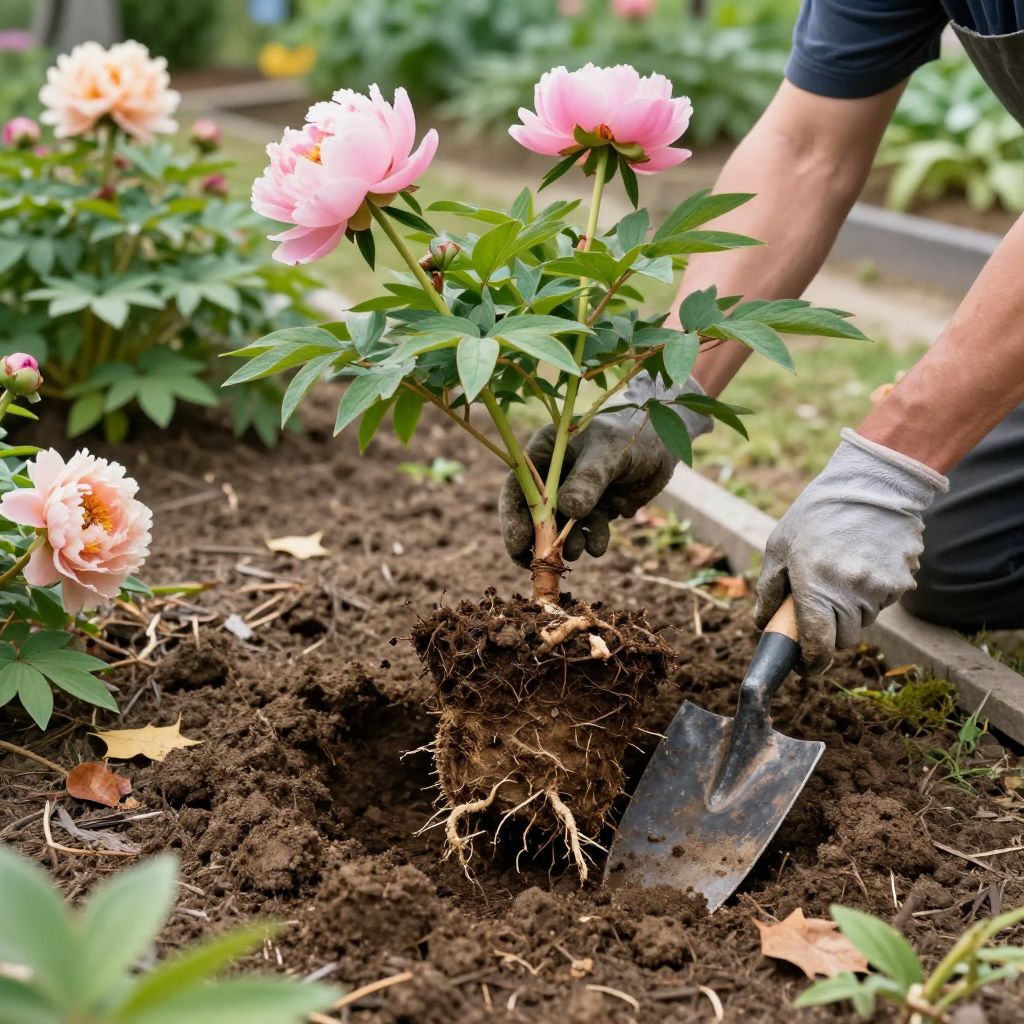
Wondering when to transplant peonies without setting them back for years? Timing matters more with peonies than with many perennials, because they dislike being disturbed and often pause blooming after a move.
The good news is that if you transplant them at the right season and replant them correctly, peonies usually recover well. The key is to move them when they are dormant, keep the roots intact, and make sure the eyes are planted at the proper depth.
When to transplant peonies?
The best time to transplant peonies is in early fall, after the foliage starts to die back and the plant is dormant or nearly dormant. In colder climates, that usually means late summer to early autumn; in milder regions, transplant as soon as the plant has finished active growth. Spring transplanting is possible, but it is more stressful and may delay flowering for a season or two.
Why fall is usually the best time
Peonies build energy in their roots during the growing season, then slow down as temperatures cool. Moving them in fall gives the roots time to settle before winter without forcing the plant to support leaves and flowers at the same time.
That rest period matters. A peony that is moved while actively growing may wilt, stall, or skip blooming the following year.
Why not move peonies in summer?
Summer is the hardest time to transplant peonies because the plant is actively growing and often flowering. Heat and dry soil increase transplant shock, and the roots are more likely to be damaged during lifting and division.
If you must move one in summer, keep the root ball as intact as possible, replant immediately, and water carefully. Even then, expect a longer recovery.
How to know your peony is ready to move
Wait until the plant has finished flowering and the foliage begins to fade naturally. For herbaceous peonies, the stems will yellow and collapse as the plant enters dormancy. Tree peonies are handled a little differently, but the same general rule applies: move them when growth has slowed, not when they are actively pushing new shoots.
- Good signs to transplant: foliage is yellowing, growth has slowed, temperatures are cooling
- Not ideal: buds are forming, the plant is blooming, or the weather is hot and dry
- Best conditions: cool, overcast weather with moist but not soggy soil
How to transplant peonies step by step
Peonies resent rough handling, so work carefully and keep the root system as intact as possible. If you are dividing a large clump, each division should have several healthy roots and at least three to five eyes, which are the pink or white buds on the crown.
- Water the plant a day or two ahead of time if the soil is dry. Moist soil is easier to dig and helps reduce root damage.
- Cut back the stems on herbaceous peonies to a few inches above the ground after foliage begins to die back, or before digging if needed.
- Dig widely around the crown to lift the root ball. Start several inches away from the stems and go deep enough to avoid slicing through thick roots.
- Lift gently and shake off only loose soil. Avoid washing or aggressively breaking apart the roots unless you are dividing the plant.
- Divide only if necessary. Use a clean, sharp knife or spade to separate sections with healthy roots and multiple eyes.
- Replant immediately at the same or slightly shallower depth than before.
- Water thoroughly after planting to settle the soil around the roots.
- Mulch lightly if your climate needs winter protection, but keep mulch away from the crown.
How deep should peonies be planted?
Depth is one of the most common reasons transplanted peonies fail to bloom. The eyes should generally sit only 1 to 2 inches below the soil surface in most climates. Planting too deeply can produce healthy leaves but few or no flowers.
In warmer regions, some gardeners place the eyes slightly shallower to help with flowering. In colder areas, you still should not bury them too deeply; instead, use a light winter mulch if needed.
Common planting mistakes to avoid
- Planting the crown too deep
- Leaving roots exposed to dry out before replanting
- Choosing a site with poor drainage
- Overcrowding the plant with shrubs or tree roots
- Expecting immediate full bloom after transplanting
Best site and soil conditions after transplanting
Peonies grow best in full sun in most climates, though a little afternoon shade can help in very hot regions. They need fertile, well-drained soil and do not like sitting in waterlogged ground.
Before replanting, improve the bed only as needed. Mix in compost if the soil is poor, but do not overdo rich amendments at the planting hole alone, which can create a “bathtub” effect and hold too much water around the roots.
What peonies want in a new location
- Sun: at least 6 hours of direct sun daily in most gardens
- Soil: loose, fertile, and well-drained
- Airflow: enough space to reduce fungal disease risk
- Support: staking or a peony ring if the variety tends to flop
Watering after transplanting
After transplanting, water deeply once to settle soil around the roots. Then keep the soil evenly moist, not soggy, while the plant re-establishes. The goal is to prevent the root ball from drying out during the first several weeks.
Once the peony is settled, it usually needs less frequent watering than many annuals. In established beds, natural rainfall may be enough except during extended dry spells.
Signs of watering trouble
- Too dry: wilting, dry soil, weak new growth
- Too wet: soft stems, yellowing foliage, root rot risk, sour-smelling soil
What to expect after transplanting
Even when moved at the right time, peonies may take a season to recover. Some bloom lightly the next year, while others skip flowering and focus on root growth. That does not necessarily mean the plant has failed.
Give the plant time, keep the crown at the correct depth, and avoid overfertilizing. A transplanted peony often performs best once it has had one full growing season to settle in.
How long until it blooms again?
Many peonies bloom normally the year after transplanting, but some need longer, especially if they were divided, moved from poor soil, or replanted too deeply. If the plant produces healthy foliage but no flowers, depth and light are the first things to check.
Should you divide peonies when transplanting?
Not always. If the plant is simply being moved to a better spot, try to keep the clump intact. Divide only if the crown is very large, overcrowded, or you want more plants.
When dividing, make sure each division is substantial enough to recover. Tiny pieces with one eye often take much longer to establish and may not bloom for several years.
Special notes for herbaceous and tree peonies
Herbaceous peonies
These die back to the ground each winter and are the most commonly transplanted type. Fall is usually the safest time to move them.
Tree peonies
Tree peonies have woody stems and are more sensitive to disturbance. If you need to move one, do it carefully in early fall where winters are not extreme, and avoid cutting back woody stems unless necessary. They can take longer to recover than herbaceous types.
Common problems after transplanting
If your peony struggles after being moved, the cause is often one of a few predictable issues. Most can be corrected if you catch them early.
- No blooms: planted too deep, not enough sun, or still recovering from division
- Wilting after transplant: root damage, dry soil, or hot weather stress
- Yellow leaves: poor drainage, overwatering, or natural dieback if it is late in the season
- Weak stems: too much shade or a crowded planting site
Practical transplanting tips for better success
- Choose a cool day if possible.
- Prepare the new hole before lifting the plant.
- Keep the roots shaded while you work.
- Use compost to improve poor soil, but do not create a deep, rich pocket in otherwise heavy ground.
- Mark the crown depth so you do not bury the eyes too deeply.
- Be patient after transplanting; peonies are slow to forgive mistakes, but they are long-lived once established.
Conclusion
If you are deciding when to transplant peonies, aim for early fall whenever possible, when the plant is going dormant and the weather is cooling. Lift the roots carefully, replant at the proper depth, and give the plant time to settle in. If you want, check your bed now so you can prepare the new site before moving the plant.
For more practical perennial care and garden planning, you may also want to read related guides on dividing perennials and improving garden soil.