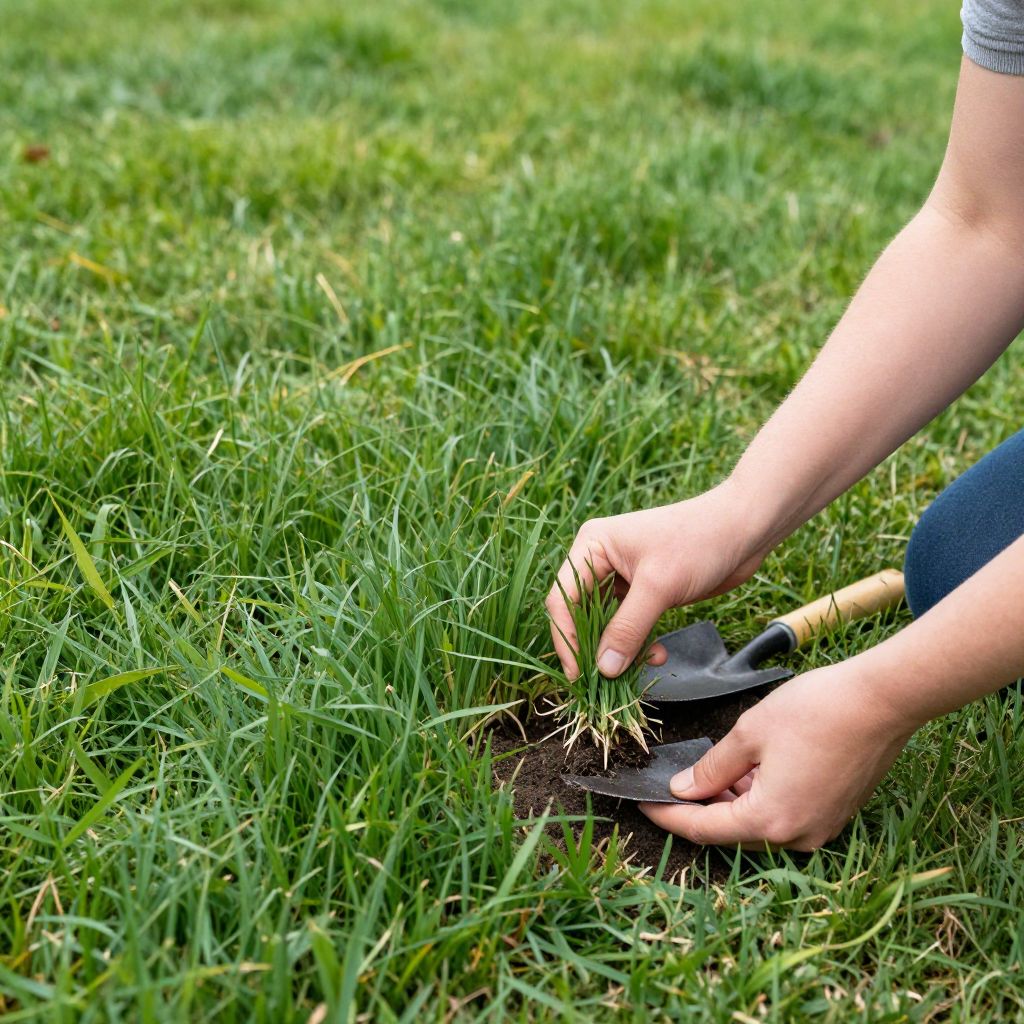
Trying to figure out what kind of grass you have? The fastest way is to look closely at the leaf blade, growth habit, seed head, and how the lawn behaves in sun, shade, heat, and foot traffic.
Once you know whether your lawn is a cool-season or warm-season grass, you can mow, water, fertilize, and repair it much more effectively. A few simple observations usually narrow it down quickly, even if you do not know the original seed mix.
What kind of grass do I have?
You can identify most lawn grasses by combining a few clues: blade width, blade texture, growth pattern, color, and whether the grass spreads by runners or clumps. Start with the leaf and stem, then compare what you see to common turf types such as Kentucky bluegrass, fescues, ryegrass, Bermuda, zoysia, St. Augustine, or centipede.
Start with the easiest identification clues
1. Look at the blade shape and width
Hold a few blades between your fingers. Fine-textured grasses feel narrow and soft; coarse grasses feel wider and stiffer.
- Very fine blades: often fine fescue or bermudagrass.
- Medium blades: often perennial ryegrass, Kentucky bluegrass, or zoysia.
- Wide blades: often tall fescue or St. Augustinegrass.
Blade width alone does not identify the grass, but it quickly rules out several options.
2. Check how it grows
Grass growth habit is one of the best clues. Some grasses spread by above-ground runners, some by underground rhizomes, and some stay in clumps.
- Spreading by runners: Bermuda, St. Augustine, zoysia, and Kentucky bluegrass.
- Clumping growth: tall fescue and many fine fescues.
- Dense mat-forming growth: zoysia and Bermuda often create a very tight turf.
If you see long creeping stems crossing the soil surface, you are likely looking at a spreading warm-season grass or Kentucky bluegrass.
3. Observe the color and texture
Color can help, but do not rely on it alone because fertilization, shade, drought, and season all affect appearance.
- Blue-green: often Kentucky bluegrass or zoysia.
- Bright green: often perennial ryegrass or St. Augustinegrass.
- Gray-green to olive: often bermudagrass or centipedegrass.
Texture matters too. Some grasses feel soft and lush, while others feel wiry or slightly rough.
Cool-season or warm-season grass?
This is the most useful first split. Cool-season grasses grow best in spring and fall and often slow down in summer heat. Warm-season grasses thrive in summer and go dormant or brown when temperatures drop.
Common cool-season grasses
- Kentucky bluegrass — fine to medium blades, spreads by rhizomes, often blue-green.
- Perennial ryegrass — shiny, narrow blades, bunch-type growth, fast to establish.
- Tall fescue — wider blades, coarse texture, bunch-type growth, drought-tolerant once established.
- Fine fescues — very narrow blades, shade-tolerant, often used in low-maintenance lawns.
Common warm-season grasses
- Bermudagrass — very fine blades, aggressive spread, loves sun and heat.
- Zoysiagrass — medium blades, dense turf, slower to establish.
- St. Augustinegrass — broad blades, coarse texture, spreads with thick stolons.
- Centipedegrass — light green, medium texture, low fertility needs.
If your lawn looks great in spring and fall but struggles in peak summer, it may be a cool-season grass. If it thrives in heat and browns in cold weather, it is probably warm-season.
How to identify grass step by step
- Examine several spots in the lawn, not just one patch.
- Pull up a small section to see whether it spreads by runners or stays in clumps.
- Measure blade width and note whether the tip is pointed, boat-shaped, or blunt.
- Look at the ligule and collar area where the blade meets the stem if you can.
- Check the seed head if the grass is flowering.
- Compare sun and shade areas because some lawns contain more than one grass type.
Useful plant parts to inspect
- Blade: the flat leaf surface.
- Sheath: the tube-like base around the stem.
- Ligule: a small membrane or fringe where blade meets sheath.
- Stolon: an above-ground runner.
- Rhizome: an underground runner.
You do not need to become a botanist. Even one or two of these features can narrow the possibilities a great deal.
Quick comparison of common lawn grasses
Fine-textured, spreading lawns
Kentucky bluegrass often has a soft, medium-fine blade and a rich blue-green color. It spreads by rhizomes, so damaged areas can fill in over time if conditions are right.
Bermudagrass is finer and more wiry, with aggressive stolons and rhizomes. It loves full sun and heat, and it can invade flower beds if edging is weak.
Coarse or broad-bladed lawns
Tall fescue is one of the easiest grasses to recognize because of its wider, coarse blades and clumping habit. It is often used where heat, drought, or wear are concerns.
St. Augustinegrass has broad blades and thick stolons. It forms a dense lawn but usually needs more warmth and less cold exposure than cool-season grasses.
Dense, medium-textured lawns
Zoysiagrass forms a tight, carpet-like lawn with medium blades. It can feel stiff underfoot and often grows more slowly than Bermuda.
Perennial ryegrass germinates quickly and has a glossy look. It is often used in seed mixes or for quick repairs, so a lawn may contain ryegrass even if another grass dominates.
Why your lawn may contain more than one grass
Many lawns are not a single species. Seed mixes, patch repairs, overseeding, and natural spread can create a blend of grasses that look different in different areas.
- Shady spots may contain fine fescue while sunny areas contain Kentucky bluegrass.
- Warm-season lawns may have winter overseeding with ryegrass.
- Old lawns may have weeds or volunteer grasses mixed in.
If your lawn looks inconsistent, identify the dominant grass first. Then note any secondary grasses that may affect mowing height or seasonal care.
How season and climate affect identification
Grass appearance changes with weather, so timing matters. A cool-season lawn may look lush in spring but thin in July. A warm-season lawn may be dormant and straw-colored in winter, which can make identification harder.
- Spring: many grasses are actively growing and easier to inspect.
- Summer: warm-season grasses are most visible; cool-season grasses may stress.
- Fall: cool-season grasses often recover and show strong color.
- Winter: dormant warm-season grasses can look dead but may be healthy beneath the surface.
If you are unsure, compare your lawn’s behavior through the year rather than judging from one season alone.
Common mistakes when identifying grass
- Judging by color only, since fertility and weather change color a lot.
- Looking at only one patch, especially in mixed lawns.
- Confusing weeds with turfgrass, such as crabgrass or nutsedge.
- Assuming brown means dead when some grasses are simply dormant.
- Skipping the runner check, which is one of the clearest clues.
If the lawn is patchy, take a sample from the healthiest area and a sample from the problem area. The difference can reveal whether you have one grass stressed by conditions or several grasses mixed together.
What to do once you know the grass type
Identification is useful because mowing, watering, and renovation should match the grass you actually have. A lawn that is treated like the wrong type often thins out or becomes weedy.
Mowing
Do not scalp the lawn. Each grass has a preferred mowing range, and cutting too low weakens the plant. If you are unsure, mow conservatively and remove no more than one-third of the leaf blade at a time.
Watering
Water deeply enough to reach the root zone, then let the surface dry slightly before watering again. Shallow, frequent watering encourages weak roots and more weeds. Adjust based on soil type, rainfall, and temperature.
Fertilizing
Cool-season and warm-season grasses do not need the same feeding pattern. Overfertilizing can create excess top growth, disease pressure, and runoff. A soil test is the best way to decide what your lawn actually needs.
Repair and overseeding
If you need to patch thin areas, use seed or sod that matches the existing grass as closely as possible. Mixing incompatible grasses can create a lawn that grows unevenly and looks blotchy.
When to call in extra help
If you still cannot tell what kind of grass you have, take a close-up photo of the blade, runner, and seed head, then compare it with local extension resources or a reputable garden center. A local expert can often identify it quickly because regional lawns tend to follow predictable patterns.
For the most reliable result, inspect your lawn in several places, note whether it spreads or clumps, and watch how it behaves through the seasons. Once you know what kind of grass you have, you can mow, water, and repair it with much better results. If you are planning a lawn renovation, also look into lawn care basics from your local extension service and turfgrass guidance for home lawns before you buy seed or sod.