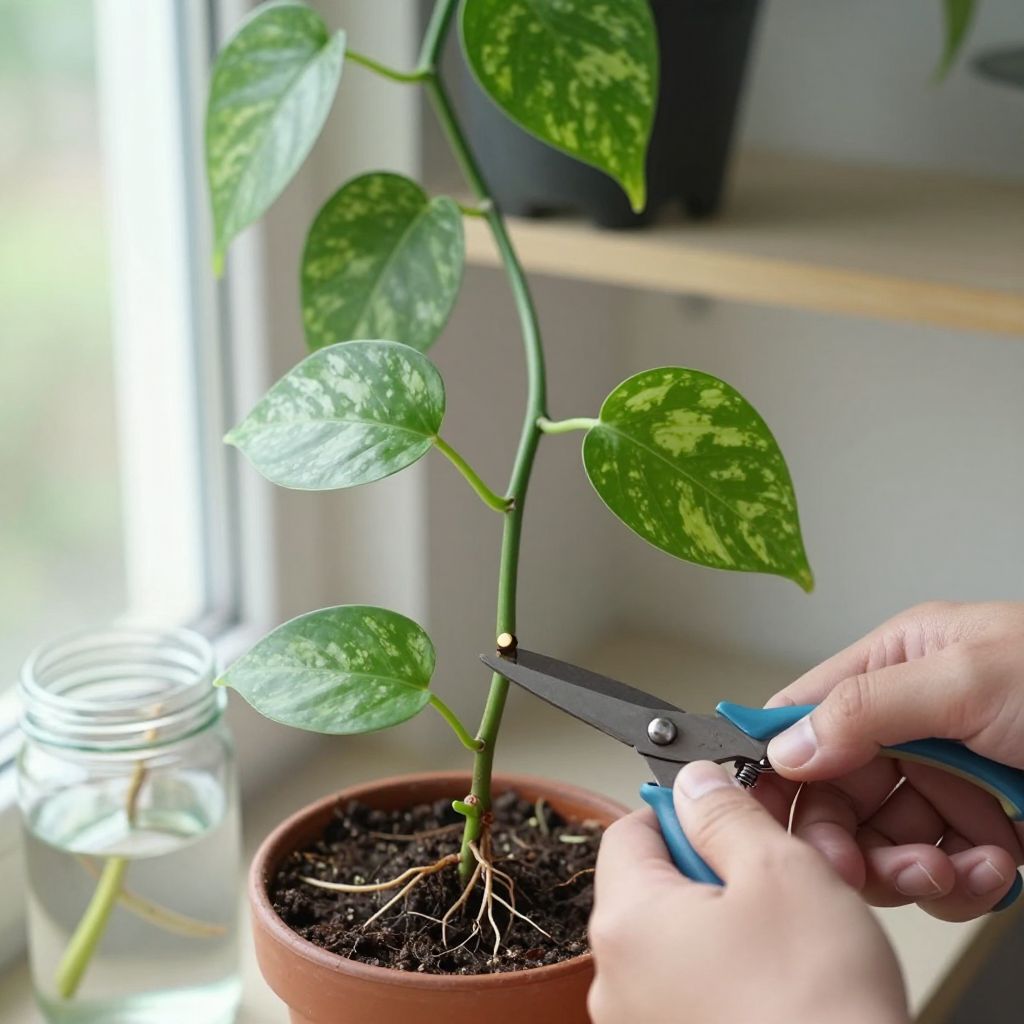
If you’re wondering where to cut pothos to propagate, the short answer is: cut just below a node, the small bump on the stem where leaves and aerial roots emerge. That node is the part that can grow roots, so every cutting needs at least one healthy node to succeed.
Once you know how to spot a node, pothos propagation becomes simple. With the right cut, a clean tool, and a little patience, you can root new plants in water or soil and turn one vine into several healthy starts.
Where To Cut Pothos To Propagate?
Cut just below a node, about 1/4 to 1/2 inch beneath it, so the node stays attached to the cutting. Include at least one node and one leaf, though two nodes often gives better results. Avoid cutting through the node itself, because that reduces the cutting’s ability to root.
How to Identify the Right Spot on a Pothos Stem
Pothos stems have repeating points where leaves attach. Those points are nodes, and they may look like small bumps, rings, or tiny brown aerial-root nubs.
What to look for
- Nodes: the key rooting points on the vine
- Leaves: useful for photosynthesis, but they do not root
- Aerial roots: often emerge from nodes and can help rooting
- Internodes: the smooth stem sections between nodes
If you are unsure, trace the vine from one leaf to the next. The node is usually right where the leaf stalk meets the main stem.
What not to cut
- Do not take a cutting with only a leaf and no node.
- Do not cut too far above the node, leaving a long bare stub.
- Do not crush the stem with dull scissors or torn cuts.
Best Cutting Length for Pothos Propagation
A single-node cutting can root, but a cutting with 2 to 4 nodes is often easier for beginners because it has more rooting points and usually establishes faster. Longer cuttings also give you more flexibility if one node fails.
Simple rule for sizing
- Single plant start: 1 to 3 nodes is usually enough
- Faster, fuller propagation: 2 to 4 nodes per cutting
- Large vines: divide into several sections rather than one very long cutting
If the vine is sparse or leggy, you can cut between nodes and make several cuttings from one stem. This is a good way to encourage the parent plant to branch after pruning.
How to Cut Pothos for Propagation Step by Step
- Choose a healthy vine with firm stems, good leaf color, and visible nodes.
- Use clean, sharp scissors or pruning snips to reduce damage and disease risk.
- Locate a node near the base of the section you want to remove.
- Make the cut just below that node.
- Trim the cutting into sections if you want multiple starts, making sure each section has at least one node.
- Remove any leaf that would sit below the waterline or beneath the soil surface.
Clean tools matter. A quick wipe with rubbing alcohol or a disinfecting wipe helps prevent spreading bacteria or fungi from plant to plant.
Can You Propagate Pothos in Water or Soil?
Yes, pothos roots well in either water or soil. Water propagation is easier to monitor, while soil propagation can reduce transplant shock later. Both methods work well if the cutting has a node and the growing conditions are warm and bright.
Water propagation
- Place the node, not the leaf, in clean water.
- Keep leaves above the waterline to prevent rot.
- Change the water every 5 to 7 days, or sooner if it turns cloudy.
- Move the jar to bright, indirect light.
Roots often begin forming in a couple of weeks, but timing varies with temperature and light. Wait until roots are several inches long before potting up.
Soil propagation
- Use a light, well-draining potting mix.
- Insert the node just below the surface.
- Keep the mix lightly moist, not soggy.
- Covering the pot loosely with a clear bag can help hold humidity, but vent it daily.
Soil propagation is often best if you want to avoid moving roots from water to potting mix later. The tradeoff is that you cannot see root development as easily.
Best Conditions for Rooting Pothos Cuttings
Pothos roots best in warm, stable indoor conditions with bright, indirect light. Cold rooms, harsh sun, and soggy media slow rooting or increase rot.
Ideal setup
- Light: bright, indirect light near a window
- Temperature: comfortably warm indoor temperatures, not chilly drafts
- Humidity: moderate to higher humidity helps, especially in dry homes
- Airflow: gentle airflow without direct blasts from vents
If your home is dry, grouping cuttings together or using a loose humidity cover can help. Just avoid sealing them in stagnant, wet conditions, which can encourage mold.
How to Tell When a Pothos Cutting Is Ready to Pot Up
In water, wait until roots are well developed and several inches long. In soil, judge by new growth and resistance when you give the cutting a very gentle tug. The goal is to let the cutting establish before moving it into a larger pot.
Signs of readiness
- Multiple roots have formed from the node
- Roots are no longer tiny nubs
- New leaves or fresh growth appear
- The cutting stays upright without support
When potting up, use a container with drainage holes and a loose houseplant mix. A mix that drains well is especially important because pothos dislikes waterlogged roots.
Common Mistakes When Cutting Pothos
Most propagation failures come from cutting in the wrong place, overwatering, or using weak plant material. These mistakes are easy to avoid once you know what to watch for.
Frequent problems and fixes
- No node on the cutting: re-cut below a visible node.
- Leaf rotting in water: remove any leaf sitting below the waterline.
- Stem turning mushy: discard the cutting and start again with a firmer section.
- Slow rooting: move to brighter indirect light and warmer conditions.
- Wilting after potting: keep soil evenly moist for a short adjustment period, but not saturated.
If the mother plant looks weak, wait until it has recovered before taking more cuttings. A stressed plant is less likely to produce strong new growth.
How to Prune the Parent Pothos After Propagation
Cutting pothos for propagation also helps shape the parent plant. If the vine has become long and sparse, pruning above a node encourages branching below the cut, which can make the plant look fuller over time.
Pruning tips
- Cut just above a node on the parent plant if you want new branching there.
- Remove yellow, damaged, or weak stems first.
- Do not remove too much at once from a stressed plant.
If you want a bushier pothos, keep several cuttings and replant them into the same pot once rooted. This is a simple way to create a fuller container.
Pests and Disease Issues to Watch For
Pothos is generally easygoing, but cuttings are more vulnerable than established plants. Watch for rot, fungus gnats in wet soil, and common indoor pests such as mealybugs or spider mites.
Prevention basics
- Use clean tools and clean containers
- Keep water fresh and soil only lightly moist
- Inspect stems and leaf joints for pests before taking cuttings
- Remove any soft, blackened, or foul-smelling tissue promptly
If you see fuzzy growth, slime, or a sour smell, the cutting is likely rotting. Start over with healthier material and improve airflow and sanitation.
Quick Reference: Best Practice for Pothos Cuttings
- Cut just below a node
- Keep at least one node on every cutting
- Use bright, indirect light
- Keep water clean or soil lightly moist
- Wait for strong roots before potting up
Conclusion
When you know where to cut pothos to propagate, the process becomes straightforward: find a healthy node, cut just below it, and root the cutting in water or soil under warm, bright indoor conditions. Start with one or two cuttings, watch how they respond, and you’ll quickly learn what works best in your home.
If you want to keep improving your houseplant skills, it can also help to read more about pothos care basics and how to root pothos cuttings.