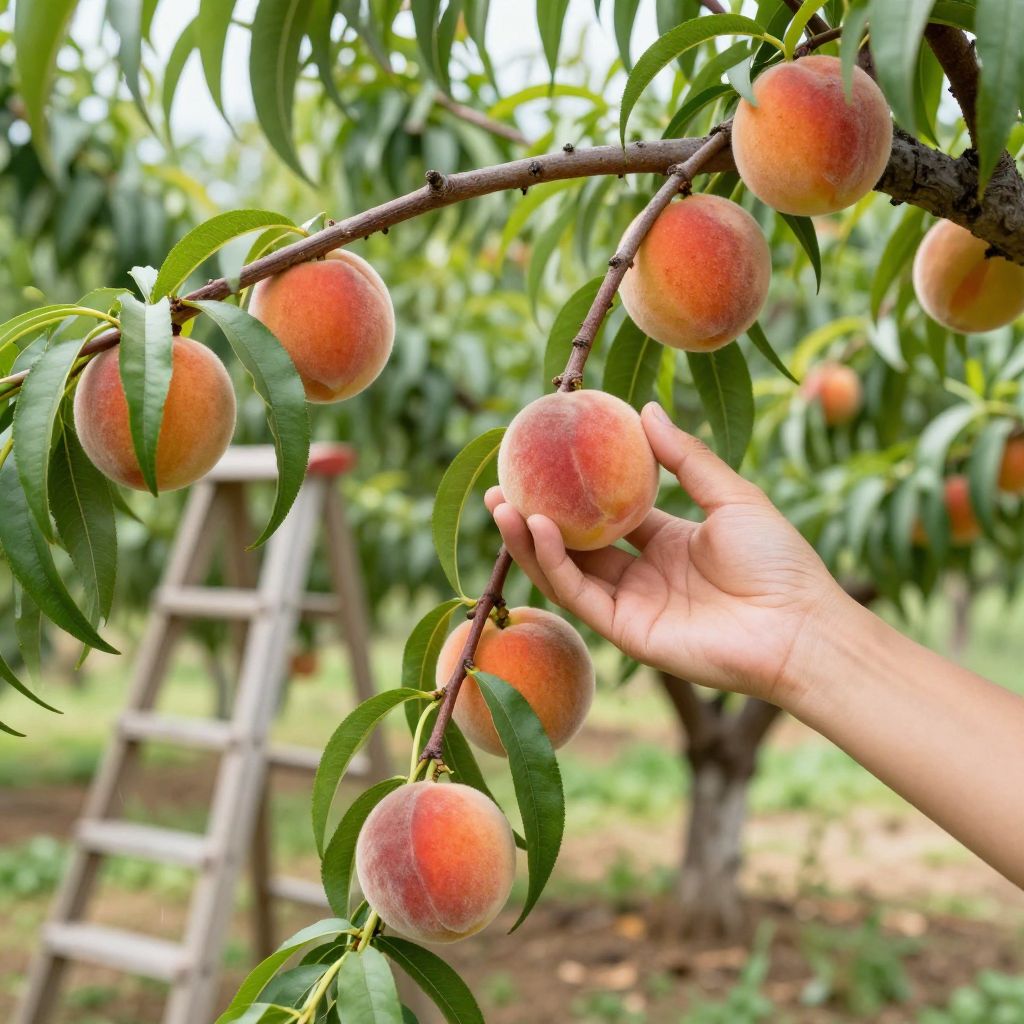
Wondering when to pick peaches so they’re sweet, juicy, and not mealy? The right harvest time makes a big difference, especially because peaches soften quickly after picking but do not improve much in flavor once removed from the tree.
Knowing the signs of ripeness helps you avoid harvesting too early or too late. With a few simple checks, you can pick peaches at the best stage for eating fresh, storing briefly, or letting them finish ripening indoors.
When to pick peaches?
Pick peaches when they come off the tree with a gentle lift and twist, the skin has developed full background color, and the fruit feels slightly soft near the stem end. Ripe peaches should smell fragrant and taste sweet, but exact timing depends on the variety, weather, sun exposure, and your local climate.
How to tell peaches are ready to harvest
Color alone is not enough. Many peaches blush red before they are fully ripe, so look at the background color underneath the red blush.
Ripeness signs to check
- Background color changes from green to creamy yellow, golden, or pale orange depending on the variety.
- Fruit gives slightly when you press gently near the stem end, not the middle.
- Strong peach aroma is present when you sniff near the stem.
- Easy release from the branch with a slight upward lift and twist.
- Skin texture looks full and smooth, not tight and shiny like an immature peach.
If the peach is still hard, has a green cast, and needs to be tugged free, it is usually too early. If it feels very soft, bruises easily, or has begun to wrinkle, it may be overripe on the tree.
What not to rely on
- Red blush alone, since many peaches color up before they ripen.
- Fruit size alone, because large peaches can still be immature.
- Calendar dates alone, because harvest time varies by cultivar and weather.
Seasonal timing: what month are peaches usually picked?
Peach harvest season usually falls in mid- to late summer, but the exact window depends on your region and variety. Early cultivars may ripen first, while midseason and late-season peaches can follow weeks later. Warm springs often speed ripening; cool, cloudy weather can delay it.
How climate affects harvest timing
- Warm climates often ripen peaches earlier and more quickly.
- Cooler climates usually delay harvest and may spread it out over a longer period.
- Full sun on the outer canopy can ripen fruit faster than shaded interior fruit.
- Heavy crop load can slow size development and make ripening uneven.
If you are unsure about timing in your area, watch the fruit closely for color, scent, and softness rather than assuming all peaches on the tree will ripen at once.
How to pick peaches without damaging the tree or fruit
Handle peaches gently. They bruise easily, and rough picking can damage nearby fruiting spurs or small branches.
- Hold the peach in your palm and support it from below.
- Lift it slightly upward.
- Twist gently until the stem separates.
- Place the fruit into a shallow basket or container.
- Keep picked peaches out of direct sun while you finish harvesting.
If a peach resists, leave it for another day or two and check again. Forcing fruit off the branch can tear the stem area and shorten storage life.
Best harvesting conditions
- Pick in the cool morning when fruit is firmer and less likely to bruise.
- Use a shallow picking container to avoid stacking fruit too deeply.
- Harvest in dry weather if possible, since wet fruit is more prone to bruising and decay.
What if your peaches are ripe on the tree but not all at once?
That is normal. Peaches often mature unevenly, especially on trees with mixed sun exposure or heavy crops. You may need to harvest the same tree several times over a week or two.
How to manage uneven ripening
- Pick the most mature fruit first and leave firmer peaches for later.
- Check the tree every 1 to 3 days during peak ripening.
- Thin crowded fruit earlier in the season next year to improve uniform ripening.
- Prune for better light penetration so interior fruit colors and ripens more evenly.
Fruit on the shaded side of the tree often lags behind fruit in direct sun, so inspect all sides carefully before harvesting.
Can peaches ripen after picking?
Peaches can soften and develop a little more aroma after harvest, but they do not become significantly sweeter once picked. If you harvest them slightly firm, let them finish ripening at room temperature for a short time. Do not refrigerate them until they are ripe unless you need to slow the process.
How to finish ripening picked peaches
- Set fruit in a single layer at room temperature.
- Keep them out of direct sun and away from heat.
- Check daily for softness and fragrance.
- Refrigerate only after they are ripe if you want to extend storage a little.
For a deeper look at post-harvest handling, see do peaches ripen after picking?
Growing conditions that affect when peaches are ready
Good peach harvests start with healthy trees. Trees grown in the right conditions tend to ripen fruit more evenly and produce better flavor.
Sun, soil, and drainage
- Sunlight: Peaches need full sun for best flowering and fruit quality.
- Soil: Well-drained soil is essential; waterlogged roots reduce tree vigor and fruit quality.
- Organic matter: Compost can improve soil structure, especially in poor or sandy soils.
- Drainage: Avoid low spots where cold air and standing water collect.
Healthy trees are more likely to size fruit properly and ripen it evenly. If the tree is stressed by drought, poor drainage, or overcrowding, peaches may be small, dry, or slow to mature.
Watering during fruit development
Consistent moisture matters most while fruit is sizing up. Irregular watering can lead to small fruit, poor flavor, or premature drop.
- Water deeply during dry spells rather than giving frequent shallow sprinklings.
- Mulch around the root zone to help hold moisture, but keep mulch a few inches away from the trunk.
- Reduce stress during heat waves, when fruit can shrivel or ripen too quickly.
Pruning and thinning for better harvest timing
Pruning and thinning do not just shape the tree; they help peaches ripen more evenly and improve fruit size. Too many peaches on one branch can delay ripening and reduce quality.
Why thinning matters
- Leaves and fruit get better light.
- Peaches grow larger and sweeter.
- Branches are less likely to break under heavy weight.
- Ripening is often more even across the tree.
If your tree consistently produces many small peaches that ripen unevenly, thinning earlier in the season may help more than waiting for harvest time to solve the problem.
Common problems when deciding when to pick peaches
1. The fruit looks ripe but tastes bland
This often means the peach was picked too early or the tree did not receive enough sun. Let a few more fruits remain on the tree until the background color deepens and the aroma improves.
2. Fruit gets soft before it tastes good
Some peaches soften quickly in warm weather. If the tree is overloaded or stressed, fruit may become soft before it fully develops flavor. Pick as soon as the fruit releases easily and finish ripening indoors if needed.
3. Birds, insects, or rot damage the crop
Harvest promptly once peaches are ready. Overripe fruit attracts pests and can spread decay to nearby peaches. Remove damaged fruit from the tree and the ground to reduce problems.
4. Peaches drop before you harvest them
Premature drop can happen from drought, heat stress, pests, disease, or a heavy crop. Check moisture, inspect for insect damage, and harvest ripe fruit promptly.
Pests and diseases that can affect harvest quality
While the main question is when to pick peaches, fruit quality can be reduced by pests and diseases that show up near harvest.
- Brown rot can cause soft, decaying patches on ripening fruit, especially in humid weather.
- Insect damage may leave entry holes, frass, or misshapen fruit.
- Birds and wildlife can peck or remove ripe peaches just as they are ready.
Inspect fruit often as harvest approaches. Remove any rotting peaches from the tree and ground to limit spread, and pick ripe fruit promptly to reduce losses.
Quick harvest checklist
- Background color has shifted from green to yellow, gold, or cream.
- Fruit smells fragrant near the stem.
- Peach yields slightly to gentle pressure.
- It releases with a light lift and twist.
- You can harvest without bruising or tugging.
Conclusion
When to pick peaches comes down to a few reliable signs: color, fragrance, slight softness, and easy release from the branch. Check your tree every day or two during ripening, harvest gently, and let only slightly firm fruit finish indoors if needed. For more seasonal timing help, you may also want to read when is peach season in Texas?