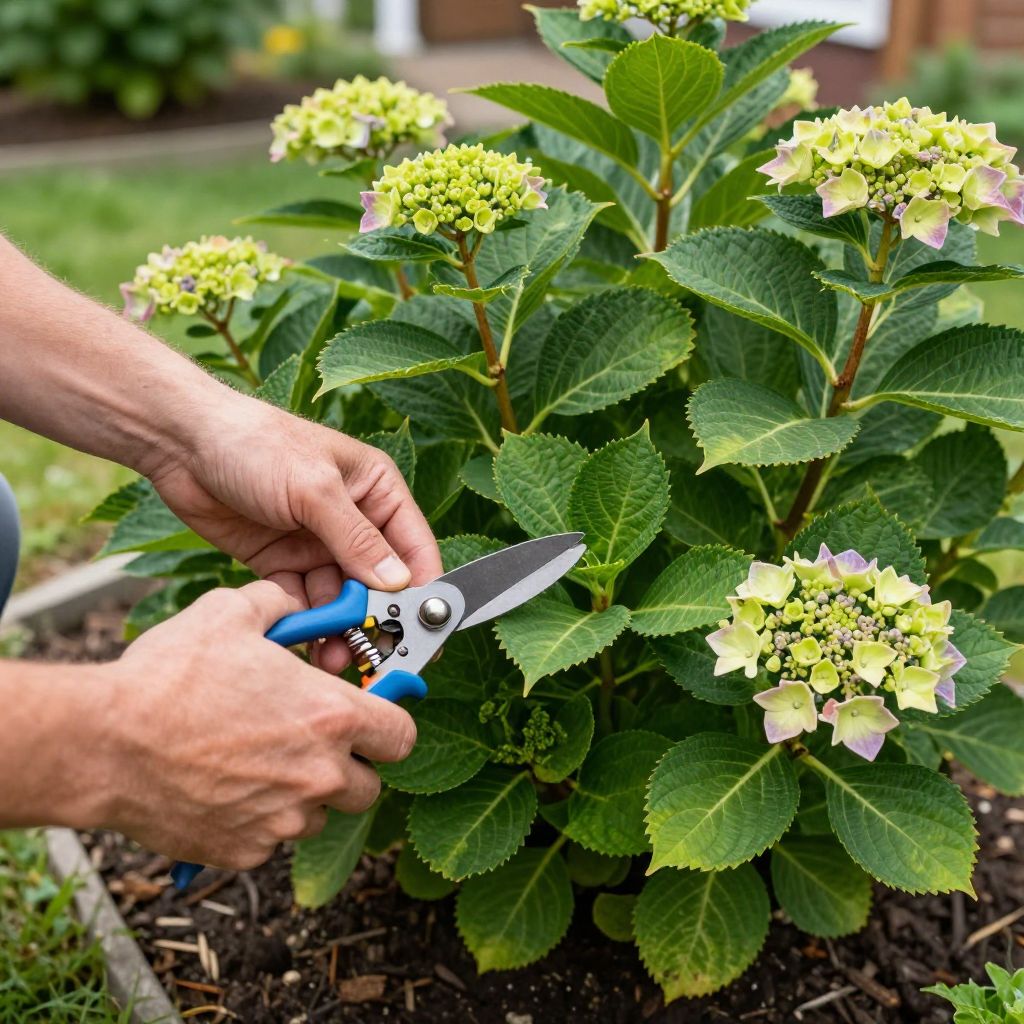
Wondering when to prune hydrangea so you don’t cut off next season’s flowers? The right timing depends on which type you grow, because some hydrangeas bloom on old wood and others on new wood. Prune at the wrong time, and you may remove the buds that would have opened later.
The good news is that once you know your hydrangea type, pruning becomes much simpler. A few careful cuts at the right season can improve flowering, shape the plant, and keep it healthy without sacrificing blooms.
When to prune hydrangea?
The best time to prune hydrangea depends on whether it blooms on old wood or new wood. Prune old-wood hydrangeas right after flowering, and prune new-wood hydrangeas in late winter or early spring before strong growth starts. If you are unsure of the type, make only light cleanup cuts until you can identify it.
First, identify what kind of hydrangea you have
Before you make a cut, figure out which hydrangea is in your garden. This matters more than the calendar, because bloom buds form at different times depending on the species.
Hydrangeas that bloom on old wood
These set flower buds on stems that grew the previous year. If you prune them too late in winter or spring, you can remove the buds before they open.
- Bigleaf hydrangea (Hydrangea macrophylla)
- Mountain hydrangea (Hydrangea serrata)
- Many oakleaf hydrangeas (Hydrangea quercifolia)
Hydrangeas that bloom on new wood
These form flowers on the current season’s growth, so they can be pruned in late winter or early spring without losing that year’s bloom display.
- Panicle hydrangea (Hydrangea paniculata)
- Smooth hydrangea (Hydrangea arborescens)
Best pruning timing by hydrangea type
Old-wood bloomers: prune right after flowering
For bigleaf, mountain, and many oakleaf hydrangeas, prune soon after the flowers fade, usually in summer. That gives the plant time to grow new stems and set next year’s buds before cold weather arrives.
In most climates, avoid major pruning after late summer. Late pruning may encourage tender new growth that can be damaged by frost, and it can reduce the next season’s flower count.
New-wood bloomers: prune in late winter or early spring
Panicle and smooth hydrangeas are usually pruned when the plant is still dormant or just beginning to wake up. In many areas, that means late winter to early spring, after the worst cold has passed but before vigorous growth begins.
This timing lets you remove winter damage, shape the shrub, and encourage strong new stems that will carry flowers later in the season.
How to prune hydrangea without hurting blooms
Hydrangeas usually need light, selective pruning, not a hard haircut. The goal is to improve structure and remove weak or damaged growth while preserving the plant’s natural shape.
- Use clean, sharp bypass pruners for small stems and loppers for thicker canes.
- Start by removing dead, broken, or diseased stems at the base or back to healthy wood.
- Cut out crossing stems that rub against each other.
- Thin crowded growth to improve airflow and light penetration.
- For older plants, remove a few of the oldest stems at ground level to renew the shrub.
Make cuts just above a healthy bud or branch junction. Avoid leaving long stubs, which can die back and look untidy.
How much should you remove?
For most hydrangeas, a light annual prune is enough. If the plant is healthy and blooming well, you may only need to remove spent flowers and a few weak stems. More severe pruning should be reserved for overgrown, damaged, or neglected plants, and even then it should be done according to the plant type.
Deadheading vs. pruning: what’s the difference?
Deadheading means removing spent flower heads, while pruning changes the structure of the plant. Deadheading is usually safe on most hydrangeas and can make the shrub look tidier, but it is not the same as cutting back stems.
On old-wood hydrangeas, deadheading should be done carefully. Snipping only the faded flower head, or cutting back to the first strong pair of leaves, is usually safer than shortening the stem deeply.
What happens if you prune at the wrong time?
If you prune an old-wood hydrangea in late winter or spring, you may cut off the flower buds and get few or no blooms that year. If you prune too late in the season, new growth may not harden off before cold weather.
New-wood hydrangeas are more forgiving, but even they can suffer if you prune during active growth and stress the plant during hot, dry weather.
Signs you may have pruned too much
- Few or no flowers
- Lots of leafy growth but no buds
- Long, weak shoots that flop over
- Uneven shape after hard cutting
Special pruning tips for common hydrangea problems
Overgrown hydrangeas
If a hydrangea has become too large, reduce it gradually rather than cutting it back hard all at once, especially if it blooms on old wood. Remove a portion of the oldest stems each year to renew the plant while keeping some flowering wood in place.
Winter damage
In colder climates, wait until late winter or early spring to see which stems are alive. Scratch the bark lightly with your fingernail; green tissue underneath usually means the stem is still living.
Cut dead stems back to healthy wood or to the base. If the tips are damaged but the lower stem is healthy, prune just above a strong bud.
Flopping stems
Some hydrangeas, especially large-flowered smooth types, can flop after rain or when they grow in too much shade. Prune selectively to encourage sturdier stems, and consider a support ring or nearby companion plants that help disguise the base.
Growing conditions that affect pruning results
Pruning works best when the plant is growing in suitable conditions. A stressed hydrangea may respond poorly to cutting, even if the timing is correct.
- Sunlight: Most hydrangeas do best with morning sun and afternoon shade, though panicle hydrangeas tolerate more sun in many climates.
- Soil: Rich, well-drained soil helps stems grow strongly and recover after pruning.
- Moisture: Consistent watering is important during dry spells, especially after pruning.
- Mulch: A 2- to 3-inch layer helps conserve moisture and moderate soil temperature, but keep it away from the stems.
If your soil is very sandy or heavy clay, improving drainage and adding compost can help the plant recover better after pruning and produce stronger growth.
Tools and hygiene for clean cuts
Using the right tools helps prevent tearing and disease spread. Clean blades make smoother cuts and are easier on the plant.
- Bypass hand pruners for stems up to about pencil thickness
- Loppers for thicker canes
- Gloves for grip and protection
- Rubbing alcohol or a disinfectant wipe for cleaning blades between plants if disease is present
Sharp tools matter. Dull blades crush stems, which can slow healing and invite problems.
Can you propagate hydrangea while pruning?
Sometimes, yes. Healthy stem cuttings taken from non-flowering shoots can root, especially from some hydrangea types. If you want to try propagation, take only vigorous, disease-free stems and keep the cuttings moist and shaded while they root.
That said, propagation is a separate task from pruning. Don’t take cuttings from weak, flowering, or stressed stems just because you are already cutting the plant back.
Common pruning mistakes to avoid
- Pruning without identifying the type of hydrangea first
- Cutting old-wood bloomers hard in late winter or spring
- Shearing the shrub into a tight ball, which can reduce flowers and weaken the shape
- Removing too much growth at once
- Pruning during extreme heat, drought, or just before a hard freeze
Simple seasonal pruning guide
- After flowering: Best time for old-wood hydrangeas
- Late winter to early spring: Best time for new-wood hydrangeas
- Any time: Remove dead, broken, or diseased stems as needed
- When unsure: Do only light cleanup until you confirm the type
Conclusion: prune with the bloom cycle in mind
If you remember one thing about when to prune hydrangea, make it this: prune after flowering for old-wood types and before new growth for new-wood types. Once you know which hydrangea you have, you can shape it confidently without sacrificing next season’s blooms.
If you’re planning broader hydrangea care, it also helps to read about how to grow hydrangeas successfully and detailed hydrangea pruning techniques for more plant-specific guidance.