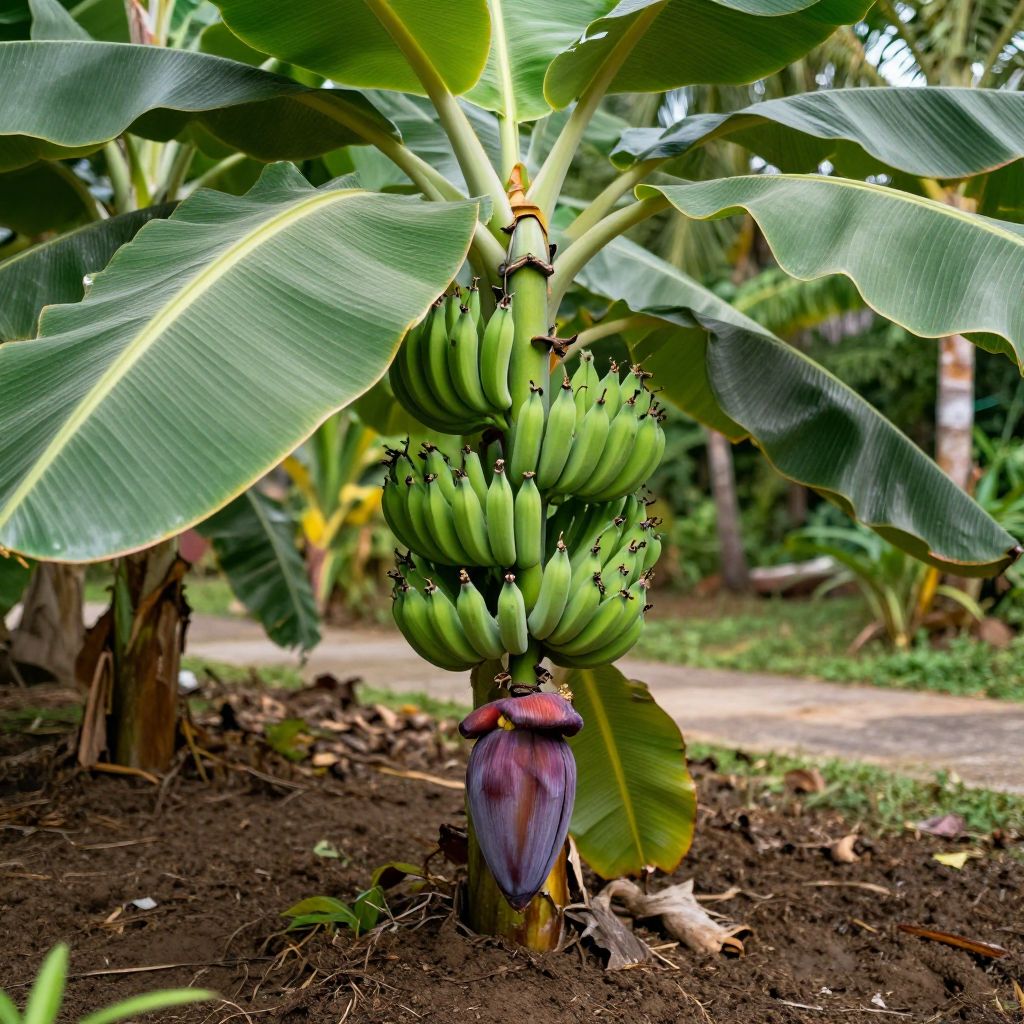
What do bananas grow on? If you picture a palm tree, you’re not alone—but bananas do not grow on trees in the usual sense. They grow on large herbaceous plants with a soft, fleshy stem called a pseudostem, and the fruit forms in a hanging bunch from the center of the plant.
Understanding that difference helps you grow bananas successfully, whether you’re trying them in a warm garden, a greenhouse, or a large container. With the right light, moisture, and rich soil, banana plants can be striking foliage plants and, in the right climate, productive fruiting plants too.
What do bananas grow on?
Bananas grow on banana plants, not true trees. The “trunk” is a pseudostem made from tightly wrapped leaf bases, and each plant produces one flower stalk that develops into a bunch of bananas. After fruiting, that stem dies back, while new shoots, called pups, continue the plant’s life cycle.
How banana plants grow
Banana plants belong to the genus Musa. They are fast-growing tropical perennials with huge leaves, shallow roots, and a strong need for warmth, water, and nutrients.
The pseudostem explained
The pseudostem looks like a trunk, but it is not woody. It is made of overlapping leaf sheaths, which means it is sturdy enough to support the plant and fruit, but still soft and vulnerable to cold, wind, and damage.
Flowers, fruit, and pups
When mature, the plant sends up a flower stalk from the center. The flowers develop into hands of bananas, and the whole cluster is called a bunch. After fruiting, the main stem usually dies, but the plant often leaves behind one or more pups that can replace it.
What bananas need to grow well
Bananas are not difficult to grow if you match their needs. They perform best with warmth, steady moisture, fertile soil, and shelter from strong wind.
- Sunlight: Full sun to light shade, with more sun generally producing stronger growth.
- Temperature: Warm conditions year-round; frost damages or kills many banana plants.
- Soil: Rich, moisture-retentive soil that still drains well.
- Water: Consistent moisture without waterlogging.
- Nutrition: Regular feeding, especially during active growth.
- Space: Room for broad leaves and spreading roots.
Best soil for bananas
Bananas like deep, fertile soil with plenty of organic matter. Add compost, well-rotted manure, or leaf mold to improve structure and water-holding capacity. At the same time, drainage matters: soggy soil can stress roots and encourage rot.
If your soil is heavy clay, plant on a raised mound or in a raised bed to help excess water drain away. If your soil is sandy, add more organic matter so it holds moisture longer.
Light and shelter
Bananas grow fastest in bright sun, but hot, dry wind can shred leaves and slow growth. A sheltered spot near a wall, fence, or windbreak often works better than an exposed open area.
In cooler climates, a south- or west-facing position can help the plant capture more heat. Indoors or in a greenhouse, place bananas where they get the brightest light available.
How to plant banana plants
Bananas are usually grown from nursery plants or pups rather than seed for home gardening. Seed-grown bananas are slow and often not true to type, so most gardeners start with a young plant or a healthy offshoot.
- Choose a warm, sheltered site with rich soil and good drainage.
- Dig a hole wider than the root ball and mix in compost.
- Set the plant at the same depth it was growing before.
- Backfill gently and water thoroughly to settle the soil.
- Mulch around the plant, keeping mulch a little away from the stem.
For containers, use a large pot with drainage holes and a quality potting mix amended with compost. Banana plants in pots need more frequent watering and feeding than those in the ground.
Container growing tips
If you’re growing bananas in pots, choose a container that is large enough to support both roots and top growth. A small pot can dry out too quickly and limit the plant’s size.
- Use a sturdy pot that will not tip as the plant gets tall.
- Keep the mix evenly moist, not soggy.
- Repot or root-prune when the plant becomes crowded.
- Move containers to a protected spot before cold weather arrives.
Watering and feeding banana plants
Bananas are thirsty plants, especially in warm weather and while making large leaves. Irregular watering can lead to slow growth, leaf curling, and poor fruit development.
Water deeply when the top layer of soil starts to dry, but avoid leaving the plant in standing water. The goal is consistent moisture, not saturation.
Feeding for strong growth
Because bananas grow quickly, they use a lot of nutrients. A soil rich in compost helps, but many plants also benefit from regular feeding during the growing season.
- Top-dress with compost or well-rotted organic matter.
- Use a balanced fertilizer appropriate for fruiting or leafy growth, if needed, following label directions.
- Reduce feeding when growth slows in cool weather.
Too much fertilizer can be as harmful as too little, especially in containers. Excess salts can burn roots and cause leaf-edge browning, so always follow product instructions and watch how the plant responds.
Pruning, maintenance, and plant care
Banana plants do not need complicated pruning, but they do benefit from regular cleanup. Remove damaged leaves, old fruiting stems, and weak excess pups to keep the clump healthy and manageable.
Managing pups
Pups are the young shoots that emerge from the base of the plant. In a home garden, it is usually best to keep one strong replacement pup and remove extra weak ones so the clump does not become overcrowded.
If you plan to propagate bananas, choose a healthy pup with its own roots rather than a tiny shoot. A larger pup establishes more reliably after separation.
Wind and leaf damage
Banana leaves tear easily in wind, and that is normal to a degree. Severe shredding can reduce the plant’s ability to photosynthesize, so shelter is important. If your site is windy, use a fence, hedge, or wall as protection.
Common problems when growing bananas
Most banana problems come from climate stress, poor drainage, or inconsistent care. Catching issues early makes a big difference.
Yellowing leaves
Older leaves naturally yellow and die as new ones form. If many leaves yellow at once, check for poor drainage, low fertility, cold stress, or inconsistent watering.
Brown leaf edges
Brown edges often point to dry air, underwatering, salt buildup in containers, or wind exposure. Increase moisture consistency and flush container soil occasionally if fertilizer salts may be accumulating.
Slow growth
Slow growth is common in cool conditions. Bananas need warmth to move quickly, so growth may stall outdoors in spring or autumn, or indoors if light is weak.
Rot and soggy roots
If the base feels soft or the soil stays wet for long periods, drainage is likely the issue. Improve drainage, reduce watering, and avoid burying the stem too deeply.
Pests and diseases to watch for
Bananas can attract pests such as aphids, spider mites, mealybugs, and scale, especially on indoor or greenhouse plants. These pests weaken growth by feeding on sap.
- Inspect leaf undersides and the base of the plant regularly.
- Wash small infestations off with water.
- Remove badly infested leaves if needed.
- Improve airflow around indoor plants.
Fungal and bacterial problems are more likely where plants are crowded, wet, or poorly ventilated. Good spacing, clean tools, and avoiding overhead watering late in the day can help reduce risk.
Harvesting bananas
If your banana plant fruits, harvest timing depends on the variety and local conditions. Bananas are usually picked when the fruit has filled out but is still green, then allowed to ripen after harvest.
Watch for the angles on the fruit to become less pronounced and for the bunch to look plump and well developed. In many home gardens, fruiting is the reward of a long, warm growing season, so patience matters.
Growing bananas in cooler climates
If you live outside a tropical or subtropical climate, you can still grow bananas as ornamental plants or seasonal container specimens. The key is to protect them from cold and give them as much warmth and light as possible.
- Grow them in large pots for easy moving.
- Bring containers indoors or into a greenhouse before frost.
- Use mulch outdoors to protect roots where winters are mild.
- Expect slower growth and less reliable fruiting in cool regions.
In colder areas, many gardeners treat bananas as dramatic foliage plants rather than dependable fruit crops. That is still a worthwhile use, especially if you want a tropical look in summer borders or patio containers.
Final thoughts
So, what do bananas grow on? They grow on banana plants with a pseudostem, not on woody trees. If you provide warmth, rich soil, regular moisture, and shelter from wind, you can grow a healthy banana plant and enjoy its bold foliage, and possibly fruit in the right climate.
If you want to keep learning, a good next step is reading more about how to use compost in the garden and container gardening basics for large tropical plants.