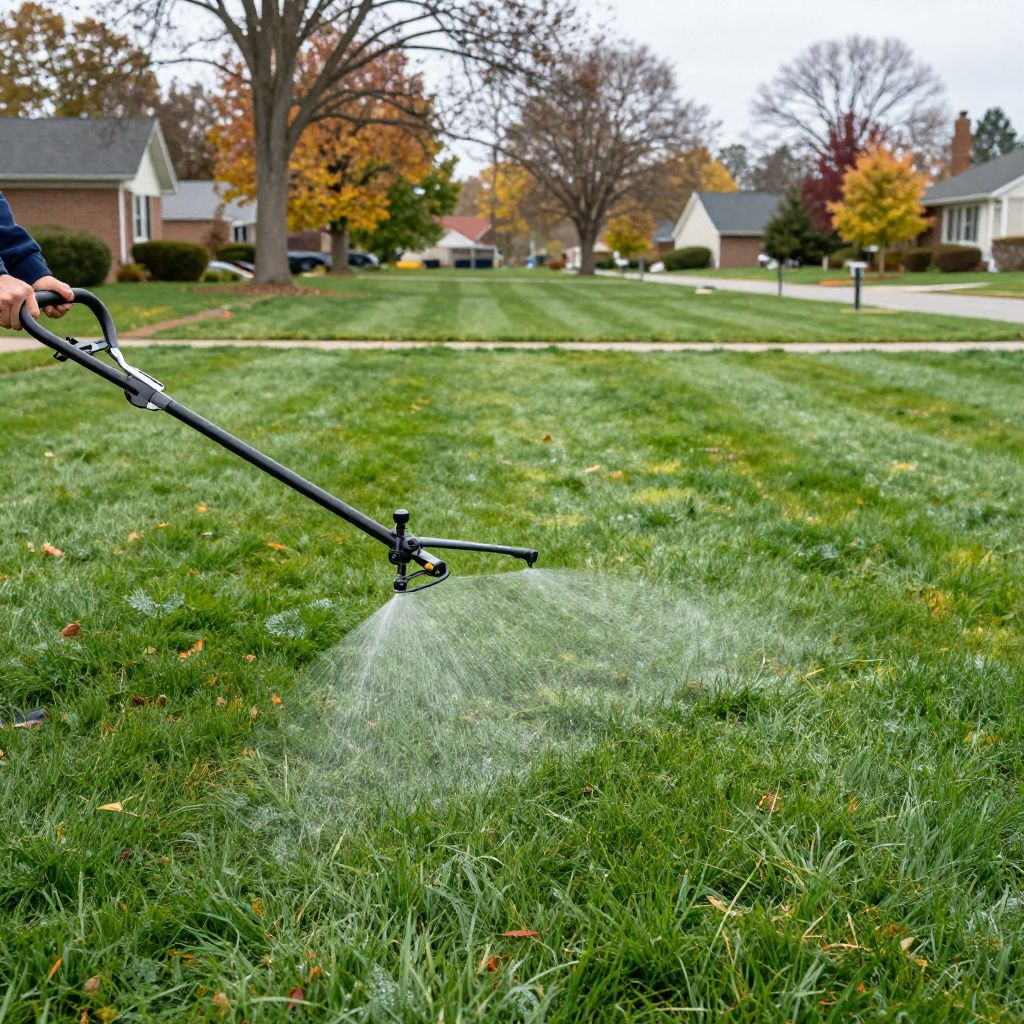
When should you fertilize a lawn in Michigan? The best timing depends on your grass type, soil condition, and whether your lawn is cool-season turf, which most Michigan lawns are. In general, the biggest feeding windows are early fall and, for many lawns, late spring. Timing matters more than the calendar because Michigan weather can shift quickly.
If you fertilize at the wrong time, you can waste product, stress the grass, or encourage weak growth when the lawn should be storing energy. The goal is to feed roots when the turf can use nutrients efficiently and recover from summer heat, foot traffic, and winter damage.
When to fertilize lawn in Michigan?
For most Michigan lawns, fertilize in early fall as the main feeding, then consider a lighter feeding in late spring if the lawn needs it. Avoid heavy fertilizing during summer stress and wait until the grass is actively growing, not dormant or frozen. Cool-season grasses respond best when temperatures are mild.
Why timing matters in Michigan lawns
Michigan lawns are usually made up of cool-season grasses such as Kentucky bluegrass, perennial ryegrass, and fine fescues. These grasses grow most actively in spring and fall, not during the hottest part of summer.
That means the most effective fertilizer applications are timed to support root growth, recovery, and storage of energy before winter.
What happens if you fertilize at the wrong time?
- Too early in spring: You may push fast top growth before roots are ready.
- Too late in summer: Heat and drought can burn or stress the lawn.
- Too late in fall: The grass may not use the nutrients well before dormancy.
- On frozen ground or snow: Fertilizer can wash away with runoff.
Best fertilizer timing by season
Early spring: use a light, careful approach
In Michigan, early spring feeding is optional for many established lawns. If you fertilize then, do it when the grass has started growing and the soil is workable, not while the lawn is still dormant.
A modest spring application can help a thin lawn green up, but too much nitrogen can create fast leaf growth without improving root strength. If your lawn was healthy last fall, you may not need a heavy spring feeding at all.
Late spring: good for a second feeding if needed
Late spring is a reasonable time for a follow-up application if the lawn is pale, recovering from winter, or showing weak growth. This is especially useful if you skipped spring feeding and want to support the lawn before summer stress arrives.
Stop short of overfeeding. In many cases, a lighter application is better than a strong one, especially if rain is frequent or the lawn already looks vigorous.
Summer: fertilize only with caution
Michigan summers can bring heat, dry spells, and drought stress. Fertilizing during hot weather can push tender growth when the lawn is already struggling.
If you must fertilize in summer, do it only when the lawn is actively growing and soil moisture is adequate. Avoid feeding during drought, extreme heat, or when the grass is brown and dormant from stress.
Early fall: the most important feeding window
For most Michigan lawns, early fall is the best time to fertilize. The grass is recovering from summer stress, temperatures are cooler, and roots are still active.
This is the feeding that helps the lawn thicken up, store energy, and head into winter in better shape. If you only fertilize once or twice a year, fall should usually be the priority.
Late fall: a useful final feeding for many lawns
Late fall fertilizing can be very effective if done before the ground freezes. The lawn may not look dramatically greener right away, but the roots can still absorb nutrients while soil temperatures remain workable.
This timing helps support spring green-up next year. The key is to apply it late enough to be useful, but not so late that the lawn is frozen or covered with snow.
How to tell if your lawn is ready for fertilizer
Instead of relying only on the calendar, check the lawn’s condition and the weather. Michigan conditions vary from the Upper Peninsula to southern counties, so local timing matters.
- Grass is actively growing: New blades are appearing and mowing has resumed.
- Soil is not frozen: Fertilizer should contact workable soil, not ice or snow.
- No drought stress: The lawn is not crispy, brown, or severely wilted.
- Rain is not immediate runoff risk: Light watering or gentle rain after application is helpful, but avoid heavy downpours.
- Mowing has started: If you are mowing regularly, the lawn is likely ready for feeding.
What type of fertilizer works best for Michigan lawns?
Choose a lawn fertilizer made for cool-season turf and follow the label directions. A soil test is the best way to know whether your lawn needs nitrogen, phosphorus, potassium, or lime.
In many established lawns, nitrogen is the main nutrient that affects color and growth. But if your soil is compacted, acidic, or low in other nutrients, fertilizer alone will not solve the problem.
Granular vs. liquid fertilizer
- Granular fertilizer: Easier for most homeowners to spread evenly over a lawn.
- Liquid fertilizer: Faster acting, but it requires careful application and even coverage.
For most home lawns in Michigan, granular fertilizer is the most practical choice. Use a broadcast or drop spreader for better control.
Slow-release vs. quick-release
- Slow-release: Feeds more gradually and reduces the chance of a growth surge.
- Quick-release: Works faster, but can be easier to overapply or burn turf if misused.
Slow-release products are often a good fit for spring and summer use, while fall feeding may use a blend depending on your lawn’s condition and the product label.
How to fertilize a lawn in Michigan step by step
- Mow first if needed. Remove excess clippings if they are thick enough to block even spreading.
- Check the weather. Aim for a calm day and avoid application before heavy rain.
- Calibrate your spreader. Set it according to the bag directions and test on a small area if possible.
- Apply evenly. Walk at a steady pace and overlap slightly to prevent striping.
- Water in if recommended. Some fertilizers need light watering to move nutrients into the soil.
- Clean up spills. Sweep fertilizer off sidewalks, driveways, and streets so it does not wash into drains.
How often should you fertilize?
Many Michigan lawns do well with one to three feedings per year, depending on grass type, soil quality, and how much maintenance you want to do. A simple plan is one strong fall feeding and one lighter spring feeding if needed.
Lawns under heavy use, newly established turf, or thin soil may need a more structured program. Healthy, mature lawns with good soil may need less.
A practical seasonal schedule for many Michigan lawns
- Early spring: Optional light feeding.
- Late spring: Feed only if the lawn needs support.
- Early fall: Main feeding.
- Late fall: Optional final feeding before freeze-up.
Common mistakes to avoid
- Fertilizing dormant grass: Wait until the lawn is actively growing.
- Applying too much nitrogen: This can cause weak, fast growth and more mowing.
- Skipping soil testing: You may be feeding the wrong problem.
- Fertilizing before a storm: Heavy rain can wash nutrients away.
- Ignoring compaction or thatch: Poor soil structure can limit results.
- Spreading unevenly: This causes streaks, dark patches, or burn spots.
How soil, watering, and mowing affect fertilizer results
Fertilizer works best when the rest of the lawn care routine is in good shape. If the soil is compacted, the grass is mowed too short, or water is inconsistent, nutrients will not perform as well.
Soil and drainage
Michigan lawns often deal with clay soil, compacted ground, or areas that stay wet after rain. Poor drainage can limit root growth and make fertilizer less effective.
If water pools for hours after rain, consider aeration, topdressing with compost, or improving grading in problem areas. Fertilizer should support the lawn, not replace soil improvement.
Watering
Fertilizer should usually be applied to a lawn that is slightly moist, not bone dry. After application, a light watering may help move nutrients into the root zone, depending on the product label.
Do not overwater just to “push” fertilizer. Too much water can leach nutrients or encourage shallow roots.
Mowing
Keep mowing height appropriate for your grass type. Cutting too short stresses the lawn and can make fertilizer less effective.
As a general rule, avoid removing more than one-third of the blade at a time.
Troubleshooting: when the lawn still looks poor after fertilizing
If you fertilized at the right time but the lawn still looks weak, the issue may not be nutrient shortage alone.
- Yellowing with poor growth: Soil compaction, root damage, or drainage issues may be limiting uptake.
- Brown patches: Could be drought, disease, insects, or pet damage rather than fertilizer needs.
- Weedy lawn: Thin turf often needs renovation, overseeding, and better mowing, not just more fertilizer.
- Fast growth then thinning: Too much spring nitrogen can create weak, lush growth that struggles in summer.
If you are unsure, a soil test and a closer look at the grass species, sun exposure, and drainage conditions will usually point you in the right direction.
Final takeaway
For most Michigan lawns, the best answer to when to fertilize is simple: feed mainly in early fall, and use spring or late fall only when the lawn needs it. Match the timing to active growth, avoid summer stress, and always consider soil and weather conditions.
If you want to fine-tune your lawn care, you may also find it helpful to read about when to apply weed and feed and when to fertilize new sod.