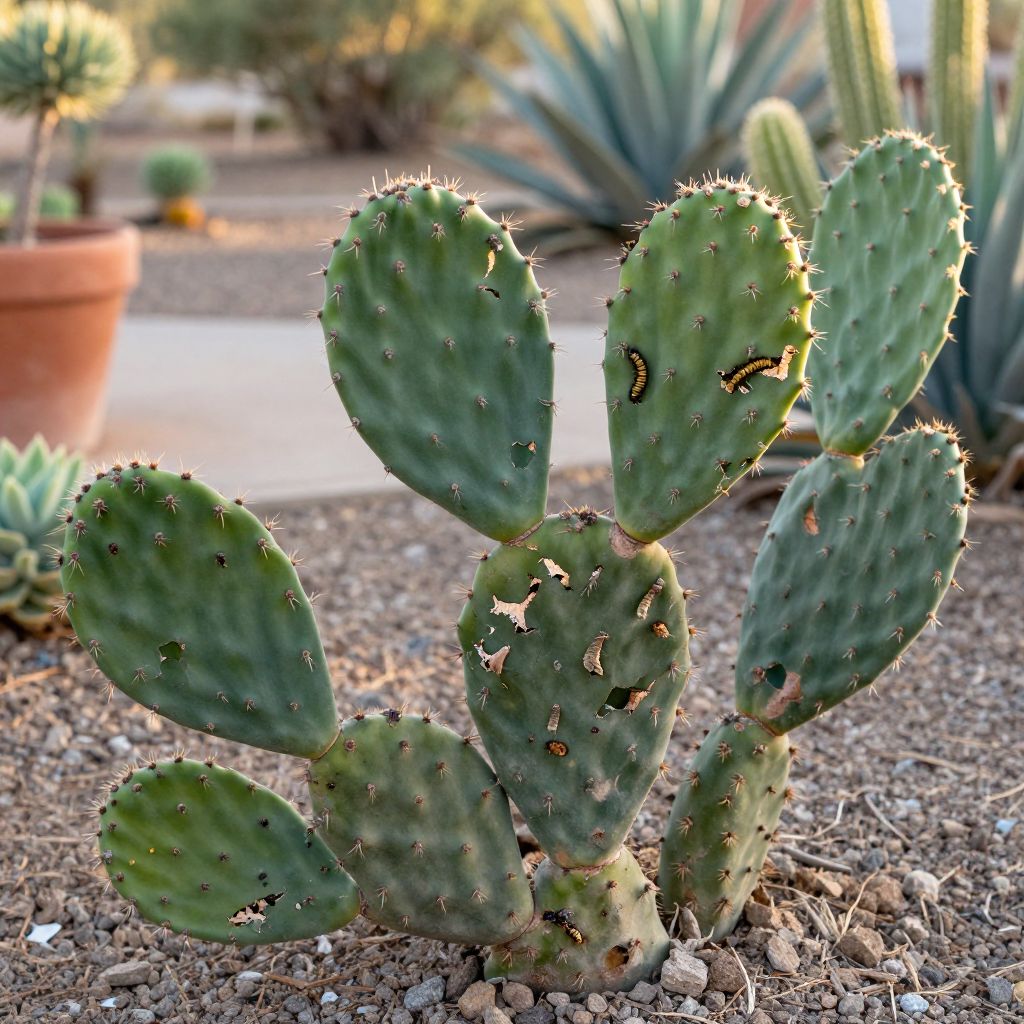
What eats cactus? If your cactus has chewed edges, holes, or missing pads, the culprit is usually not one thing but a mix of pests, animals, and sometimes rot that looks like feeding damage. The good news is that most cactus damage can be identified and managed once you know what to look for.
This guide will help you tell the difference between insect damage, animal damage, and environmental problems, then show you how to protect your plant and help it recover.
What eats cactus?
Cactus can be eaten by insects like mealybugs and scale, larger pests such as slugs and snails, and animals including rabbits, rodents, deer, and birds. In some cases, soft rot or sunburn can mimic chewing. The first step is to inspect the damage closely so you treat the real cause, not just the symptoms.
Common pests and animals that feed on cactus
Insects that damage cactus
Most insect pests do not “eat” cactus the way a caterpillar eats leaves, but they do pierce, suck, or scrape tissue and leave visible damage.
- Mealybugs hide in joints, ribs, and roots. They leave white cottony clusters and can weaken plants badly.
- Scale insects look like small bumps on pads or stems. They are often brown, tan, or gray and can be hard to spot.
- Spider mites cause stippling, dull color, and fine webbing, especially in hot, dry conditions.
- Cactus bugs and other true bugs may puncture tissue and leave discolored spots or corky patches.
Slugs, snails, and caterpillars
These are more likely to create actual bite marks, ragged holes, or scraped surfaces, especially on young or tender cactus growth. Slugs and snails are usually active at night and in damp conditions, while caterpillars may hide during the day.
Mammals and birds
Outdoor cactus can be damaged by rabbits, rats, mice, ground squirrels, deer, and sometimes birds. Mammals often leave clean bites, torn edges, or flattened pads. Birds may peck at fruit, flowers, or soft tissue, especially on prickly pear and similar species.
How to tell what is eating your cactus
Look closely at the type of damage
- Clean, repeated bites often point to rabbits, rodents, or deer.
- Ragged holes or slime trails usually suggest slugs or snails.
- White cottony residue is a classic sign of mealybugs.
- Raised bumps that do not wipe off easily may be scale.
- Yellowing, shriveling, or corky patches can be pest stress, sunburn, or rot rather than feeding.
Check where the damage appears
Damage near the base, soil line, or hidden joints often points to mealybugs, scale, or rodents. Damage high on exposed pads may be from birds, insects, or sun exposure. If the plant is indoors, pests are more likely than animals.
Use timing as a clue
If the damage appears overnight, think slugs, snails, or mammals. If it develops slowly over weeks, look for insects or disease. If the plant was recently moved into stronger sun, the problem may be environmental stress rather than something eating it.
What to do right away if your cactus is being eaten
- Isolate the plant if it is in a pot and move it away from other plants.
- Inspect all sides, including under pads, in crevices, and at the soil line.
- Remove any loose debris, dead tissue, or fallen pads from around the base.
- Check the soil surface and pot drainage for hiding pests.
- Take a photo or note the pattern of damage so you can track whether it is spreading.
If the cactus is outdoors, look for tracks, droppings, or nighttime activity. If it is indoors, inspect nearby windowsills, shelves, and neighboring houseplants for pest spread.
Practical control methods that actually help
For mealybugs and scale
Use a cotton swab dipped in isopropyl alcohol to dab visible mealybugs or scale on small infestations. For heavier infestations, prune badly affected sections if the plant can tolerate it, then repeat inspections weekly.
- Wipe pests off with a soft cloth or cotton swab.
- Use a gentle stream of water outdoors to dislodge some pests.
- Quarantine infested houseplants from healthy ones.
- Check roots if the plant is declining without obvious top growth pests.
Avoid soaking the cactus or leaving alcohol on large areas of tissue. Test a small spot first if the plant is especially delicate or thin-skinned.
For slugs and snails
Pick them off at night or early morning, reduce damp hiding places, and keep mulch away from the crown. In containers, raise pots off the ground and make sure excess water drains freely. Traps and barriers can help, but moisture management is often the biggest fix.
For rodents, rabbits, and deer
Physical protection works best. Use fencing, hardware cloth, or sturdy mesh around vulnerable plants, especially young specimens and newly planted cactus. For containers, place pots where animals cannot easily reach them.
- Use low fencing for rabbits and larger barriers for deer.
- Keep weeds and tall grass down around outdoor cactus.
- Remove fallen fruit or pads that may attract animals.
- Protect newly planted cactus until it is established.
For birds
Birds are usually a problem when fruit, flowers, or soft new growth is exposed. Netting, visual deterrents, and placing plants where birds cannot perch easily can reduce pecking. Make sure any netting is secured so wildlife cannot become tangled.
When damage is really a growing problem
Rot can look like chewing
Soft, dark, or mushy tissue is more likely rot than feeding damage. Rot often starts after overwatering, poor drainage, cold damage, or injury. If the tissue smells bad or feels wet and collapses easily, pests may not be the main issue.
Sunburn and stress can mimic pests
Cactus moved suddenly from shade into strong sun can develop bleached, tan, or corky patches. These areas are not eaten, but they can look damaged. Gradual acclimation is important, especially for indoor plants moved outdoors.
What to do about rot
- Stop watering until the soil dries appropriately for the species and season.
- Improve drainage or repot into a faster-draining cactus mix if needed.
- Cut away soft, diseased tissue with a clean tool if the plant can be saved.
- Let cuts callus before replanting, if propagation is possible.
How to prevent cactus from being eaten
Choose the right growing conditions
Healthy cactus is less likely to be attacked. Most cactus need bright light, sharp drainage, and a pot or bed that does not stay wet for long. Overly rich, constantly moist soil encourages weak growth and pest problems.
- Use a gritty, fast-draining cactus mix.
- Choose pots with drainage holes.
- Avoid oversized containers that stay wet too long.
- Give the plant the light level it needs, but acclimate it gradually.
Water carefully
Water only when the soil has dried enough for the plant’s needs. The exact timing depends on temperature, pot size, light, airflow, and whether the cactus is actively growing. In cool or low-light periods, cactus usually needs much less water than in warm, bright weather.
Wet soil plus low light is one of the fastest ways to weaken a cactus. Weak plants are more attractive to pests and more likely to rot.
Inspect regularly
Check your cactus every one to two weeks during active growth, and less often in slower seasons if it is healthy. Early detection makes mealybugs, scale, and slug damage much easier to manage.
Indoor vs. outdoor cactus problems
Indoor cactus
Indoor plants are more likely to suffer from mealybugs, scale, spider mites, and overwatering. Keep them in bright light, avoid crowded shelves, and inspect new plants before bringing them home.
Outdoor cactus
Outdoor plants face more animal pressure, weather stress, and slug activity. Good site selection matters: full sun or bright light, excellent drainage, and protection from standing water are key in most climates.
Propagation and recovery after damage
If a cactus pad or stem is badly damaged but still firm in other sections, you may be able to remove the damaged part and propagate healthy tissue, depending on the species. Use a clean, sharp tool and let the cut surface dry and callus before planting in dry, well-drained mix.
Do not try to save tissue that is soft, blackened, or actively rotting. For many cactus types, healthy cuttings root better than damaged, stressed plants left in poor conditions.
Mistakes to avoid
- Assuming every hole is from insects.
- Watering more because the plant looks stressed.
- Leaving infested plants near healthy ones.
- Using dense soil that stays wet too long.
- Moving a cactus into strong sun without acclimation.
- Ignoring the soil line, where many pests hide.
Conclusion
If you are wondering what eats cactus, start by identifying the damage pattern, then match it to the most likely pest or animal. Check the plant closely, improve growing conditions, and use physical protection or targeted control as needed. For more help diagnosing cactus stress, you may also find what eats a cactus and why is my cactus turning yellow useful next reads.