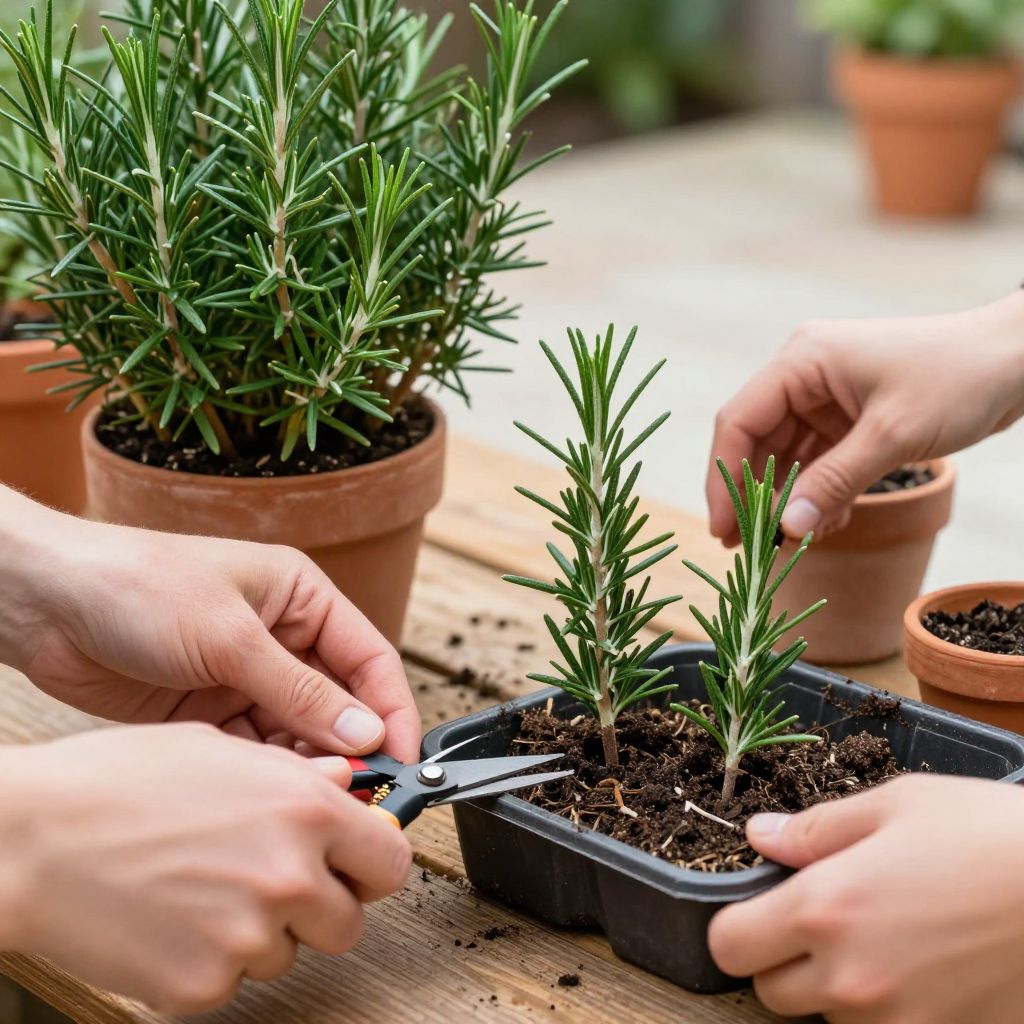
Can you propagate rosemary? Yes, and it’s one of the easiest herbs to multiply at home if you give it the right conditions. Rosemary roots reliably from cuttings, and you can also grow it from seed, though seed is slower and less dependable for most gardeners.
The best method for beginners is usually stem cuttings taken from healthy, non-flowering growth. With sharp tools, a free-draining medium, and steady warmth and light, you can turn one rosemary plant into several new plants for pots, borders, or herb beds.
Can you propagate rosemary?
Yes. Rosemary (Salvia rosmarinus) is commonly propagated from stem cuttings, which is faster and more reliable than seed. Softwood or semi-ripe cuttings root well in a light, well-drained mix, especially when kept evenly moist, warm, and bright but out of harsh direct sun.
Why cuttings are the best way to propagate rosemary
Rosemary grown from cuttings produces a plant that is genetically identical to the parent, so you keep the same flavor, growth habit, and fragrance. That matters if you already have a plant you like.
Seed propagation can work, but it is slower, and seedlings may vary more in vigor and form. For home gardeners, cuttings are usually the simplest and most successful route.
When to take rosemary cuttings
The easiest time is when the plant is actively growing and the stems are healthy. In many climates, that means late spring through summer, though mild regions may offer a longer window.
Choose stems that are:
- Non-flowering or just before flowering
- Healthy and pest-free
- Firm but not old and woody
- About 4 to 6 inches long
How to propagate rosemary from cuttings
Take a clean cutting, remove the lower leaves, and place the stem into a very free-draining propagation mix. Keep the medium lightly moist, not wet, and provide bright light with warmth. Roots usually form in a few weeks, but timing depends on temperature, light, and cutting quality.
Step-by-step method
- Use clean, sharp scissors or pruners to cut a 4 to 6 inch stem just below a leaf node.
- Remove the leaves from the lower half of the cutting.
- If the stem is very soft, trim just below a node again for a fresh cut.
- Optional: dip the cut end in rooting hormone to improve consistency, especially in cooler conditions.
- Insert the cutting into a pot filled with a light, well-drained mix such as seed-starting mix blended with perlite or coarse sand.
- Firm the mix gently around the stem so it stands upright.
- Water lightly so the mix is evenly damp, then let excess water drain away.
- Place the pot in bright, indirect light and keep it warm.
Best rooting conditions
- Light: Bright light, but avoid intense midday sun on fresh cuttings
- Temperature: Mild to warm conditions help rooting; avoid cold drafts
- Moisture: Evenly moist medium, never soggy
- Drainage: Essential for preventing rot
A clear plastic cover or humidity dome can help reduce moisture loss, but it should not trap stale air. Vent it daily so the cutting does not mold.
How to know if the cutting has rooted
New growth is a good sign, but don’t rely on it alone. After a few weeks, give the cutting a very gentle tug. If it resists, roots are likely forming.
You can also check by looking for:
- Fresh growth at the tip
- Firmness in the stem
- Roots visible from drainage holes
Can you propagate rosemary in water?
You can root rosemary in water, but it is usually less reliable than rooting in a potting mix. Water-rooted cuttings often develop weaker roots that struggle when moved into soil, so many gardeners prefer a well-drained medium from the start.
If you do use water, change it regularly and move the cutting into soil as soon as roots are a couple of inches long. Handle the roots carefully because they can be fragile.
Can you propagate rosemary from seed?
Yes, but seed propagation is slower and less predictable. Rosemary seed can germinate unevenly, and young seedlings grow slowly at first. If you want one or two extra plants quickly, cuttings are usually the better choice.
Seed may be worth trying if you want to grow many plants at once or if you do not have access to an established rosemary plant. Use a fine, well-drained seed mix and keep the surface just moist while waiting for germination.
How to transplant rooted rosemary cuttings
Once the cutting has a healthy root system, move it into a small pot with a free-draining potting mix. Rosemary dislikes staying wet, so avoid heavy garden soil in containers.
Transplanting tips
- Choose a pot with drainage holes.
- Use a gritty, airy mix rather than rich, dense compost alone.
- Water after potting, then let the top of the mix dry slightly before watering again.
- Acclimate the new plant gradually to stronger sun if it has been indoors.
For outdoor planting, wait until the plant is established and your weather is suitable. In colder climates, young rosemary often does better in a container that can be moved to shelter.
Growing conditions rosemary prefers
Rosemary thrives in full sun, excellent drainage, and relatively lean soil. It is adapted to drier conditions than many herbs, so overwatering is one of the most common mistakes.
Soil and compost
In the ground, rosemary prefers soil that drains quickly. If your soil is heavy clay, improve drainage with grit, coarse sand, or raised beds rather than relying on extra compost alone.
In containers, use a quality potting mix amended with perlite, pumice, or horticultural grit. A mix that holds too much water can lead to root rot.
Sunlight
Give rosemary as much sun as your climate allows. Outdoors, it usually performs best with at least 6 hours of direct light. Indoors, place it in the brightest window you have, and rotate the pot so growth stays even.
Watering
Water newly rooted plants more carefully than mature ones. Let the top inch or two of mix dry before watering again, and always empty saucers so roots do not sit in water.
Established rosemary is fairly drought-tolerant, but container plants dry out faster than in-ground plants. Check pots more often during hot, windy weather.
Common problems when propagating rosemary
Most propagation failures come from too much moisture, poor airflow, weak cuttings, or low light. If you correct those issues early, your success rate improves a lot.
Cuttings turning black or mushy
This usually means rot. The mix is too wet, the container lacks drainage, or the cutting was taken from unhealthy tissue. Start again with a fresher cutting and a drier, airier medium.
Cuttings wilting
Wilting can happen if the cutting loses moisture faster than it can replace it. Move it out of strong sun, increase humidity slightly, and check that the medium is moist but not waterlogged.
Slow or no rooting
Rosemary can root slowly, especially in cool conditions. Give it warmth, bright light, and patience. If the stem stays firm and green, it may still root even if progress seems slow.
Yellowing leaves
Yellow leaves often point to excess water, poor drainage, or low light. Improve the growing conditions before adding fertilizer. Rosemary generally needs only modest feeding.
Pruning and maintenance for healthy rosemary
Once your new plant is established, light pruning helps it stay bushy and productive. Pinch or trim soft tips to encourage branching, but avoid cutting deep into old, leafless wood unless the plant is already vigorous.
Regular trimming also gives you more material for future cuttings. Just avoid taking too much from a young plant at once, since it still needs leaf growth to build roots and strength.
Pests and diseases to watch for
- Aphids: Cluster on soft growth; rinse off or treat early
- Spider mites: More common in hot, dry indoor conditions
- Root rot: Usually caused by poor drainage or overwatering
- Powdery mildew: Can appear where airflow is poor
Good airflow, proper spacing, and careful watering prevent many rosemary problems before they start.
Harvesting rosemary from propagated plants
Once your new rosemary plant is well established, you can begin light harvesting. Snip tender tips or short sprigs rather than stripping the plant bare. Frequent, moderate harvests encourage fuller growth.
For the best flavor, harvest in dry weather and use clean pruners or scissors. Avoid taking too much from a newly rooted cutting until it has clearly settled in.
Quick troubleshooting checklist
- Use healthy, non-flowering stems.
- Choose a free-draining propagation mix.
- Keep the cutting warm and bright.
- Water lightly and let excess drain away.
- Protect from harsh sun until roots form.
- Transplant only after a strong root system develops.
Conclusion
So, can you propagate rosemary? Absolutely. If you take a healthy cutting, give it sharp drainage, and avoid overwatering, you can usually grow a new plant with very little fuss. Start with one cutting this season, and you may soon have several rosemary plants to use around the garden.
If you’d like to expand your herb garden further, look for more guidance on herb propagation basics and growing herbs in containers to keep your new rosemary plants thriving.