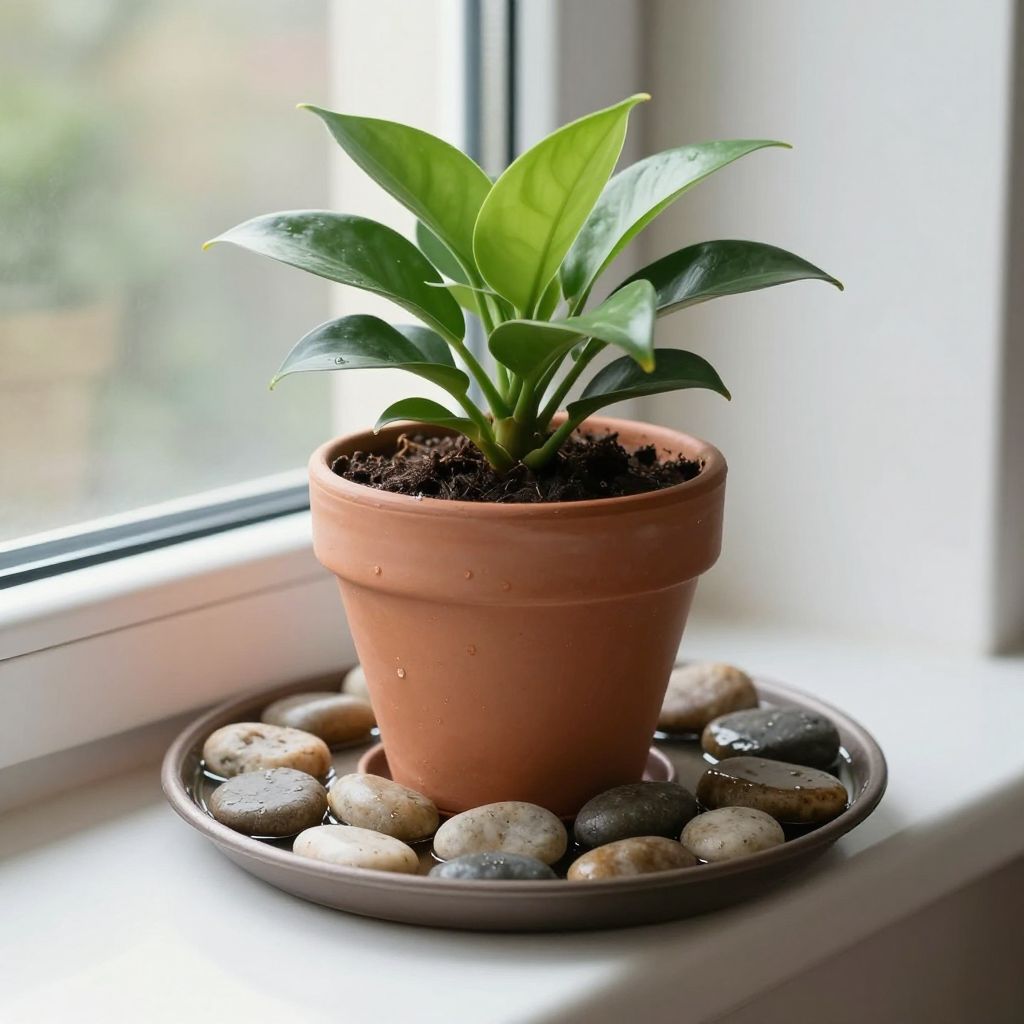
What is a pebble tray for plants, and does it really help? A pebble tray is a shallow tray filled with stones and a little water, set under or near a plant pot to raise humidity around the plant. It is a simple indoor-gardening tool, especially useful for moisture-loving houseplants in dry rooms.
Used correctly, it can help reduce dry-air stress without soaking the potting mix. Used incorrectly, it can leave roots sitting in water or create a mosquito problem, so placement and maintenance matter.
What Is A Pebble Tray For Plants?
A pebble tray for plants is a humidity aid: water sits below the pot, the stones keep the pot above the waterline, and evaporation slightly increases moisture in the air around the plant. It does not water the plant from below and it will not fix severe dryness, but it can help in heated or air-conditioned homes.
How a Pebble Tray Works
The idea is simple. As the water evaporates from the tray, the air immediately around the plant becomes a little more humid.
This is most helpful for tropical houseplants that prefer steady moisture in the air, such as ferns, calatheas, prayer plants, orchids, and some begonias. It is less useful for succulents, cacti, and drought-tolerant plants.
What it does and does not do
- Does: add a small amount of local humidity around the plant.
- Does: keep the pot from sitting directly in water.
- Does not: replace regular watering.
- Does not: raise humidity much across an entire room.
- Does not: solve poor light, root rot, or pest infestations.
When to Use a Pebble Tray
Pebble trays are most useful when indoor air is dry, especially during winter heating or in rooms with constant air conditioning. They can also help in bright, warm rooms where moisture-loving plants dry out faster than expected.
Good candidates
- Boston fern (Nephrolepis exaltata)
- Peace lily (Spathiphyllum spp.)
- Calathea and prayer plants (Goeppertia and Maranta types)
- Orchids grown indoors
- Some begonias and other tropical foliage plants
Plants that usually do not need one
- Succulents and cacti
- Snake plant (Dracaena trifasciata)
- ZZ plant (Zamioculcas zamiifolia)
- Most herbs grown in ordinary indoor conditions
How to Make a Pebble Tray
You do not need special equipment. A shallow waterproof tray, saucer, or plant base tray works as long as it is wider than the pot and can hold a little water safely.
- Choose a tray or shallow dish with a low rim.
- Add a single layer of clean pebbles, gravel, or LECA-style clay balls.
- Pour in water until it sits just below the top of the stones.
- Set the plant pot on top of the pebbles, not directly in the water.
- Check that the pot drainage holes stay above the waterline.
The pot should never sit in standing water. If the drainage holes touch the water, the potting mix can become waterlogged and roots may rot.
Best tray size
As a general guide, choose a tray that extends at least 2 to 4 inches beyond the pot on all sides. A larger surface area gives more evaporation, but it should still fit the plant stand, shelf, or windowsill safely.
How to Use a Pebble Tray Correctly
For best results, place the tray near the plant rather than assuming it will humidify the whole room. The effect is local and modest, so the plant should be close to the moisture source.
- Keep the tray in the plant’s normal light conditions.
- Refill with clean water as it evaporates.
- Rinse pebbles regularly to prevent algae and mineral buildup.
- Empty and scrub the tray if it develops slime, odor, or mosquito larvae.
Where to place it
Set the tray directly under the pot if the plant is stable, or beside the plant if the pot is too large or top-heavy. If you use a decorative cachepot, make sure excess water cannot collect inside it.
Common Mistakes to Avoid
Most pebble tray problems come from too much water, poor cleaning, or expecting more humidity than the tray can realistically provide.
- Letting the pot sit in water: this can damage roots.
- Using a tray that is too small: evaporation will be limited.
- Ignoring hygiene: stagnant water can attract fungus gnats or mosquitoes.
- Using it for the wrong plant: dry-loving plants may suffer from extra moisture nearby.
- Expecting it to fix low humidity alone: some plants need a humidifier or grouping with other plants.
How to Tell if It Is Helping
A pebble tray should support healthier foliage, not create soggy soil. Watch the plant, not just the tray.
Signs it may be working
- Leaf edges brown less quickly.
- New leaves unfurl more smoothly.
- The plant stays turgid longer between waterings.
Signs it is not enough
- Leaves still crisp or curl despite regular care.
- Soil dries out too fast in a very warm room.
- Humidity-sensitive leaves continue to brown at the tips.
If the plant still struggles, consider grouping plants together, moving it away from vents, or using a room humidifier. Those options usually make a bigger difference than a pebble tray alone.
Pebble Tray vs. Other Humidity Methods
A pebble tray is low-cost and easy, but it is not the only option. The right choice depends on how dry your home is and how sensitive your plant is to low humidity.
- Pebble tray: simple, inexpensive, mild humidity boost near the plant.
- Plant grouping: helps create a slightly more humid microclimate.
- Humidifier: better for consistently dry rooms and humidity-loving collections.
- Misting: short-lived effect; often less useful than people expect.
For many houseplants, a pebble tray is a helpful support tool, not a complete solution.
Cleaning and Maintenance
Maintenance is quick, but it matters. Clean trays work better and are less likely to harbor pests or algae.
- Top up water as needed.
- Rinse pebbles every couple of weeks, or sooner if you see buildup.
- Wash the tray with mild soap and water when it becomes dirty.
- Dry it briefly before refilling if algae or slime appears.
If your tap water is very hard, mineral deposits may build up faster. In that case, rinse more often or use filtered water if practical.
Troubleshooting Common Problems
Fungus gnats or mosquitoes
Standing water can attract insects. Empty the tray, scrub it, and refill with fresh water. If the problem persists, reduce the amount of water and improve overall indoor sanitation around the plant area.
Algae on stones
Algae usually means the tray stays damp and receives light. Wash the pebbles and tray, and avoid overfilling. A little algae is not usually harmful, but it is a sign the tray needs cleaning.
Still too dry
If leaf tips continue to brown, the room may simply be too dry for the plant. Move the plant closer to other humidity-loving plants, away from heaters and drafts, or use a humidifier.
Potting mix staying wet too long
This usually means the plant is getting too much water overall, not that the pebble tray is “watering” it. Check drainage holes, pot size, and soil mix. A chunky, well-draining mix is often better for indoor plants than dense soil.
Final Takeaway
A pebble tray for plants is a simple humidity aid for indoor gardening, especially for tropical houseplants that dislike dry air. Use a tray with pebbles, keep the pot above the waterline, and clean it regularly. If your plant still struggles, pair the tray with better placement, grouping, or a humidifier.
For more practical houseplant care tips, you may also want to read about how to water houseplants correctly and choosing the right potting mix for indoor plants.