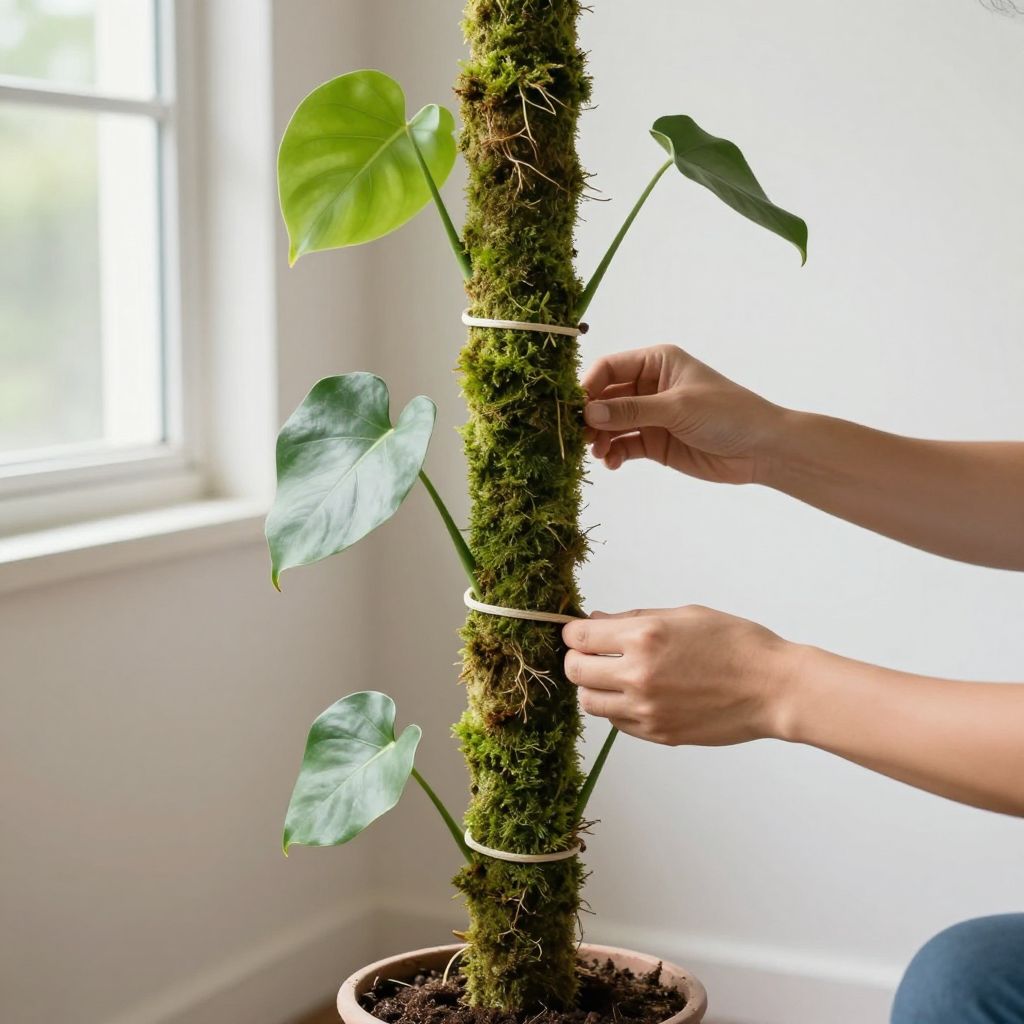
What is a moss pole, and do you actually need one for your houseplants? If you grow climbing aroids such as pothos, monstera, or philodendron, a moss pole can help them grow upright, produce larger leaves, and support healthier growth indoors.
The key is using the right pole and installing it correctly. A moss pole is not just decoration; it is a climbing support that mimics the tree trunks these plants would naturally cling to in the wild.
What Is A Moss Pole?
A moss pole is a vertical plant support wrapped in sphagnum moss or another moisture-holding material. It gives climbing houseplants something to attach their aerial roots to, helping them grow upward instead of trailing or flopping over. For many vining aroids, it can improve structure, leaf size, and overall appearance.
How A Moss Pole Works
Many tropical climbing plants use aerial roots to grip bark, moss, or rough surfaces. A moss pole provides that same kind of anchor indoors, encouraging the plant to climb rather than sprawl. When kept lightly moist, the pole also offers a humid surface that roots can explore.
Plants that commonly benefit
- Monstera deliciosa and other Monstera species
- Philodendron species and hybrids
- Epipremnum aureum (pothos), especially mature vines
- Scindapsus species
- Other climbing aroids with aerial roots
Not every plant needs one. Trailing plants, rosette plants, and many compact houseplants do better with other supports or no support at all.
How To Tell If Your Plant Needs A Moss Pole
Use a moss pole when your plant naturally climbs, has long bare stems, or keeps leaning toward the light. If you see aerial roots, larger gaps between leaves, or a plant that is losing its upright shape, it may be ready for support.
Signs a moss pole is a good idea
- Stems are bending or toppling
- Aerial roots are growing and searching for something to grab
- Leaves are getting smaller as the vine stretches
- The plant looks leggy and difficult to manage
- You want a more vertical, mature look
Signs it may not be necessary
- The plant is naturally compact or bushy
- You prefer a hanging or trailing habit
- The plant has no climbing growth pattern
- Your space is too dry or too shaded to maintain the pole well
Choosing The Right Moss Pole
Pick a pole that matches the plant’s size and growth rate. A small starter plant usually needs a shorter pole, while a fast-growing climber may need a taller, sturdier support that can be extended later. The pole should be firm enough not to wobble in the pot.
Common moss pole types
- Classic sphagnum moss pole — holds moisture well and is ideal for many aroids
- Coco coir pole — less moisture-retentive, often easier to maintain
- Modular or extendable pole — useful for plants that keep climbing over time
- Mesh or plastic-core pole — durable, but may dry faster depending on the fill material
For most indoor gardeners, a moss pole about as tall as the plant plus a little extra is a practical starting point. Choose a diameter that feels stable in the pot without crowding the roots.
How To Install A Moss Pole
Install the pole when you repot or when the plant is still small enough to manage easily. The best time is before the stems become too heavy or tangled, because moving a mature climber can damage roots and leaves.
- Choose a pot with good drainage and enough weight to stay stable.
- Place the pole toward the back of the pot, where the main stem can lean against it.
- Insert the pole deeply so it is firmly anchored.
- Repot the plant if needed, keeping the root ball close to the pole.
- Gently tie the stem to the pole with soft plant ties, Velcro tape, or garden twine.
- Guide aerial roots toward the pole, but do not force them into place.
Important: avoid tying the stem too tightly. The plant needs room to expand as it grows, and tight ties can bruise stems or restrict movement.
How To Water And Maintain A Moss Pole
Many moss poles work best when they are kept lightly moist, not soaked. Moisture encourages aerial roots to attach and helps the pole function like a climbing surface. How often you water depends on your room humidity, temperature, pot size, and the material used in the pole.
Practical maintenance tips
- Check the pole by touch; it should feel slightly damp, not dripping wet.
- Water the pole from the top if it dries out quickly.
- Water the potting mix separately; do not rely on pole moisture alone.
- Use a potting mix with excellent drainage so the roots do not sit in water.
- In dry homes, expect the pole to dry faster than in humid rooms.
In very dry indoor conditions, a moss pole may need more frequent attention. In humid rooms, it may stay moist longer and need less watering. Always check the plant and the pole rather than following a fixed schedule.
Best Growing Conditions For Plants On Moss Poles
A moss pole helps with support, but the plant still needs the right light, soil, and air movement. Most climbing aroids do best in bright, indirect light, a chunky well-draining mix, and moderate humidity.
Light
Bright, indirect light usually encourages stronger growth and better leaf development. Too little light can lead to long, weak stems that never attach well to the pole.
Soil and drainage
Use a loose indoor potting mix that drains freely. Many climbing houseplants prefer a blend with bark, perlite, and other airy ingredients rather than dense, waterlogged soil.
Humidity and airflow
Moderate humidity can help aerial roots and reduce leaf stress, but stagnant air can invite disease. Good airflow matters, especially if you keep the pole damp.
Common Mistakes To Avoid
A moss pole is helpful, but it can cause problems if used poorly. Most issues come from overwatering, unstable installation, or choosing the wrong plant for the support.
- Using a pole for a non-climbing plant — it will not magically improve every houseplant.
- Letting the pole stay soggy — this can encourage rot, algae, or fungus gnats.
- Installing it too late — a large, tangled plant is harder to train.
- Choosing a flimsy support — the plant may topple as it gets heavier.
- Binding stems too tightly — this can damage growth points.
- Ignoring the pot mix — the pole cannot compensate for poor drainage.
Troubleshooting Moss Pole Problems
If your plant is not attaching, do not assume the pole is failing. The issue may be light, humidity, plant maturity, or the type of support material.
The plant is not climbing
Some plants need time to mature before they begin clinging strongly. Increase light slightly, keep the pole lightly moist, and guide the stem closer to the support.
The pole is molding or smelling bad
This usually means it is too wet or poorly ventilated. Let it dry more between waterings, improve airflow, and check that the pot mix is not staying soggy.
The plant is still flopping over
The pole may be too short, too weak, or not anchored deeply enough. You may need a sturdier support or a wider pot for stability.
Leaves are yellowing
Yellow leaves are often linked to overwatering, poor drainage, or low light rather than the moss pole itself. Check the roots, potting mix, and light level first.
Can You Make A Moss Pole Yourself?
Yes. Many gardeners make simple poles at home using a sturdy core, mesh, and sphagnum moss or coco coir. A DIY pole can be a good option if you want a custom height or shape, but it still needs to be strong, safe, and easy to maintain.
Simple DIY materials
- Plastic or PVC support core
- Wire mesh or plastic mesh wrap
- Sphagnum moss or coco coir
- Soft ties or plant clips
Whatever design you choose, make sure the finished pole is stable, moisture-friendly, and not likely to rust, rot, or collapse indoors.
When To Repot Or Replace A Moss Pole
As your plant grows, the pole may need to be extended or replaced. Repotting is often the best time to upgrade support, especially if the plant has outgrown its current pole or the base has become unstable.
- Replace the pole if it wobbles or leans badly
- Extend it if the vine has outgrown the top
- Repot if roots are crowded or the mix has broken down
- Refresh the pole if the moss has decomposed over time
Be gentle when moving a climbing plant off an old support. Untie stems gradually and avoid tearing aerial roots that have attached firmly.
Conclusion
A moss pole is a practical support for climbing plants that want to grow upward, not outward. If you choose the right pole, install it securely, and keep both the plant and support in suitable conditions, you can train your climber into a healthier, more attractive shape.
If you want to improve your houseplant care further, you may also find it useful to read about what a node is on a plant and what a pebble tray is for plants.