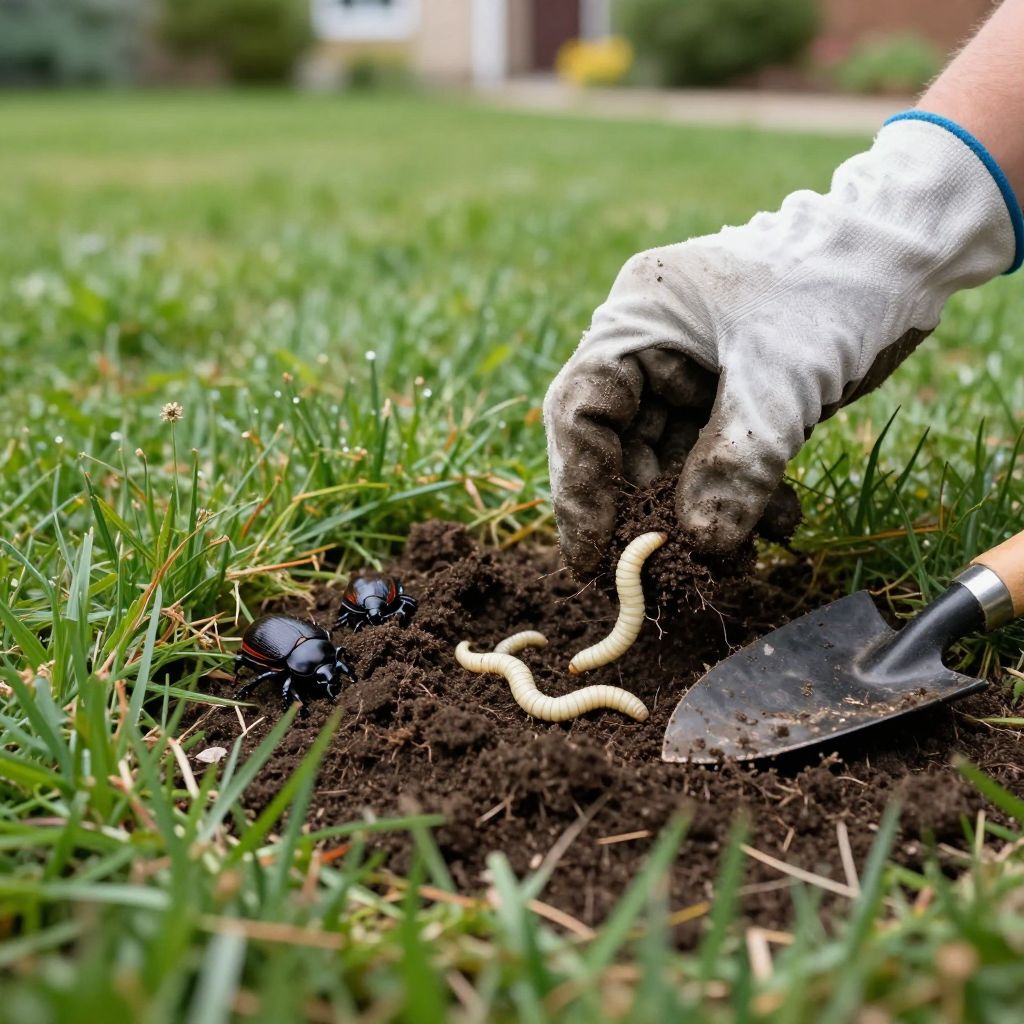
What do grub worms turn into? If you’ve found white, curled larvae in your lawn or garden soil, you’re probably looking at the immature stage of some beetle species. Knowing which beetle they become helps you judge whether they’re a minor soil insect or a pest worth managing.
For gardeners, the important part is not just identification but what those larvae are doing underground. Grubs feed on roots, weaken turf, and attract wildlife that digs for them, so the right response depends on the size of the infestation, the season, and the plants affected.
What do grub worms turn into?
Grub worms turn into adult beetles, not worms. Most garden grubs are the larvae of scarab beetles such as Japanese beetles, June beetles, or chafers. The adults emerge from the soil, mate, and lay eggs that hatch into new grubs, continuing the cycle.
How to tell whether you have a grub problem
Not every grub in soil is a serious pest. Some beetle larvae are harmless decomposers, while others feed on grass roots and ornamental plant roots. The key is to look for damage, not just the insect itself.
Common signs of damaging grubs
- Irregular brown or yellow patches in turf that don’t improve with watering
- Grass that lifts like a loose carpet because roots have been eaten
- Increased bird, skunk, raccoon, or mole activity digging in the lawn
- Wilting or stunted plants in beds with poor root systems
- Small, C-shaped white larvae found 1 to 4 inches below the surface
What healthy-looking soil may mean
If you find only a few grubs while turning compost, amending beds, or planting, that may be normal. Healthy garden soil contains many insects and larvae, and a small number of grubs does not automatically mean you need treatment.
Which beetles do grub worms become?
Most gardeners encounter grubs from scarab beetles. The exact adult depends on the species, but the lifecycle is similar: egg, grub, pupa, and adult beetle. The adult stage is often the one you notice on flowers or foliage.
Examples of common grub-to-beetle life cycles
- Japanese beetle grubs become metallic green and copper beetles that feed on many ornamental plants.
- June beetle grubs become larger brown beetles, often called June bugs, which are attracted to lights.
- Masked chafer grubs become tan beetles that are usually less visible but can still damage lawns as larvae.
Because several beetle species have similar-looking grubs, you usually can’t identify the adult with certainty from the larva alone unless you know the local pest pressure or have an expert confirm it.
Why grub control matters in the garden
Grubs feed below ground, so damage often appears suddenly. In lawns, they can destroy root systems and leave turf vulnerable to drought. In beds, they may stress young plants, especially where soil is already compacted or drainage is poor.
Where grubs cause the most trouble
- Lawns with thin turf and shallow roots
- Newly planted beds where roots are still establishing
- Sandy soils that dry out quickly and offer less root protection
- Areas with heavy beetle activity in midsummer
Healthy, well-rooted plants can tolerate a few grubs better than stressed plants. That’s why good soil care is part of grub management, not just insect control.
When grubs are active during the year
Timing matters because grubs are easier to manage when they are small and actively feeding near the soil surface. The exact season varies by climate and beetle species, but many grubs are most noticeable in late summer and early fall.
Seasonal pattern to expect
- Adults emerge from soil in warm weather and lay eggs in turf or garden soil.
- Young grubs hatch and begin feeding on roots.
- Larger grubs continue feeding through the season and may overwinter in the soil.
- Pupation occurs when mature grubs transform into beetles underground.
If you’re dealing with a lawn issue, inspect the soil when damage first appears rather than waiting until the turf is nearly gone. Early detection gives you more options.
How to check for grubs in soil or lawn
A simple inspection tells you whether you have a few larvae or a real infestation. You do not need special tools, just a spade or trowel and a little patience.
Step-by-step grub check
- Choose a damaged patch of lawn or a suspicious bed area.
- Cut and peel back a square of turf about 1 square foot, or dig 4 to 6 inches into the soil in a bed.
- Look for white, C-shaped larvae with tan heads.
- Count the grubs in several spots, not just one.
- Check root condition and soil moisture at the same time.
If you find only one or two grubs in a small area, you may not need to act. If you find many grubs in multiple spots and roots are badly damaged, control measures make more sense.
Practical ways to manage grub worms
The best approach depends on the size of the problem, your plantings, and whether you’re protecting lawn grass or garden beds. Start with cultural controls first, then move to more targeted treatments if needed.
1. Improve plant health
- Water deeply but only when the soil begins to dry, so roots grow downward.
- Avoid compacting soil with heavy foot traffic or machinery.
- Topdress with compost to improve soil structure over time.
- Keep turf mowed at a sensible height for your grass type.
Strong roots help grass and ornamentals recover from minor feeding. Weak, shallow-rooted plants are more likely to show visible damage.
2. Encourage natural predators carefully
Birds, beneficial nematodes, and soil-dwelling organisms can help reduce grub numbers, but they are not instant fixes. Avoid broad, unnecessary insecticide use that can reduce beneficial insects in the area.
3. Use targeted treatments when needed
If you have a confirmed infestation, choose a control method that matches the grub stage and your local conditions. Follow the product label exactly and apply only where needed, especially around edible crops and pollinator-friendly plantings.
For many gardeners, the most effective strategy is to treat small infestations early rather than waiting until damage is widespread. In severe lawn cases, you may need to reseed or repair turf after the grubs are controlled.
Common mistakes gardeners make with grubs
Grub management often goes wrong because the problem is misidentified or treated at the wrong time. Avoiding a few common mistakes can save time and protect your plants.
- Assuming every brown patch is from grubs when drought, disease, or compaction may be the real cause.
- Treating without checking the soil first.
- Applying control too late after grubs are large and less vulnerable.
- Overwatering in an attempt to “flush out” grubs, which can worsen root stress.
- Ignoring soil health and expecting one treatment to solve recurring issues.
How to reduce future grub problems
Prevention is easier than rescue. Since adult beetles lay eggs in suitable soil, your goal is to make the area less attractive and less damaged when larvae appear.
Good prevention habits
- Maintain healthy turf density so beetles have fewer open areas to target.
- Water wisely to keep roots strong without creating soggy soil.
- Repair thin or bare patches promptly.
- Monitor lawns and beds in late summer for early signs of feeding.
- Inspect new sod, compost, or topsoil if you bring in material from elsewhere.
In garden beds, mulch can help moderate soil moisture and reduce stress, but it will not eliminate grubs already in the soil. Think of mulch as support, not a pest cure.
When to call in extra help
If you’ve checked the soil, confirmed active grub feeding, and still see worsening damage, it may be time to consult a local extension office, nursery professional, or lawn care specialist. Local guidance matters because beetle species and timing vary by region.
Get help sooner if you are protecting a newly installed lawn, a valuable landscape planting, or a large area that has already lost significant roots. A local diagnosis can prevent repeated treatments that don’t match the pest cycle.
Conclusion: what to do next
Now that you know what grub worms turn into, the next step is to inspect your lawn or beds for actual damage and count what’s in the soil. If you find only a few larvae, improve plant health and monitor. If you find many grubs and root loss, act early with a targeted plan.
For more practical garden problem-solving, you may also want to read about how to tell the difference between lawn pests and drought stress and simple ways to improve soil drainage in garden beds.