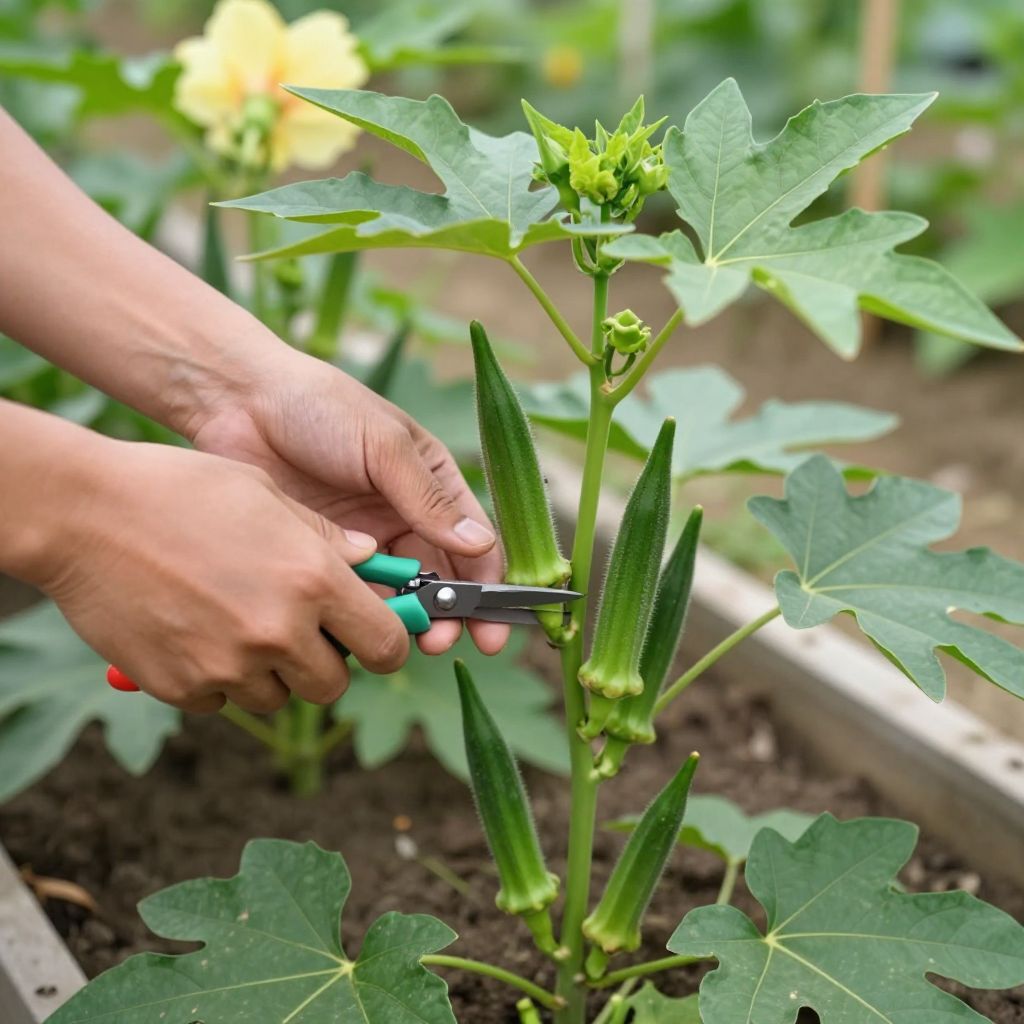
Wondering when to harvest okra so the pods are tender instead of tough and fibrous? The best time is usually when pods are young, straight, and still easy to snap, often about 2 to 4 inches long depending on the variety. Harvesting every day or two during peak season keeps plants producing.
Okra grows fast in warm weather, so timing matters more than the calendar. If you wait too long, pods quickly become woody. The good news is that once you know what to look for, harvesting okra becomes a simple routine that improves both quality and yield.
When to harvest okra?
Harvest okra when pods are young, tender, and before they become tough, usually 2 to 4 inches long for many varieties. Check plants every day or two in warm weather, because pods can grow from perfect to overmature very quickly. The right harvest time depends on variety, temperature, and how fast the plant is growing.
How to tell okra is ready to pick
The easiest way to judge okra is by size and feel, not just by age. A pod that looks slender, bright, and firm is usually ready.
Signs a pod is ready
- Length: Often 2 to 4 inches, though some varieties stay tender a bit longer.
- Texture: The pod feels firm but not hard or woody.
- Color: Usually bright green, red, or another mature color depending on the variety, but still glossy and fresh-looking.
- Stem: The stem is still green and the pod snaps or cuts cleanly.
Signs you waited too long
- Pods feel hard or ridged.
- The pod bends less and feels fibrous.
- Seeds inside are large and noticeable.
- The pod may have a duller look or a tougher stem.
If you are unsure, pick one pod and test it. A tender okra pod should cut easily with a knife or pruners and should not feel rubbery or stringy when you break it.
Why timing matters so much with okra
Okra pods enlarge quickly in warm weather, and once they pass the tender stage, they become fibrous fast. Frequent harvesting encourages the plant to keep flowering and setting more pods, so you get a longer picking season and better-quality harvests.
Leaving overmature pods on the plant also slows production. The plant puts energy into seed development instead of making new edible pods, which is why regular picking is one of the most important parts of okra care.
How often should you harvest okra?
During peak season, check plants every day or every other day. In hot weather, pods may reach harvest size very quickly, sometimes in just a day or two after flowering.
- Cooler weather: Pods may size up more slowly.
- Hot weather: Harvest more often because pods can oversize fast.
- Heavy-producing plants: Daily picking may be best.
Even if you do not need pods immediately, keep harvesting regularly. This is one of the simplest ways to extend the harvest window.
Step-by-step: how to harvest okra correctly
- Inspect plants early in the day when pods are fresh and easier to handle.
- Choose pods that are tender and within the size range that suits your variety.
- Use clean scissors, pruning snips, or a knife if the stem is tough.
- Cut the stem just above the cap, or snap the pod cleanly if it breaks easily.
- Handle pods gently to avoid bruising or damaging nearby flowers and buds.
- Keep harvesting every few days, especially in warm weather.
Wear gloves and long sleeves if you are sensitive to the plant’s fine hairs. Okra stems and leaves can irritate some people’s skin, especially during repeated harvests.
Best tools for harvesting okra
You do not need special equipment, but the right tool makes the job cleaner and easier.
- Pruning snips or scissors: Best for clean cuts on tougher stems.
- Small knife: Useful if stems are thick or fibrous.
- Gloves: Helpful for protecting hands from rough stems and leaf hairs.
- Basket or shallow container: Keeps pods from getting crushed after picking.
Clean tools matter because rough cuts can damage the plant and make it easier for disease to enter. Wipe blades occasionally if you are harvesting many plants.
What if okra gets too big?
Overgrown pods are usually too tough for eating fresh, but they are not necessarily wasted. You can leave a few on the plant if you want seed, but do not leave too many because that reduces new pod production.
What to do with oversized pods
- Remove them if you want the plant to keep producing.
- Save a few only if you are collecting seed from a non-hybrid variety.
- Discard pods that are split, damaged, or diseased.
If you are saving seed, let selected pods dry fully on the plant. For eating, though, oversized okra is usually disappointing, so it is better to pick a little early than a little late.
Harvesting by variety and climate
Not all okra behaves the same way. Some varieties stay tender at slightly larger sizes, while others are best picked very small. Your local weather also changes how fast pods mature.
How to adapt your harvest timing
- Warm climates: Expect faster growth and more frequent picking.
- Shorter seasons: Harvest promptly because plants may have less time to produce.
- Larger-podded varieties: Follow the plant’s growth habit and harvest when pods are still tender, not just when they are small.
If you are growing a variety for the first time, start by harvesting a few pods at different sizes and compare the texture. That is the most reliable way to learn what your plant prefers.
Common harvesting mistakes to avoid
Most okra problems at harvest come from waiting too long or picking too roughly. A few simple habits will improve quality right away.
- Waiting for pods to become large: Bigger is not better with okra.
- Harvesting too infrequently: This can quickly lead to tough pods.
- Twisting pods off forcefully: This can damage stems and nearby buds.
- Ignoring hidden pods: Some pods grow quickly and are easy to miss behind leaves.
- Letting mature pods stay on the plant: This can slow new pod formation.
Check plants from different angles, not just from above. Okra pods can hide under leaves and become overmature before you notice them.
How harvesting affects plant health and production
Regular picking is part of okra maintenance, not just the final step. When you remove tender pods promptly, the plant keeps sending energy into new flowers and pods instead of seed development.
Healthy okra plants also need full sun, warm temperatures, well-drained soil, and steady moisture to keep producing well. If plants are stressed by drought, poor drainage, or low fertility, pods may develop more slowly or plants may stop producing earlier.
Support good production with basic care
- Grow okra in full sun for strong flowering and pod set.
- Use fertile, well-drained soil enriched with compost.
- Water deeply when the soil begins to dry, especially during flowering and pod fill.
- Mulch lightly to help hold moisture and reduce weeds.
- Remove damaged leaves if disease pressure becomes a problem.
Good harvest timing works best when the plant is healthy. If pods are small or misshapen, look at growing conditions as well as your picking schedule.
Troubleshooting poor okra harvests
If your okra is not producing the way you expected, the issue may be timing, weather, or plant stress. A few common patterns can help you narrow it down.
Problem: Pods are tough even when small
This can happen if the pods are being left too long, but it may also be caused by heat stress or uneven watering. Harvest more often and keep soil moisture more consistent.
Problem: Plants flower but set few pods
Okra needs warm conditions and plenty of sun. Cool nights, too much shade, or poor pollinator activity can reduce pod set. Make sure the plant is getting enough light and is not stressed by drought.
Problem: Pods are misshapen or scarred
Insect feeding, disease, or physical damage can affect pod quality. Check leaves and stems for pests, and remove badly damaged pods so the plant can focus on healthy growth.
Can you harvest okra in the morning or evening?
Morning is often the best time because pods are cool, fresh, and easier to handle. That said, the most important thing is to harvest before pods become overmature, so pick whenever you can if the pods are at the right stage.
If temperatures are very high, morning picking can also reduce stress on you and the plant. In hot climates, this is a practical way to stay ahead of fast pod growth.
Conclusion: keep it tender and keep picking
When to harvest okra comes down to one simple rule: pick pods young, tender, and before they turn fibrous. Check plants often, use clean cutting tools, and keep harvesting regularly to encourage more pods.
If you want to improve your next picking, go out today and harvest any pod that feels firm but still tender. Then mark your calendar to check the plants again in a day or two during warm weather. For more practical growing tips, you may also want to read about growing okra and okra care and harvesting basics.