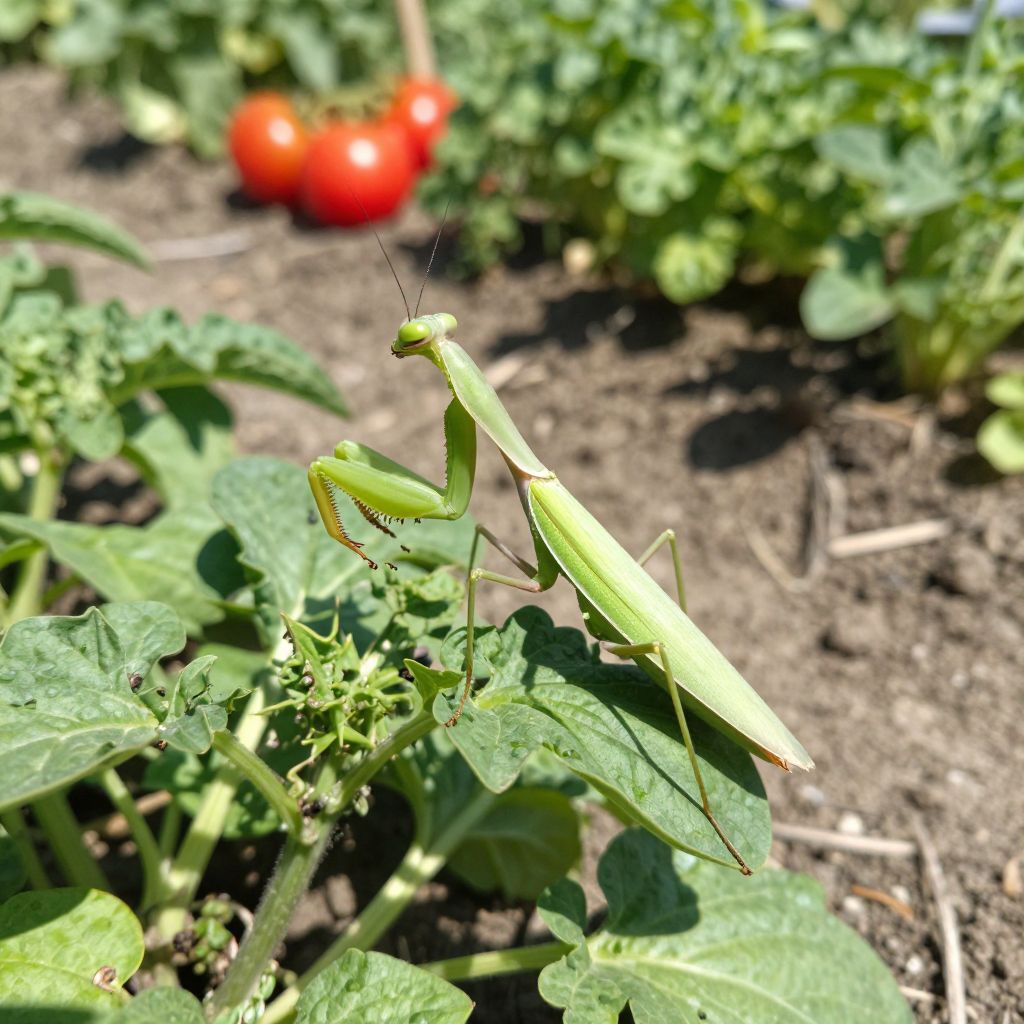
Are praying mantis good for gardens? In many cases, yes—but they are not a complete pest-control solution. Praying mantises are generalist predators that may eat aphids, flies, caterpillars, beetles, and other insects, but they also catch beneficial pollinators and helpful predators.
If you want to use them well, think of mantises as one part of a balanced garden ecosystem. They can help reduce some pest pressure, but healthy soil, diverse planting, and careful monitoring still do most of the long-term work.
Are praying mantis good for gardens?
Yes, praying mantises can be useful in gardens because they prey on many soft-bodied and flying insects. However, they are not selective and may also eat beneficial insects. They work best as a supplemental predator in a diverse garden, not as a stand-alone pest control method.
What praying mantises actually do in the garden
Praying mantises are ambush hunters. They sit still, blend into leaves and stems, then strike at passing insects. In a garden, that means they may help with some pest populations, especially when pests are active and easy to catch.
Common prey they may eat
- Aphids
- Flies
- Moths and moth larvae
- Leafhoppers
- Small beetles
- Caterpillars
- Grasshoppers and crickets when they are small enough
What they may also eat
- Bees
- Butterflies
- Hoverflies
- Lacewings
- Other praying mantises
Important: because mantises are opportunistic, they do not target only “bad” insects. If your garden depends heavily on pollinators, mantises should be used carefully and in moderation.
Why praying mantises are not a complete pest solution
Many gardeners hope mantises will clear out pests quickly, but that is rarely how gardens work. A mantis may eat a few pests, yet it will not eliminate an infestation on its own, especially if the underlying conditions that attracted the pests are still present.
Limitations to keep in mind
- They are solitary hunters, not a colony that blankets the garden.
- They do not control pests hidden inside leaves, stems, or soil.
- They may not be present when pest outbreaks begin.
- They can reduce some insects while leaving others untouched.
If you have a serious pest problem, use mantises alongside other strategies such as handpicking, row covers, encouraging birds, improving plant health, and removing badly infested foliage.
How to attract praying mantises to your garden
If you want mantises to show up naturally, make your garden a place where they can hunt, hide, and reproduce. That means reducing broad-spectrum pesticide use, growing a variety of plants, and keeping some structure in the landscape.
- Avoid broad-spectrum insecticides. These can kill mantises directly and also remove the insects they feed on.
- Grow diverse plantings. Mixed flowers, herbs, shrubs, and vegetables support a wider food web.
- Leave some cover. Tall grasses, shrubs, and layered plantings give mantises places to perch and hide.
- Limit nighttime disturbance. Bright lights can alter insect activity and reduce the natural prey base.
- Accept some insect presence. A completely insect-free garden is not realistic and usually not healthy.
Best garden conditions for mantises
- Sun to partial sun
- Mixed vegetation with vertical stems and foliage
- Low pesticide use
- Nearby flowers that attract insects
- Areas with shelter from strong wind
Should you buy praying mantis egg cases?
Buying egg cases is common, but it is not always the best approach. Released mantises may disperse quickly, and if the garden has limited prey or little cover, they may not stay long. In some areas, non-native mantis species can also create ecological concerns.
Before you release an egg case, ask yourself
- Do you already have enough insect activity to support them?
- Is your garden free from pesticide residues?
- Will the mantises have plants to hide in and hunt from?
- Are you comfortable with them eating beneficial insects too?
If you do use an egg case, follow the supplier’s instructions and release only species that are appropriate for your region. Local extension guidance or native insect resources can help you avoid introducing the wrong species.
How to care for a praying mantis in a garden setting
In most gardens, you do not “care for” a wild mantis the way you would care for a plant. Instead, you create conditions that let it survive naturally. The goal is a safe habitat with enough prey, shelter, and minimal chemical exposure.
Simple maintenance that helps mantises
- Keep plants healthy so they can support insect life
- Water deeply enough to avoid drought stress in your plants
- Leave some stems and foliage standing rather than over-cleaning beds
- Use mulch to stabilize soil moisture and support ground-level habitat
- Inspect before spraying anything, even organic products
Tip: if you must treat a pest issue, spot-treat only the affected plant or area whenever possible. This protects beneficial insects that are part of your garden’s natural balance.
Do praying mantises protect vegetables, flowers, and fruit plants?
They can help around vegetables, ornamentals, and fruiting plants, but only indirectly. Mantises do not “guard” a plant. They simply hunt where insects are active, so they are most useful in gardens with steady insect traffic and enough structure for them to perch on.
Where they may be most useful
- Vegetable beds with frequent flying pests
- Flower borders that attract a variety of insects
- Orchard edges and shrub borders
- Mixed beds with tall and short plants together
They are less helpful in sparse plantings, heavily mulched areas with little vertical structure, or gardens that are routinely sprayed.
Common problems gardeners notice with praying mantises
They disappear after release
This is common. Mantises roam, especially if prey is scarce. A garden that looks good to us may still be too low in insect activity to hold them for long.
They eat beneficial insects
This is normal behavior, not a sign that something is wrong. If you rely on pollinators or biological control insects, keep mantis numbers modest and maintain plant diversity so the garden supports many helpful species, not just one predator.
They do not solve a severe infestation
If aphids, caterpillars, or beetles are overwhelming your plants, the issue may be plant stress, overcrowding, poor airflow, or a mismatch between plant and site. Fix those conditions first.
They are mistaken for a sign of a “perfect” garden
A mantis in the garden is interesting, but it is not proof that your pest management is working. Healthy gardens usually depend on many factors: soil quality, watering, pruning, spacing, and a broad mix of beneficial organisms.
How to support a balanced pest-control system
Praying mantises work best in a garden that already supports natural enemies. If you want fewer pests overall, combine them with practical garden care that reduces pest pressure at the source.
- Inspect plants regularly. Catch pest outbreaks early.
- Remove damaged leaves. This can slow spread and improve airflow.
- Water correctly for the plant. Stress can make plants more vulnerable to pests.
- Space plants properly. Crowding invites disease and makes pests harder to manage.
- Encourage a wide range of beneficial insects. Diversity is more reliable than relying on one predator.
Are praying mantises good for indoor plants?
Usually, no. Indoor plants rarely provide enough prey, and a mantis indoors is unlikely to be useful for long. For houseplants, focus on sticky traps, isolation of infested plants, wiping pests off by hand, and correcting overwatering or poor airflow.
If a mantis ends up indoors by accident, gently move it outside if temperatures and weather are suitable. Do not expect it to manage indoor pests effectively.
Practical mistakes to avoid
- Releasing mantises and expecting instant pest control
- Spraying broad-spectrum insecticides after introducing beneficial insects
- Removing all “messy” habitat that supports insect diversity
- Ignoring plant stress and soil problems while focusing only on predators
- Assuming mantises will only eat harmful insects
Bottom line: are praying mantis good for gardens?
Yes, praying mantises can be a helpful part of a garden’s natural pest-control system, but they are not a magic fix. The best results come when you combine them with healthy soil, diverse planting, careful watering, and low-toxicity pest management.
If you want a stronger garden ecosystem, keep learning about the creatures that help your beds thrive. You may also find it useful to read about whether worms are good for gardens and whether marigolds keep bugs away.