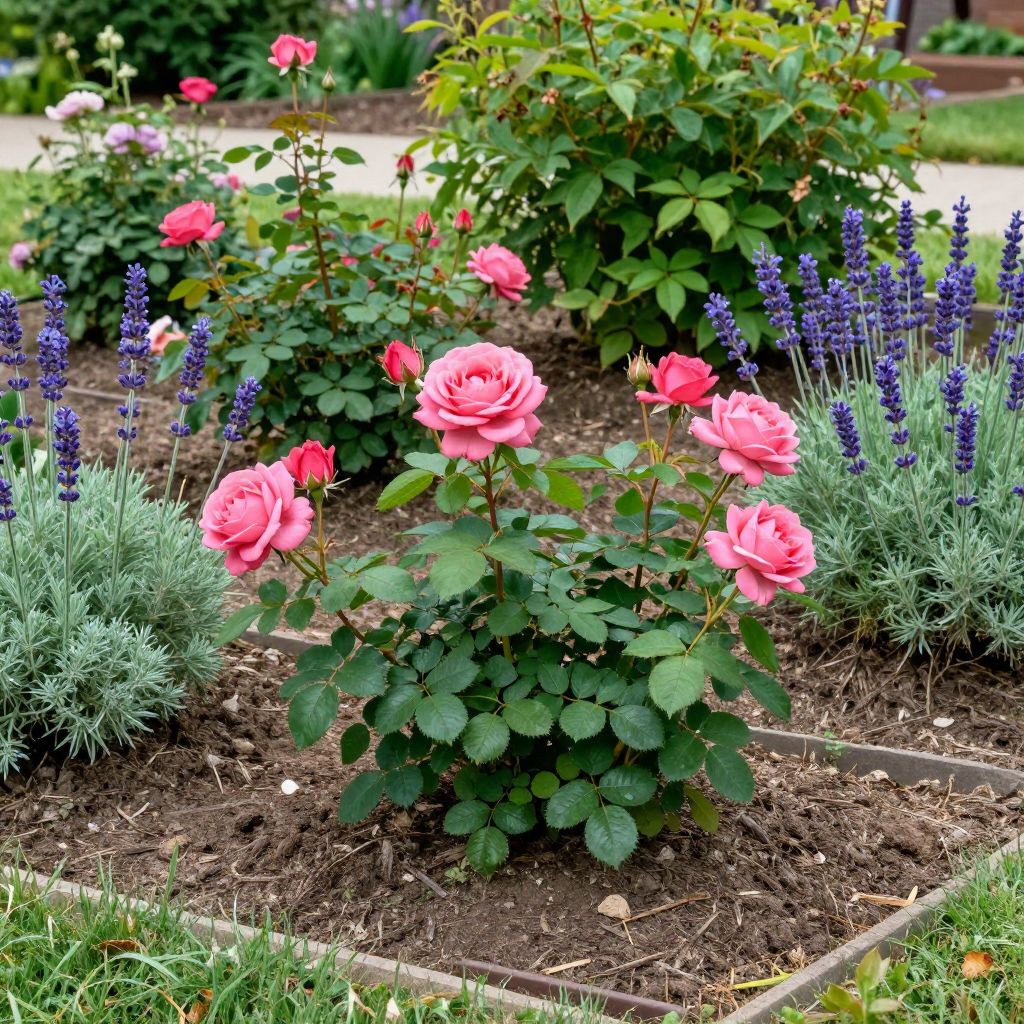
What should you plant with Knock Out roses so the bed looks full, healthy, and easy to maintain? The best companions are plants that enjoy similar sun, drainage, and moderate watering, while adding contrast in color, texture, and bloom time.
Choose companions that won’t crowd the roses, compete too aggressively for water, or trap humidity around the canes. With the right mix, you can soften bare lower stems, extend seasonal interest, and create a more polished landscape bed.
What to plant with Knockout roses?
Plant low, sun-loving companions with good airflow and similar soil needs, such as catmint, salvia, lavender, ornamental grasses, daylilies, and compact perennials. These plants complement Knock Out roses without shading them out or creating a damp, crowded bed that encourages disease.
Best companion plants for Knock Out roses
Knock Out roses are vigorous, repeat-blooming landscape roses, so companions should be sturdy but not overly aggressive. The goal is contrast and balance, not competition.
1. Catmint (Nepeta)
Catmint is one of the easiest companions for roses. Its airy blue-purple flowers, gray-green foliage, and long bloom period pair beautifully with rose shrubs.
- Thrives in full sun
- Tolerates average, well-drained soil
- Softens the base of rose shrubs without hiding them
2. Salvia (Salvia nemorosa and similar perennial salvias)
Salvia adds vertical flower spikes and a long season of color. It works especially well if you want a more structured, pollinator-friendly border.
- Likes sun and drainage
- Pairs well with pink, red, or white roses
- Stays relatively tidy if deadheaded
3. Lavender (Lavandula)
Lavender offers silver foliage, fragrance, and a neat mounded shape. It is a strong choice where summers are sunny and soils drain well.
- Best in full sun
- Prefers lean, well-drained soil
- Can struggle in heavy clay or overly rich beds
4. Ornamental grasses
Small to medium grasses add movement and texture without competing for the spotlight. Choose clumping types rather than aggressive spreaders.
- Use compact fountain grass or other well-behaved clumps where appropriate for your region
- Provide contrast to the rose’s rounded form
- Help the bed look attractive even when roses are between bloom cycles
5. Daylilies (Hemerocallis)
Daylilies are dependable, easy perennials that can fill space around roses in many climates. Their strappy foliage contrasts nicely with rose leaves.
- Tolerate a wide range of soils
- Bloom in a different rhythm than roses, extending interest
- Choose varieties that won’t overwhelm the rose shrub
6. Coreopsis, gaura, and other airy perennials
Light, open-flowering perennials can weave through a rose border without making it feel heavy. These plants work best when you want a looser, cottage-style look.
- Keep airflow moving through the bed
- Add long bloom periods in warm weather
- Look best when planted in small drifts
7. Boxwood or dwarf evergreen shrubs
If you want a more formal landscape, small evergreens can anchor the bed and give structure year-round. Use them carefully so they do not crowd the roses as they mature.
- Choose compact, slow-growing varieties
- Leave enough space for air circulation
- Great for framing a rose border or foundation planting
How to choose the right companion plants
The best answer to what to plant with Knockout roses depends on your site. Match plants to the same sun, soil, and maintenance level, or the bed will become harder to manage over time.
Look for these traits
- Full sun tolerance: Most rose companions should handle at least 6 hours of direct sun.
- Good drainage: Roses dislike soggy roots, and so do many of their best companions.
- Moderate size: Choose plants that stay below or around the rose canopy.
- Airflow: Open forms help reduce black spot and mildew pressure.
- Similar water needs: Avoid pairing roses with plants that need constantly wet soil.
Avoid these poor matches
- Large shrubs that shade the roses
- Thirsty plants that require frequent heavy irrigation
- Fast-spreading ground covers that creep into the rose crown
- Tall perennials that flop over the roses in midsummer
How to plant around Knock Out roses
Good spacing matters as much as plant choice. Crowding is one of the most common reasons rose beds become messy, unhealthy, or difficult to prune.
- Start with the rose’s mature size. Leave room for the shrub to reach its full width without being squeezed.
- Mark companion planting spots first. Arrange plants in front of or beside the rose, not directly against the main canes.
- Keep the crown open. Leave a small clear zone around the base so air can move and pruning stays easy.
- Group in drifts. Repeating 3 to 5 of the same companion looks cleaner than scattering many different plants.
- Water deeply after planting. Settle the soil, then monitor moisture as roots establish.
Spacing tips
As a general rule, give companions enough room that they can mature without touching the rose canes constantly. If you are unsure, err on the side of extra space. A bed that looks slightly sparse at planting usually looks better and healthier after one or two seasons.
Soil, mulch, and watering for mixed rose beds
Knock Out roses do best in fertile, well-drained soil, and most companion plants prefer the same conditions. Before planting, loosen compacted soil and mix in compost if the bed is poor or heavy.
Soil prep basics
- Work compost into the top layer if the soil is thin or depleted
- Improve drainage in clay soil with organic matter and careful grading
- Avoid burying the rose crown too deeply
Mulching tips
Mulch helps conserve moisture and suppress weeds, but keep it pulled back slightly from the base of the rose. A mulch layer that sits directly against the canes can trap moisture and invite rot.
Watering considerations
Water deeply at the soil level rather than wetting the foliage whenever possible. This is especially helpful in mixed beds, where overhead watering can encourage fungal problems on roses and nearby plants.
Design ideas for different garden styles
Classic cottage look
Combine Knock Out roses with catmint, salvia, and airy filler flowers. The result is relaxed, colorful, and long-blooming.
Formal foundation planting
Use roses with dwarf boxwood, lavender, or neat perennial mounds for a more structured appearance. Keep pruning disciplined so the bed stays balanced.
Low-maintenance landscape bed
Choose durable companions such as daylilies, ornamental grasses, and tough perennial salvias. This style works well if you want a bed that looks good with less fuss.
Common mistakes to avoid
- Planting too close: Crowding reduces airflow and makes pruning harder.
- Choosing aggressive spreaders: Some ground covers can smother the rose base.
- Overwatering the whole bed: Roses and their companions usually prefer moisture, not soggy soil.
- Mixing plants with wildly different needs: A shade lover or bog plant is a poor fit.
- Ignoring mature size: Small nursery pots can hide how large a plant will get later.
Pruning and maintenance in a mixed planting
Knock Out roses still need regular pruning, even when planted with companions. Keep nearby plants trimmed back enough that you can reach the rose canes easily in late winter or early spring, depending on your climate.
Deadhead or shear companion plants as needed to keep them from leaning into the rose shrub. If a perennial starts to dominate the bed, divide or move it before it crowds the rose.
Pests and diseases to watch for
Companion planting does not prevent every problem, but a well-designed bed can reduce stress on the roses. Good spacing and airflow are especially important for limiting black spot, powdery mildew, and general pest pressure.
- Remove fallen leaves if disease appears
- Prune out crossing or crowded canes
- Avoid splashing soil onto foliage when watering
- Inspect new plants before adding them to the bed
When to plant companions with Knock Out roses
The best planting time depends on your climate and the condition of the plants you buy. In general, plant when temperatures are moderate and the soil is workable, so roots can establish before extreme heat or cold.
If you are planting in a hot climate, early morning or late afternoon planting can reduce stress. In cooler regions, spring and early fall are often easier windows, but local weather matters more than the calendar.
Quick planting checklist
- Choose sun-loving, well-drained companions
- Leave space for mature growth and airflow
- Prepare the soil with compost if needed
- Mulch lightly, keeping it away from the rose crown
- Water deeply and monitor moisture during establishment
- Prune and deadhead to keep the bed open and tidy
Conclusion
If you are wondering what to plant with Knockout roses, focus on companions that like sun, drainage, and room to breathe. Catmint, salvia, lavender, daylilies, and well-behaved grasses are all strong choices, as long as you match them to your climate and soil.
Before planting, sketch your bed, check mature sizes, and leave enough space for pruning and airflow. For more help planning a healthy border, you may also find it useful to read about companion planting basics and how to prune roses correctly.