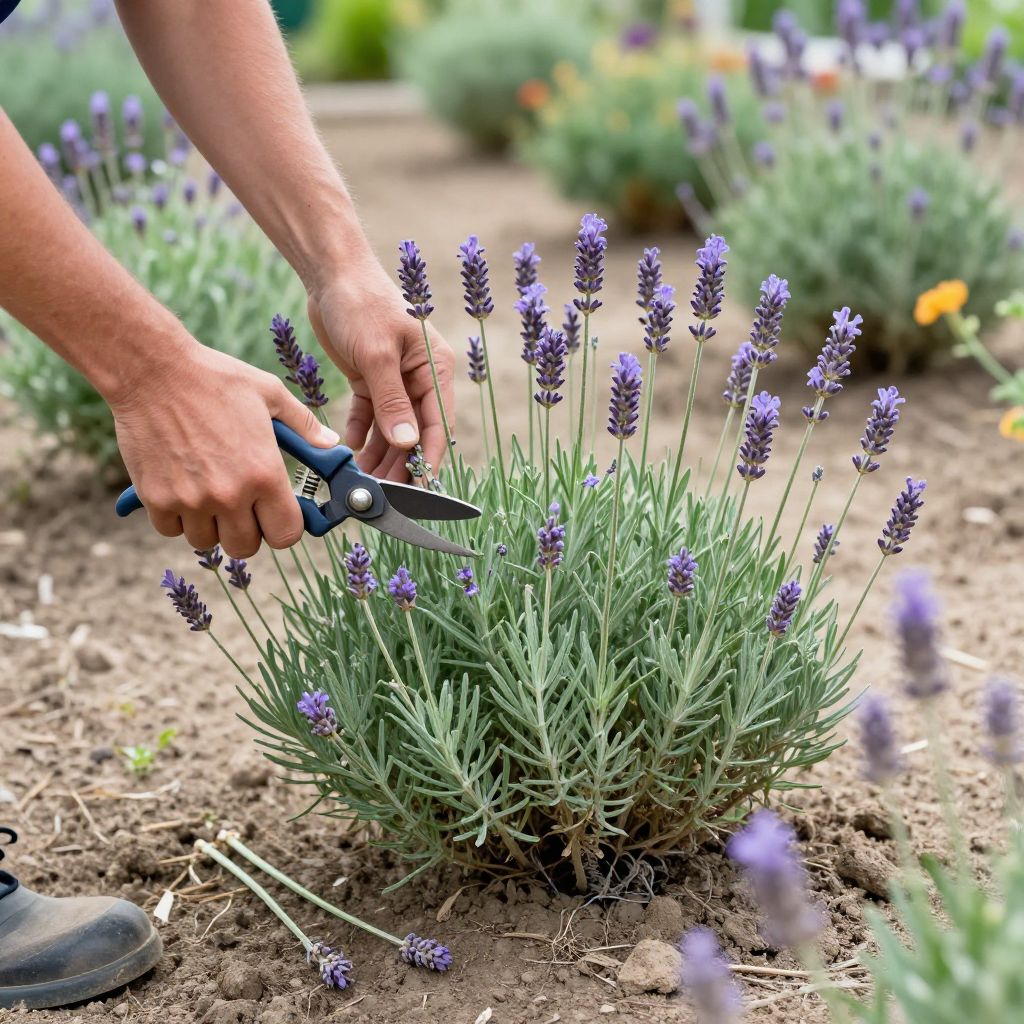
Wondering when to cut back lavender without harming the plant? The right timing depends on your climate, the plant’s age, and how hard you prune, but in most gardens the best time is after flowering or in early spring once new growth starts. The goal is to keep lavender compact, woody stems under control, and blooms coming back strongly.
Cutting at the wrong time can reduce flowering or leave tender new growth exposed to winter damage. With a few simple rules, though, you can prune lavender confidently and keep it healthy for years.
When to cut back lavender?
Cut back lavender lightly after flowering, or in early spring if you missed the post-bloom trim. Avoid severe pruning into old, leafless wood, and never make major cuts late in fall in cold climates. The safest approach is to remove spent flower stems and trim green growth by about one-third.
The best time to prune lavender by season
After flowering in summer
For many gardeners, the easiest time to cut back lavender is right after the main bloom flush. This usually means late summer, though the exact timing depends on your region and variety.
At this stage, you can shape the plant while it is still actively growing. That helps it stay compact and encourages a tidy mound instead of a woody, open center.
Early spring
If you live in a colder climate, or if you prefer to leave spent flowers for winter interest, wait until early spring to prune. Look for fresh buds or new shoots at the base and along the stems before you cut.
Spring pruning is especially useful if winter damage is a concern. You can remove dead tips and lightly reshape the plant once you can clearly see what survived.
What to avoid in fall and winter
Heavy pruning in late fall is risky, especially where winters are wet or freezing. New growth triggered by a hard cut can be damaged by cold weather, and open cuts may be more vulnerable to rot.
If you need to tidy the plant before winter, keep it minimal: remove only spent flower stalks and any obviously dead stems.
How to cut back lavender correctly
Use the right tools
Sharp hand pruners are usually enough for most lavender plants. For larger, older shrubs, bypass loppers can help with thicker stems, but avoid crushing cuts.
Clean, sharp tools matter because ragged cuts heal more slowly and can invite disease.
Follow the green growth rule
When pruning lavender, cut back into leafy growth, not bare old wood whenever possible. Lavender often struggles to resprout from old, woody stems with no leaves.
A good rule is to trim back about one-third of the current season’s growth, shaping the plant into a rounded mound. Leave some green leaves on each stem so the plant can recover quickly.
Step-by-step pruning method
- Remove spent flower spikes first.
- Inspect the plant for dead, broken, or crossing stems.
- Trim back soft green growth by about one-third.
- Shape the plant into a dome or low mound.
- Stop before you reach leafless, woody stems.
If the plant is overgrown, do not try to fix everything in one hard cut. It is safer to renew it gradually over two or three seasons.
How much can you cut back lavender?
Light annual pruning is best. Most established lavender plants respond well to a moderate trim, but severe cutting can weaken them. If you remove too much at once, especially from older plants, they may produce fewer shoots or fail to regrow from the base.
For younger plants, regular shaping helps build a strong framework. For older plants, the priority is to keep some leafy growth on every stem and avoid shocking the plant.
Signs you are cutting too hard
- Large sections of bare wood are left behind
- Few or no leaves remain on the trimmed stems
- The plant looks flat or stubby instead of rounded
- New shoots appear only in a few spots, not evenly
How to tell if lavender needs pruning
Lavender usually needs cutting back when it starts to look leggy, flops open in the middle, or flowers are fading. You may also notice woody stems rising above the leafy growth.
Regular pruning keeps the plant compact and can help extend its useful life. Without it, lavender often becomes sparse at the base and harder to shape.
Common signs it is time
- Flower spikes have finished blooming
- The plant has become wide and uneven
- Stems are getting woody and bare near the center
- New growth is only at the tips
Special care for young, mature, and old lavender
Young lavender plants
Newly planted lavender benefits from light shaping, not heavy pruning. In the first year, focus on helping the plant establish roots and form a bushy shape.
You can pinch or lightly trim the soft tips after flowering to encourage branching, but avoid cutting back deeply while the plant is still settling in.
Established lavender plants
Mature plants usually handle annual pruning well if you stay in green growth. A consistent once-a-year trim after flowering or in early spring is often enough to keep them neat.
If the plant is healthy, this routine helps maintain airflow and reduces the chance of the center becoming woody and thin.
Older, woody lavender
Older plants are trickier. If a lavender shrub has a thick woody base and very little leafy growth, hard pruning may not work well.
Instead, prune lightly over time and consider replacing the plant if it has become too sparse. Some gardeners also take cuttings from healthy shoots to start new plants before removing the old one.
Growing conditions that affect pruning success
Lavender prunes best when it is growing in full sun and well-drained soil. Plants in heavy, wet soil often become weak, woody, or short-lived, which makes pruning less effective.
Good drainage is especially important. Lavender dislikes sitting in soggy soil, so raised beds, slopes, gravelly soil, or amended planting sites often work better than rich, heavy ground.
What lavender likes
- Full sun for strong flowering and compact growth
- Fast-draining soil
- Moderate to low fertility
- Good air circulation
Overfeeding lavender can produce soft, floppy growth that needs more pruning and may flower less reliably.
Common pruning mistakes to avoid
Cutting into old wood
One of the biggest mistakes is cutting lavender back into leafless woody stems. Many plants do not regrow well from that wood, so the shrub can end up with dead sections.
Pruning too late in the season
Late pruning can push tender growth that gets damaged by frost or winter wet. In colder regions, stop major pruning well before hard freezes arrive.
Shearing into a box shape
Lavender usually looks and performs better when shaped into a soft mound rather than clipped flat like a hedge. A rounded form improves light penetration and airflow.
Skipping annual maintenance
If you never prune lavender, it often becomes woody and open in the center. Light annual trimming is much easier than trying to rescue an overgrown plant later.
What to do if your lavender looks damaged after pruning
If the plant seems stressed after cutting, do not panic. Lavender may pause briefly before pushing new growth, especially after a spring trim.
Check that the soil drains well and that the plant is getting enough sun. Avoid overwatering, because stressed lavender is more likely to decline in wet conditions than in dry ones.
Watch for these problems
- Blackened or mushy stems, which can suggest rot
- Very slow regrowth after a hard cut
- Yellowing from poor drainage or excess moisture
- Patchy growth from pruning too far into old wood
If only part of the plant is alive, prune back to healthy green growth and leave the rest alone. Sometimes partial recovery is possible, but not every woody lavender plant can be fully restored.
Can you propagate lavender while pruning?
Yes. If you are trimming healthy green stems, you can often take softwood or semi-ripe cuttings from the removed growth. This is a practical way to replace aging plants or expand a border at little cost.
Choose non-flowering shoots that are healthy and flexible. Rooting success depends on the season, the type of cutting, and your local growing conditions.
A simple seasonal lavender care routine
- Let lavender bloom fully.
- After flowering, trim off spent spikes and lightly shape the plant.
- Keep cuts in leafy growth, not bare wood.
- In cold climates, avoid hard fall pruning.
- In spring, remove winter damage and tidy the shape if needed.
This routine keeps lavender compact, encourages better flowering, and reduces the chance of woody, unbalanced growth.
Conclusion
When to cut back lavender comes down to timing and restraint: prune after flowering or in early spring, stay in green growth, and avoid hard cuts into old wood. If you are unsure, start with a light trim rather than a severe one. Check your plant today and remove only the spent flowers and overlong stems that need shaping.
For more practical plant care, you may also want to read about how to prune flowering shrubs and growing herbs in well-drained soil.
Leave a Reply