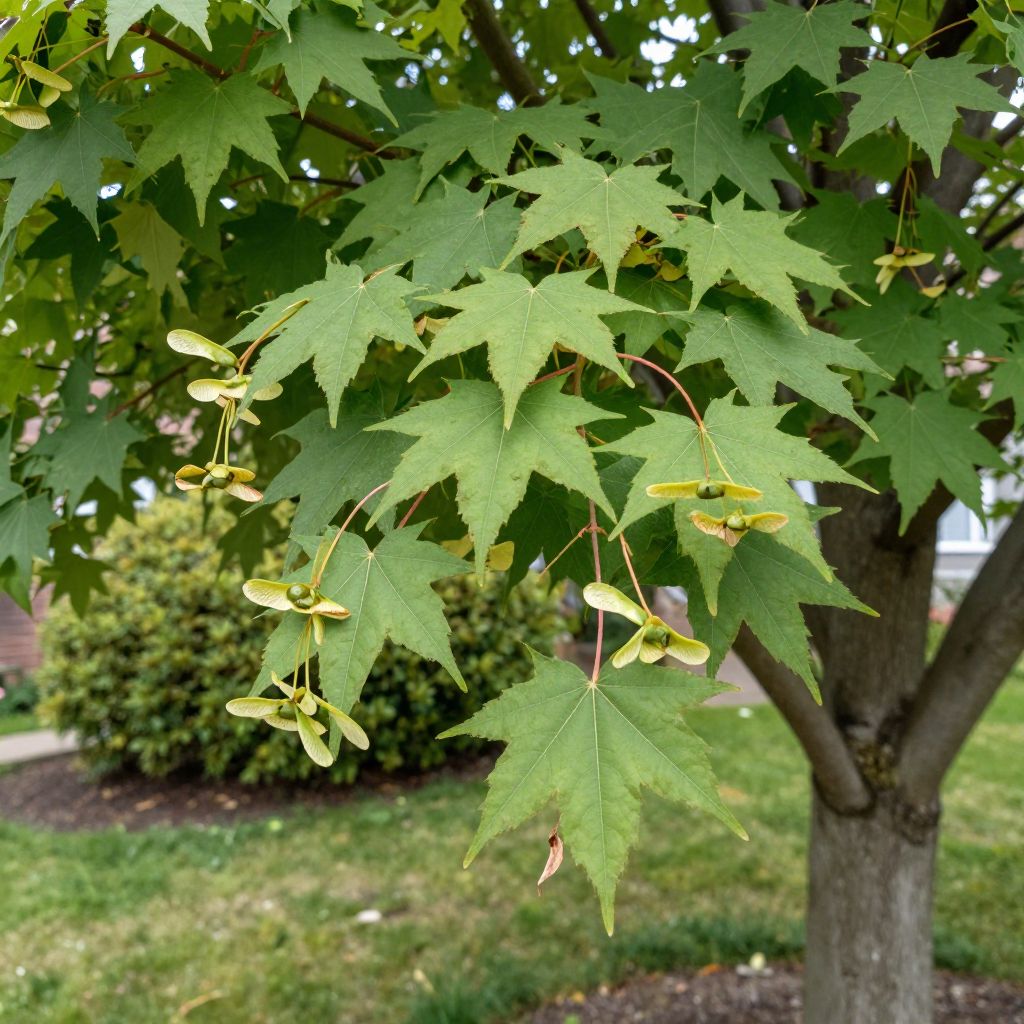
If you’ve ever wondered, “What trees have helicopter seeds?” you’re probably seeing those spinning seed pods drop from a nearby tree in spring or early summer. These winged seeds are called samaras, and they help certain trees spread by twirling on the wind.
Knowing which trees make helicopter seeds can help you identify a tree in your yard, clean up seedlings, and decide whether a self-seeding tree is a good fit for your landscape. Some are welcome shade trees; others can become weedy if they sprout everywhere.
What trees have helicopter seeds?
The most common trees with helicopter seeds are maples (Acer species), especially red maple, silver maple, Norway maple, and sugar maple. Ash trees (Fraxinus species), sycamores, and some elms also produce winged seeds, but maples are the classic “helicopter seed” trees most people notice.
How to identify helicopter seeds on trees
Helicopter seeds are paired or single winged seeds that spin as they fall. In maples, the seeds usually come in pairs joined at one end, forming a V-shape or straight line before they separate and twirl down.
Common trees that produce helicopter seeds
- Maples (Acer spp.) — the best-known helicopter seed trees
- Ash (Fraxinus spp.) — single-winged seeds, often called keys or samaras
- Sycamore (Platanus spp.) — round seed balls that break apart into many tiny winged seeds
- Elm (Ulmus spp.) — flat, winged seeds that may look like small discs or ovals
- Tree of heaven (Ailanthus altissima) — winged seeds, but this is an invasive tree in many regions
The easiest clue: maple samaras
If you see two seeds joined together with thin wings, you are likely looking at a maple. The angle between the wings can help with identification, but it varies by species and maturity, so use leaf shape, bark, and tree size for a more reliable ID.
Why trees make helicopter seeds
These winged seeds are a natural dispersal strategy. The spinning motion slows the seed’s fall and lets wind carry it farther from the parent tree, which improves the tree’s chances of growing in new places.
For gardeners, that means one important thing: a tree that drops helicopter seeds may also produce volunteer seedlings in beds, lawns, gutters, and containers nearby.
What to do if helicopter seeds are sprouting in your garden
If you are finding little maple or ash seedlings, the fix is usually simple: remove them early while the roots are small. Young seedlings pull more easily after rain or watering, and you can often lift them by hand or with a hand fork.
- Check the area weekly during seed-drop season.
- Pull seedlings when the soil is moist.
- Remove the entire root if possible.
- Mulch bare soil to reduce new germination.
- Keep lawn areas mowed so seedlings do not establish.
Do not wait too long. Once seedlings get woody, they become much harder to remove and may resprout if cut off at ground level.
Are helicopter-seed trees good for landscaping?
Yes, many are excellent landscape trees. Maples and ashes can provide shade, seasonal color, and wildlife value, but you should choose the right species for your space and maintenance tolerance.
When they are a good choice
- You want a fast-growing shade tree.
- You have room for a large canopy and root spread.
- You do not mind occasional seed cleanup.
- You want a tree that supports birds and other wildlife.
When to think twice
- You have a small yard or narrow planting strip.
- You want very low maintenance under the tree.
- You are planting near patios, drains, or gutters.
- You live where a species is invasive or overused in the landscape.
Growing conditions for common helicopter-seed trees
Most maples and ash trees prefer full sun to partial shade and well-drained soil, though many tolerate a range of conditions once established. The best choice for your yard depends on your climate, soil texture, and available space.
Soil and drainage
Good drainage matters more than rich soil for long-term health. If soil stays soggy after rain, roots may struggle, especially in compacted ground or low spots.
- Improve heavy clay with organic matter before planting.
- Avoid planting where water pools for long periods.
- Use mulch to moderate moisture and reduce competition from grass.
Sunlight
Most helicopter-seed trees grow best with several hours of direct sun each day. In too much shade, they may grow thin, lean toward light, and produce fewer healthy branches.
Watering young trees
Newly planted trees need regular deep watering until their roots spread into surrounding soil. Rather than watering a little every day, water deeply and less often so moisture reaches the root zone.
- Check soil moisture a few inches below the surface.
- Water when the root zone begins to dry, not on a fixed calendar.
- Mulch 2 to 4 inches deep, but keep mulch away from the trunk.
Pruning and maintenance tips
Prune helicopter-seed trees while they are young to establish a strong structure. Good early pruning reduces future breakage and makes cleanup easier because the tree develops a balanced canopy.
What to prune
- Dead, damaged, or crossing branches
- Low limbs that interfere with mowing or walking
- Competing leaders on young trees
- Weakly attached branches that could split later
Use clean, sharp tools and make cuts just outside the branch collar. If a tree is large or near power lines, hire a certified arborist rather than trying to handle major pruning yourself.
Common problems with helicopter-seed trees
Too many seedlings
This is the most common issue. The best fix is prevention: mulch beds, keep turf dense, and remove seedlings early before they root deeply.
Mess on patios and roofs
Some trees drop heavy seed crops that collect in gutters, on decks, or around drains. If that bothers you, place the tree farther from hardscape or choose a species with less prolific seeding for your area.
Weak branches or storm damage
Fast-growing trees can develop narrow branch angles or brittle wood if not pruned well. Structural pruning when the tree is young is much easier than correcting problems later.
Invasive or unwanted spread
Some winged-seed trees, especially tree of heaven in many regions, spread aggressively. If you suspect an invasive species, confirm the identification before deciding whether to keep or remove it.
How to tell if a tree in your yard is a maple
Because maples are the most familiar helicopter-seed trees, many gardeners want a quick ID. Look at the leaves first: maple leaves are usually opposite on the twig and often lobed, though the exact shape varies by species.
Then check the seeds. Paired samaras, opposite branching, and familiar bark patterns together give a much better identification than seed shape alone.
Helpful identification checklist
- Are the leaves opposite each other on the twig?
- Are the leaves lobed or palm-shaped?
- Do the seeds come in pairs with wings?
- Is the tree dropping seeds in spring or early summer?
- Does the bark match a maple, ash, or another broadleaf tree?
Best time to manage helicopter seeds
The right time depends on the species and your local climate, but the general rule is to act as soon as seed drop begins. That is when seedlings are easiest to prevent and cleanup is simplest.
- Spring: Watch for seed drop from maples and some ashes.
- Early summer: Check for seedlings in beds, lawns, and containers.
- Late season: Mulch and tidy areas where seeds collected.
Should you plant a tree that has helicopter seeds?
If you like shade, wildlife value, and seasonal interest, a helicopter-seed tree can be a smart addition to the garden. Just match the tree to the site and be realistic about cleanup.
Choose a species that fits your space, keep it pruned while young, and stay ahead of seedlings. If you are unsure what tree you already have, compare the leaves, bark, and seeds together before deciding how to manage it. For more help identifying a tree in your yard, see what type of tree is this?
Leave a Reply