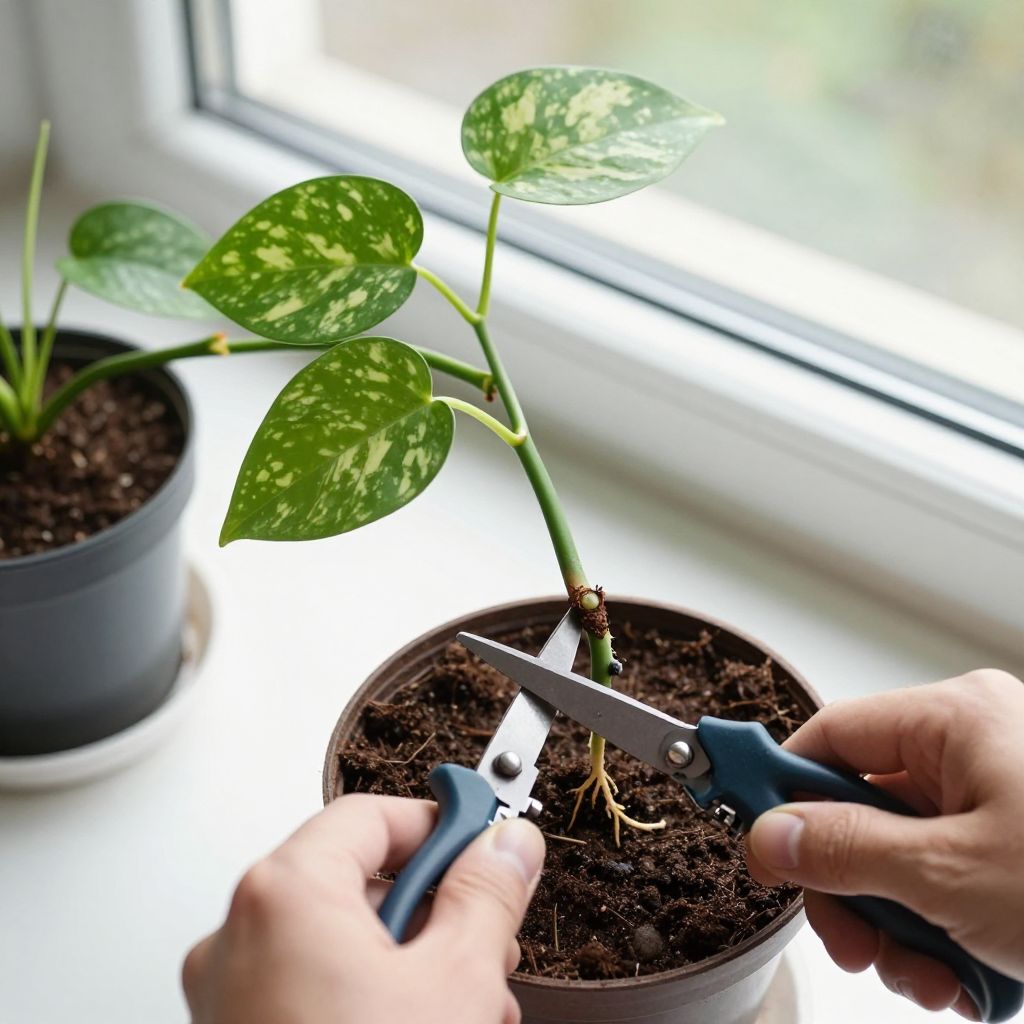
Wondering where to cut pothos for propagation? The best place is just below a node, the small bump on the vine where leaves and aerial roots emerge. That node is what can grow new roots, so a cutting without one usually won’t propagate well.
You can root pothos cuttings in water or directly in a moist potting mix, and healthy vines usually respond quickly when you make clean cuts and give them warmth, bright indirect light, and steady moisture. The key is choosing the right section of vine and avoiding cuts that are too close to the leaf or too far from the node.
Where To Cut Pothos For Propagation?
Cut just below a node on a healthy vine, ideally taking a cutting with at least one node and one leaf, though 2–4 nodes gives you a better chance of success. The node is the only part that can produce new roots, so make sure it stays on the cutting, not on the parent plant.
What a pothos node looks like
Before you snip anything, identify the node. On pothos (Epipremnum aureum), a node usually looks like a slightly swollen joint along the stem where a leaf attaches. You may also see a tiny brown nub or aerial root starting there.
Node vs. internode
- Node: the growth point where roots and new shoots can form.
- Internode: the bare stem section between nodes.
If you cut only an internode, the cutting may look fine at first but often fails to root because it has no growth point.
How to make the cut correctly
Use clean, sharp scissors or pruning snips and cut about 1/4 inch below the node. A clean cut reduces damage and helps the cutting stay healthy while it roots.
- Choose a healthy vine with firm stems and at least a few leaves.
- Find a node near the tip or along a longer trailing stem.
- Cut just below the node so the node remains on the cutting.
- Remove any leaf that would sit below the waterline or soil line.
- Place the cutting in water or moist propagation mix right away.
Important: If you are making multiple cuttings from one vine, leave at least one or two nodes on the mother plant so it can regrow.
Best cutting lengths for pothos propagation
Short cuttings can work, but longer cuttings are usually easier for beginners. A cutting with 4 to 6 inches of stem and at least one node is a practical minimum. Many gardeners prefer cuttings with 2 or 3 nodes because they root more reliably and establish faster.
Good cutting options
- Single-node cutting: useful if you want many cuttings from one vine.
- Two-node cutting: a strong choice for water or soil propagation.
- Three- to four-node cutting: often roots well and gives you a fuller new plant sooner.
If your pothos is leggy, take cuttings from the longest trailing stems first. This also helps the parent plant look fuller after pruning.
Should you cut above or below the node?
For propagation, cut below the node. That way the node stays on the cutting and can produce roots. If you cut above the node, the node remains on the parent plant and the piece you removed may not root.
When you prune the mother plant for shape, you can cut just above a node on the parent vine to encourage branching. But for propagation, the cutting itself must include the node.
Water propagation: how to do it well
Water propagation is popular because it lets you watch the roots form. It is also a good way to monitor whether the cutting is healthy before potting it up.
Steps for water propagation
- Place the cutting in a clean jar of room-temperature water.
- Keep the node submerged, but keep leaves above the waterline.
- Change the water every 5 to 7 days, or sooner if it looks cloudy.
- Set the jar in bright, indirect light.
- Wait for roots to reach about 2 to 3 inches before potting.
Water propagation works best when the cutting has at least one healthy node and the water stays clean. If the stem turns mushy, remove it and start again with a fresher cutting.
Soil propagation: a good option for stronger roots
Some gardeners prefer rooting pothos directly in soil because the roots adapt immediately to potting mix. This can reduce transplant shock later, especially if you want a faster transition into a permanent pot.
Steps for soil propagation
- Fill a small pot with a light, well-draining potting mix.
- Moisten the mix so it is evenly damp, not soggy.
- Insert the node just below the soil surface.
- Firm the mix gently around the stem.
- Keep the pot warm and lightly moist while roots develop.
Use a mix that drains well, such as a standard houseplant potting mix amended with perlite or orchid bark. Pothos dislikes heavy, waterlogged soil, especially during propagation.
How many cuttings should you take from one pothos?
That depends on the size and health of the plant. If your pothos is vigorous, you can usually take several cuttings from long vines without harming it, but avoid stripping too much foliage at once. A good rule is to leave enough leaves behind that the mother plant can still photosynthesize well.
If the plant is small, weak, or recovering from stress, take only a few cuttings and let it recover before pruning more.
Common mistakes when cutting pothos for propagation
Most propagation failures come from a few simple errors. Avoiding them will save time and prevent rot or stalled growth.
- Cutting without a node: the most common mistake.
- Using dull tools: can crush the stem and slow rooting.
- Leaving leaves underwater or buried: increases rot risk.
- Too much sun: can scorch cuttings before roots form.
- Overwatering soil cuttings: leads to stem rot.
- Waiting too long to pot up water roots: can make transition harder if roots become very long and fragile.
What conditions help pothos cuttings root fastest?
Pothos cuttings root best in warm indoor conditions with bright, indirect light. A stable room temperature is usually enough; avoid cold windowsills, drafts, and direct afternoon sun. Moderate humidity helps, but you do not need a greenhouse for success.
Helpful growing conditions
- Light: bright, indirect light
- Temperature: warm and steady, not chilly
- Moisture: evenly moist for soil cuttings; clean water for water cuttings
- Airflow: gentle circulation, not stagnant, damp air
If your home is dry, a clear propagation bag or dome can help soil cuttings hold moisture, but vent it regularly to prevent mold.
How to tell when a pothos cutting is ready to pot up
For water-started cuttings, wait until roots are several inches long and have begun to branch. Thin single roots can work, but a small cluster is better because it handles potting stress more easily.
For soil-started cuttings, give them a gentle tug after a few weeks. If you feel resistance, roots are likely forming. New leaf growth is another good sign that the cutting has established.
Signs of success
- White or pale roots emerging from the node
- New leaf growth at the tip
- Firm, green stem tissue
- No sour smell or mushy spots
What to do after rooting
Once roots are established, pot the cutting into a small container with drainage holes and a light houseplant mix. Do not jump to a very large pot, because excess soil can stay wet too long and slow growth.
After potting, water thoroughly, then let the top layer of mix dry slightly before watering again. Keep the plant in bright, indirect light while it adjusts.
Pruning pothos for a fuller plant
Propagation is also a pruning tool. If your pothos looks sparse, cutting back long vines encourages the plant to branch from nodes below the cut, which can make the parent plant fuller over time.
Trim just above a node on the mother plant to stimulate new side growth. You can then root the removed sections and replant them in the same pot for a denser look.
Problems to watch for
Even easy plants like pothos can run into trouble during propagation. Most issues are easy to correct if you catch them early.
Yellowing leaves
One yellow leaf is not always a problem, but several yellowing leaves can mean too much water, poor light, or a cutting that was too weak to begin with. Remove damaged leaves and reassess the cutting conditions.
Stem rot
If the stem turns brown, soft, or slimy, discard that cutting. Rot spreads quickly in stagnant water or soggy mix, so start over with a healthy section and cleaner conditions.
No roots after several weeks
If a cutting sits unchanged for a long time, check whether it actually includes a node, whether the water is clean, and whether the plant is warm enough. Slow rooting often improves with better light and steadier temperatures.
Outdoor vs. indoor propagation
Most pothos propagation happens indoors because pothos is commonly grown as a houseplant. Outdoors, it can only be grown in frost-free climates and should still be protected from harsh sun and cold snaps.
Indoors, you have more control over temperature and moisture, which usually makes rooting easier. Outdoors, watch for heavy rain, direct heat, and pests that may damage tender cuttings.
Quick answer: best places on the vine to cut
The best places to cut are healthy sections with visible nodes, especially near the ends of trailing vines. Tip cuttings root quickly, while longer vine sections with multiple nodes give you more flexibility and often create a fuller new plant.
If you want the simplest approach, choose a vine with several leaves, cut just below a node, and root the cutting in water or moist mix. That is the most reliable method for most home gardeners.
Conclusion
To propagate pothos successfully, always cut just below a node, keep at least one node on the cutting, and root it in clean water or a lightly moist, well-draining mix. Start with a healthy vine, give it bright indirect light, and avoid soggy conditions. If you want to learn more about keeping your plant vigorous after pruning, a good next step is reading up on pothos care and indoor plant pruning techniques.