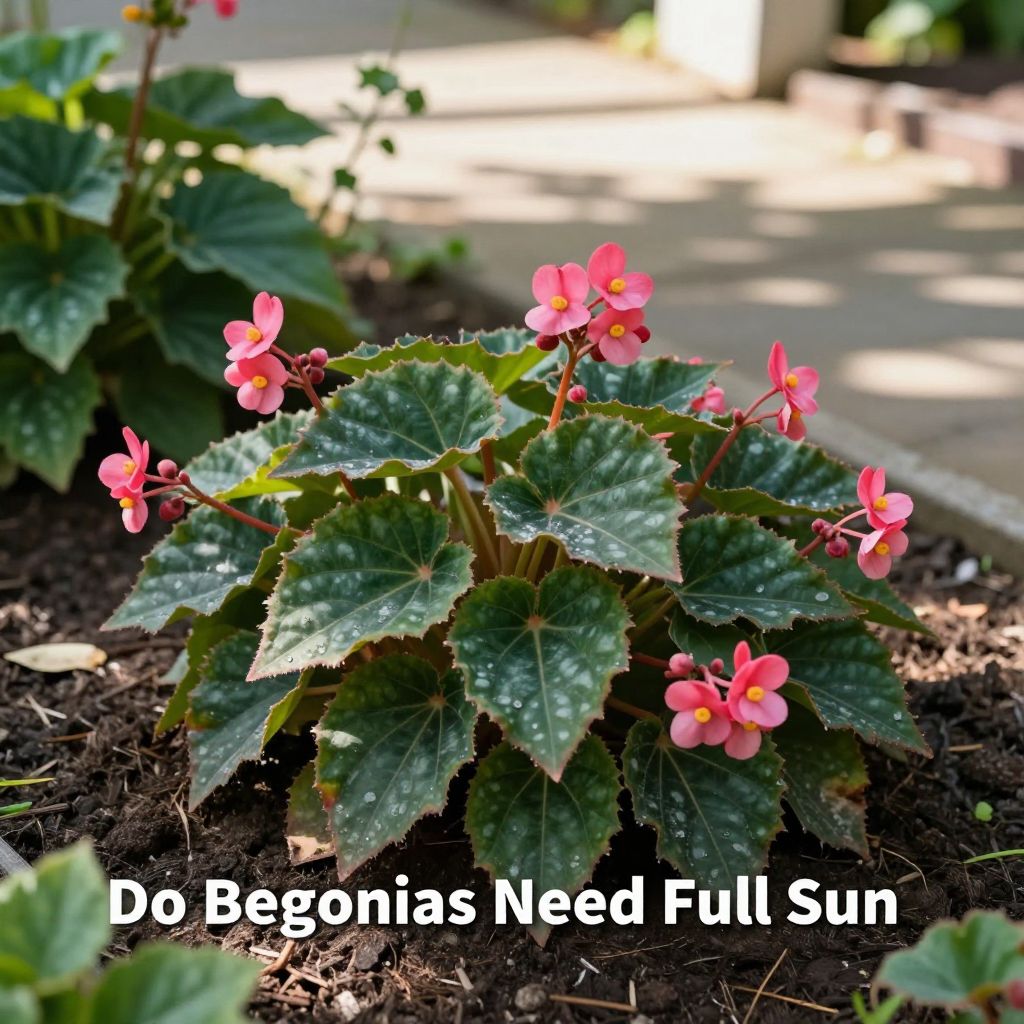
Do begonias need full sun? Usually, no. Most begonias grow best in bright, indirect light or partial shade, and many will scorch, fade, or dry out in strong all-day sun.
The exact light they need depends on the type of begonia and your climate. A little morning sun may help some varieties bloom well, but hot afternoon sun is often too intense.
Do begonias need full sun?
Most begonias do not need full sun. In fact, many perform better in partial shade, filtered light, or bright indirect light, especially in hot climates. Some wax begonias can handle more sun than tuberous or rex begonias, but full midday sun usually causes stress, leaf scorch, and faster drying.
How much sun begonias actually need
Begonias are a large plant group, so light needs vary. The safest rule is to give them enough light to grow compactly and flower well, but protect them from harsh, direct sun during the hottest part of the day.
General light guidelines by begonia type
- Wax begonias: Tolerate more sun than many other types, especially in cooler regions.
- Tuberous begonias: Prefer bright shade or morning sun only; strong afternoon sun can damage flowers and foliage.
- Rex begonias: Best in filtered light or bright indirect light; direct sun often burns the leaves.
- Cane begonias: Usually like bright, indirect light and some protection from hot sun.
- Angel wing begonias: Prefer bright light without harsh direct exposure.
If you are unsure which begonia you have, start with partial shade and watch the plant’s response. You can always move it to a brighter spot if it becomes leggy or stops blooming.
What happens if begonias get too much sun?
Too much direct sun can bleach, curl, or scorch begonia leaves. Flowers may fade quickly, and the plant may wilt even when the soil is moist because the leaves lose water faster than the roots can replace it.
Common signs of sun stress
- Brown, crispy leaf edges or patches
- Leaves that look washed out, pale, or bleached
- Wilting during the hottest part of the day
- Flowers dropping early
- Stunted growth or thin, stressed stems
These symptoms can look like drought stress, so check the soil before you assume the plant needs more water. If the soil is damp but the plant still wilts in the afternoon, excess sun is often the real problem.
Best light conditions for healthy begonias
For most begonias, the ideal spot gets bright light with protection from intense afternoon rays. Morning sun is often gentler and can be helpful, especially in cooler climates or for more sun-tolerant varieties.
Outdoor placement
- East-facing beds or containers are often ideal.
- Use dappled shade under open trees or on a porch with filtered light.
- In hot regions, aim for shade after late morning.
- In cooler climates, some begonias can take more direct sun if they are well watered and gradually acclimated.
Indoor placement
- Place begonias near a bright window with indirect light.
- Use sheer curtains if the window gets strong midday sun.
- Rotate the pot every week or two so growth stays even.
- Avoid placing them right against hot glass in summer.
Indoor begonias often decline not from too little light, but from too much direct sun through a window. Glass can intensify heat, so a bright room is better than a blazing windowsill in many homes.
Can begonias ever grow in full sun?
Some begonias can tolerate more sun than others, but “full sun” is still risky in many gardens. In mild coastal climates or cooler summers, certain wax begonias may handle several hours of direct light if the soil stays evenly moist and the plant is gradually adjusted.
When more sun may work
- Your summer temperatures are moderate rather than hot
- The plant is a sun-tolerant wax begonia
- The soil drains well but does not dry out too fast
- The plant receives morning sun, not harsh afternoon exposure
Even then, watch the plant closely for stress. If leaves fade or curl, move it to a shadier spot before the damage becomes severe.
Soil, drainage, and watering for begonias in sun or shade
Light and water go hand in hand. Begonias dislike soggy soil, but they also suffer when roots dry out completely, especially in containers or sunny spots.
Use a loose, well-draining mix
Begonias grow best in soil that holds some moisture but drains freely. A rich potting mix with added compost often works well in containers, while garden beds should be amended with organic matter if the soil is heavy or compacted.
- Add compost to improve structure and moisture retention.
- Make sure containers have drainage holes.
- Avoid dense clay soil that stays wet after watering or rain.
Water carefully
Water when the top layer of soil begins to dry, but do not let the pot or bed dry out completely for long. In hotter or sunnier conditions, begonias may need more frequent checks, especially in containers.
- Water the soil, not the leaves, when possible.
- Check containers daily during heat spells.
- Mulch outdoor plants lightly to reduce moisture loss.
If you grow begonias in more sun than usual, consistent moisture becomes even more important. Dry roots plus strong light is a common recipe for leaf scorch and poor flowering.
How to tell if your begonia needs more or less light
Begonias often tell you what they need. The key is to read the foliage and growth pattern rather than guessing.
If the plant needs more light
- Stems become long and thin
- Leaves are spaced far apart
- Flowering is weak or absent
- The plant leans toward the light source
If the plant gets too much light
- Leaves scorch or bleach
- Edges dry and crisp
- Flowers fade quickly
- The plant wilts in the afternoon even when watered
A small change in placement can make a big difference. Moving a begonia just a few feet, or shifting it from direct sun to filtered light, can improve its appearance within a couple of weeks.
Seasonal care tips for begonias
Light needs change with the season. A begonia that tolerates more sun in spring may struggle in midsummer, especially if temperatures climb and the sun angle becomes stronger.
Spring
As days lengthen, acclimate begonias gradually if you are moving them outdoors. Sudden exposure to full sun after indoor growing can shock the leaves.
Summer
Watch for heat stress and dry soil. In hot weather, afternoon shade is often the difference between a thriving plant and a scorched one.
Fall
Light levels drop, so outdoor begonias may need a brighter position if nearby trees become denser or if shade patterns change.
Winter
Indoor begonias may need the brightest indirect light you can provide. Keep them away from cold drafts and avoid placing them in a dark corner.
Pruning, grooming, and maintenance
Regular grooming helps begonias use light more efficiently. Removing damaged leaves and spent flowers improves appearance and can reduce disease pressure.
- Pinch or trim leggy stems to encourage bushier growth.
- Remove yellowing or scorched leaves promptly.
- Deadhead spent blooms if your begonia type benefits from it.
- Turn container plants occasionally so all sides receive even light.
Use clean, sharp snips when pruning. This reduces tearing and helps prevent disease entry points, especially in humid conditions.
Common pests and disease issues linked to poor light
Light problems can make begonias more vulnerable to pests and disease. A stressed plant is easier for insects and fungal problems to attack.
Watch for these issues
- Powdery mildew in crowded, shaded, humid conditions
- Root rot if soil stays wet and light is low
- Aphids or mealybugs on weak, crowded growth
- Leaf scorch from direct sun and dry air
Good spacing, proper drainage, and the right light level are some of the best preventive tools you have. If a plant is constantly stressed, it will be harder to keep healthy no matter how often you treat symptoms.
Simple steps to place begonias correctly
- Identify the begonia type if you can.
- Choose bright light with protection from harsh afternoon sun.
- Use well-draining soil and a pot with drainage holes if growing in containers.
- Water when the top of the soil starts to dry, adjusting for heat and wind.
- Watch the leaves for scorch, fading, or legginess, then adjust the location.
Conclusion: the best answer for most gardeners
For most begonias, full sun is not necessary and often not ideal. Bright shade, filtered light, or gentle morning sun usually gives you the healthiest leaves and best flowers. Start with a protected spot, then adjust based on how your plant responds.
If you are planning a begonia bed or container, choose the brightest location that still shields the plant from hot afternoon sun, and observe the foliage closely during the first few weeks.