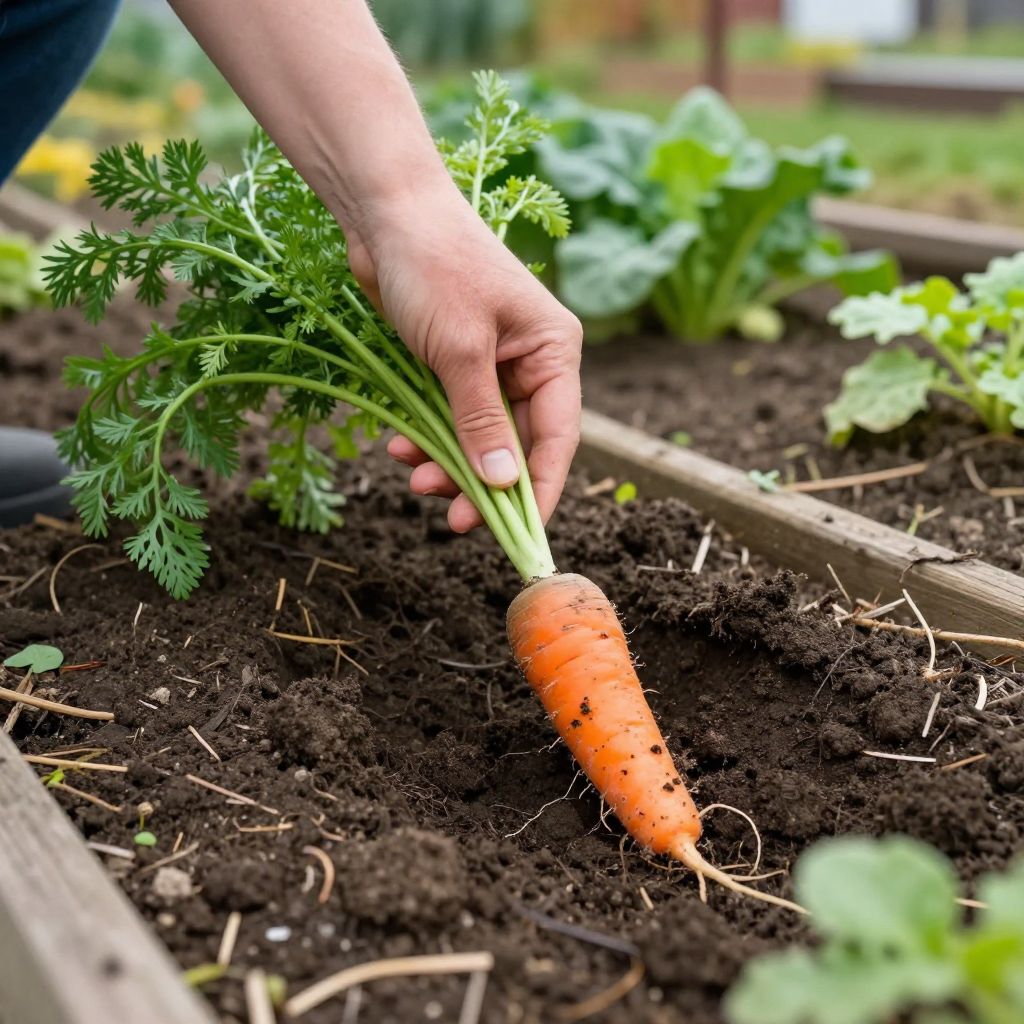
Wondering when to pick carrots so they’re sweet, crisp, and not too small or woody? The best harvest time depends on the variety, your weather, and how quickly the roots are growing. Carrots are usually ready when the shoulders are visible and the roots have reached a usable size, but flavor often improves with a little patience.
You can harvest them young for tender baby carrots or leave them longer for full-sized roots. The key is to check size, color, and texture rather than relying only on the calendar.
When to pick carrots?
Pick carrots when the roots are large enough for the variety you planted, usually 50 to 80 days after sowing for many types. Look for shoulders peeking above the soil, rich orange color, and firm roots that feel full. Harvest before they become oversized, tough, or split from stress.
How to tell carrots are ready
Carrots do not always show obvious above-ground signs, so you need to check the root itself. A quick test pull is the most reliable way to judge readiness.
Signs your carrots are ready to harvest
- Shoulders are visible at the soil surface and look about the width expected for the variety.
- The foliage is healthy and upright, but the roots feel firm and substantial.
- The color is fully developed, especially for orange varieties.
- The top of the root measures roughly 1/2 to 1 inch across for many standard types, though this varies by cultivar.
What if you are unsure?
Gently brush away soil around one carrot and check its size before pulling the whole row. If it looks too small, cover it back up and wait another week or two. Carrots can often stay in the ground a bit longer without trouble if conditions are cool and moist.
Seasonal timing: spring, summer, and fall harvests
Carrot harvest timing changes with the season because temperature affects growth rate and flavor. Cooler weather usually produces sweeter roots, while heat can make them grow faster but sometimes less evenly.
Spring-planted carrots
Spring sowings are often ready in early to midsummer, depending on your climate. Warm weather speeds growth, so check them often once they approach maturity. If summer heat arrives quickly, harvest promptly before roots become pithy or start splitting.
Summer succession plantings
If you sow carrots in mid- to late summer for a fall crop, they often mature during cooler weather. These are frequently the sweetest carrots of the year because cool nights help concentrate flavor. In many regions, they can stay in the ground until late fall if the soil remains workable.
Fall and overwintered carrots
In mild climates, carrots may be left in the ground through part of winter and dug as needed. Cold weather can improve sweetness, but hard freezing can damage roots unless the bed is mulched. In colder regions, harvest before the ground freezes solid.
How to harvest carrots without breaking them
Carrots are easy to damage if the soil is compacted or dry. A careful harvest keeps roots straight, clean, and usable.
- Water the bed lightly a few hours before harvesting if the soil is dry.
- Loosen the soil beside the row with a fork or trowel, taking care not to stab the roots.
- Grip the foliage close to the crown and pull steadily upward.
- If a carrot resists, loosen more soil rather than yanking harder.
- Shake off loose soil and trim the tops if you are storing them.
Do not pull carrots from very dry, hard soil. That is one of the most common reasons they snap in half.
Baby carrots vs. full-sized carrots
You do not have to wait for full maturity to enjoy carrots. Many gardeners harvest some roots early and leave the rest to size up.
Baby carrots
Baby carrots are simply immature carrots harvested young, usually when the roots are thin but already sweet and tender. They are ideal if you want quick harvests or if the row is crowded and needs thinning.
Full-sized carrots
Full-sized carrots need more time in the ground and usually develop better storage quality. They are best harvested once they reach the expected size for the variety, but before they become fibrous or split.
What affects the best time to pick carrots?
Several growing conditions can speed up or slow down maturity. Watching the plants closely matters more than following a fixed date.
Soil type
Loose, sandy, stone-free soil helps carrots grow straight and evenly. Heavy clay or rocky soil can slow growth, cause forked roots, and make harvest more difficult. In poor soil, carrots may be ready later than the seed packet suggests.
Watering
Even moisture helps carrots develop smoothly. Long dry spells followed by heavy watering can cause splitting or rough growth. If the soil dries out often, the roots may stay small and woody.
Temperature
Cool weather usually improves flavor, while hot spells can stress plants. If temperatures rise quickly, carrots may mature faster but not always better. In warm climates, choose varieties suited to your season and check them earlier.
Spacing
Overcrowded carrots compete for space and may stay thin. Thinning seedlings early helps the remaining roots size up properly. If the row is packed, you may need to harvest some carrots young to give the rest room.
Common mistakes to avoid when picking carrots
- Waiting too long and ending up with oversized, tough roots.
- Harvesting too early and assuming all carrots are ready at the same time.
- Pulling from dry, compacted soil and breaking the roots.
- Ignoring variety differences, since small round carrots and long storage carrots mature differently.
- Leaving damaged carrots in the ground too long after cracking or splitting starts.
Can carrots stay in the ground after they are ready?
Yes, often for a while. Mature carrots can remain in the soil if weather is cool and the bed drains well. This is useful if you want to harvest only what you need.
However, carrots left too long may become woody, split, or attract pests. In wet soil, they can also rot. If rain is frequent or frost is coming, it is safer to lift most of the crop and store it properly.
How to store harvested carrots
Good storage starts at harvest. Handle the roots gently and remove the tops soon after pulling, because the foliage keeps drawing moisture from the carrot.
- Trim greens to about 1/2 inch above the crown.
- Brush off excess soil, but avoid washing if you plan to store them for a while.
- Store in a cool, humid place such as a refrigerator crisper or a root cellar.
- Keep them in perforated bags, damp sand, or another method that helps prevent drying out.
If the carrots are for immediate use, you can wash them after harvest and refrigerate them. For longer storage, keep them as dry and cool as possible.
Problems that can affect harvest timing
Forked or misshapen roots
These often happen when the soil contains rocks, clods, fresh manure, or other obstructions. The carrot may still be edible, but it can be harder to judge size and readiness. Improving the soil before planting is the best fix.
Cracked roots
Cracking usually comes from irregular moisture or roots left too long after a growth surge. Harvest cracked carrots soon, since they do not store as well.
Pests and disease
Carrot rust fly, root-knot nematodes, and fungal problems can reduce quality. If tops yellow early, roots show tunnels, or growth stalls, check a sample carrot sooner rather than later. Damaged roots are often best harvested immediately.
Quick harvest checklist
- Check the expected days to maturity for your variety.
- Look for shoulders at the soil line.
- Pull one test carrot and assess size and texture.
- Harvest before roots become woody, split, or overgrown.
- Loosen the soil first if it is dry or compacted.
When in doubt, pull one carrot and taste it. If it is sweet and crisp, the rest are likely ready soon. If it is still thin, give the row more time and check again in a week.
For more practical vegetable-growing advice, you may also want to read about how to thin carrot seedlings and how to store root crops after harvest.