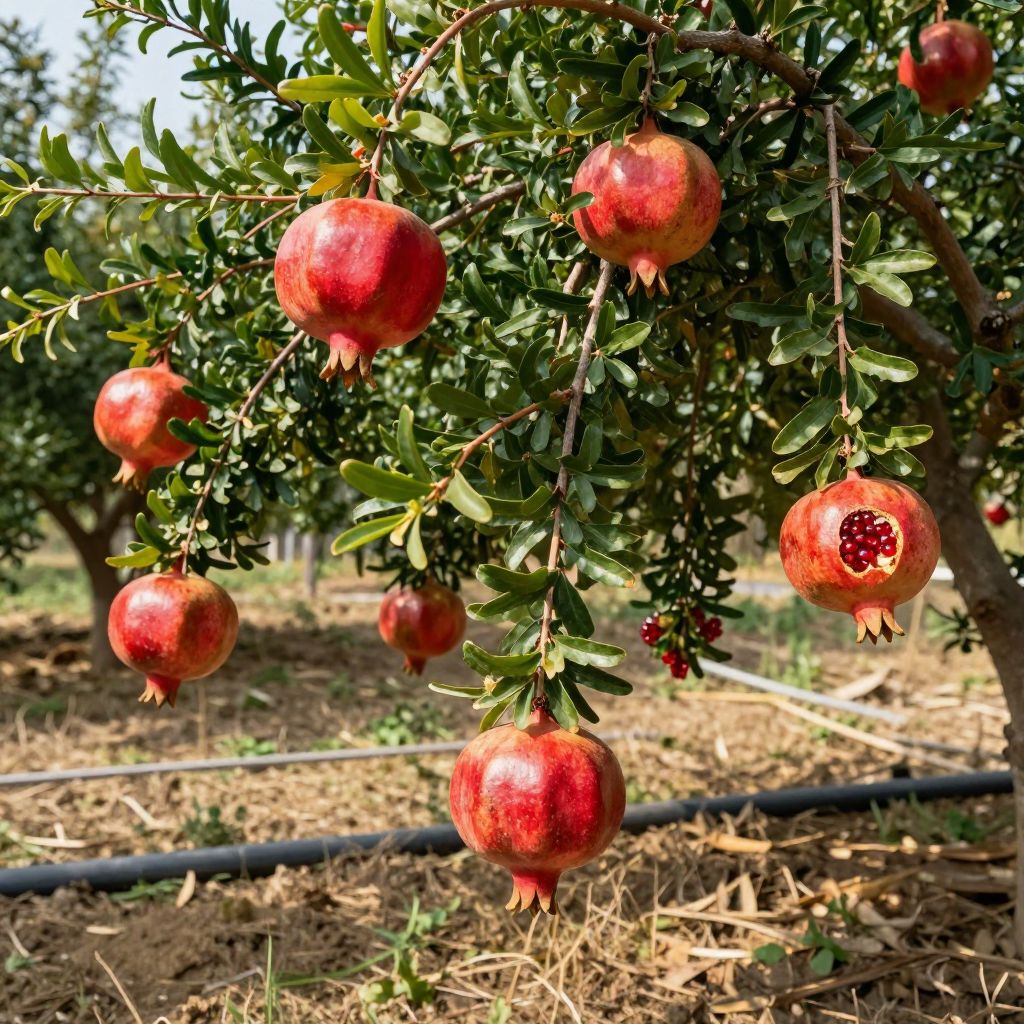
Are pomegranates in season? Yes—usually in fall and early winter, though the exact harvest window depends on your climate, variety, and local weather. If you grow pomegranates, the best fruit often ripens when days are warm, nights cool, and the arils inside have developed full color and flavor.
For gardeners, timing matters as much as care. Knowing when pomegranates are in season helps you harvest at peak quality, avoid split fruit, and plan pruning, watering, and pest control around the plant’s natural cycle.
Are pomegranates in season?
Pomegranates are typically in season from late summer through fall, with many home garden harvests stretching into early winter in mild climates. Fruit is ready when it has developed rich skin color, a slightly flattened shape, and a metallic sound when tapped. The exact season varies by cultivar and local growing conditions.
When pomegranates ripen in the garden
Pomegranate trees (Punica granatum) do not all ripen at the same time. Some early varieties finish in late summer, while others hold fruit well into autumn. In warmer regions, harvest may begin earlier; in cooler areas, fruit often needs the full season to mature.
What ripening looks like
- Skin color deepens to the expected shade for the variety, often red, pink, or yellow-orange.
- The fruit becomes more angular or flattened rather than perfectly round.
- The rind feels firm and leathery, not soft.
- When tapped, ripe fruit often sounds more metallic than dull.
- The fruit should detach with a clean cut, not by yanking.
Do not rely on color alone. Some pomegranates are naturally paler, and some stay partly green on the outside even when the arils inside are ready.
How to tell if your pomegranates are ready to harvest
The best way to judge harvest time is to combine appearance, feel, and taste. If you pick too early, the arils may be pale, tart, and underdeveloped. If you wait too long in wet or hot weather, the fruit can split or attract pests.
- Check the fruit size against the variety’s usual mature size.
- Look for a firm rind with good color development.
- Gently tap the fruit and listen for a more hollow, metallic tone.
- Sample one fruit before harvesting the entire crop.
- Use clean pruners to cut the stem rather than pulling fruit off the branch.
Important: pomegranates do not continue to ripen much after harvest. If they are picked too early, they usually stay tart and less juicy.
Growing conditions that affect season and flavor
Sun, heat, water, and soil all influence when pomegranates ripen and how sweet they taste. Trees grown in full sun with good drainage generally produce the best fruit. Too much shade, excessive nitrogen, or overly frequent watering can delay ripening and reduce flavor.
Sunlight
Pomegranates need full sun for strong flowering and fruit development. Aim for at least 6 to 8 hours of direct sunlight daily. In partial shade, the tree may still grow, but fruiting is often weaker and harvest may be later.
Soil and drainage
These trees prefer well-drained soil and can struggle in heavy clay that stays wet. If your soil is dense, improve it with compost and plant on a slight mound or raised bed to help excess water move away from the roots.
- Work in organic matter to improve structure, not to make soil soggy.
- Avoid planting where water pools after rain.
- Use mulch to moderate soil moisture, but keep it a few inches away from the trunk.
Watering
Young trees need regular watering to establish roots, but mature pomegranates are fairly drought-tolerant. Even so, inconsistent watering can cause fruit cracking. Deep, even moisture is better than frequent shallow watering.
During fruit development, water when the top few inches of soil begin to dry, adjusting for rainfall, temperature, and soil type. In very hot weather, container-grown trees may need more frequent attention than in-ground trees.
Seasonal care to improve harvest quality
Good seasonal care supports both fruit size and ripening. The goal is to keep the tree healthy without pushing too much leafy growth at the expense of fruit.
Pruning
Prune pomegranates during dormancy or after harvest, depending on your climate and tree form. Remove dead, damaged, crossing, or crowded branches to improve light and air movement. A more open canopy can reduce disease pressure and help fruit color up evenly.
- Cut out suckers from the base if you want a tree form.
- Thin crowded interior growth to let sunlight reach fruiting wood.
- Avoid hard pruning right before harvest, which can reduce fruiting wood.
Fertilizing
Too much fertilizer, especially nitrogen, can lead to vigorous leaves and fewer flowers. If your soil is healthy, a light application of compost in spring is often enough for established trees. For poor soils, use a balanced approach based on a soil test rather than guessing.
Mulching
A 2- to 4-inch layer of organic mulch helps conserve moisture and suppress weeds. Keep mulch several inches away from the trunk to reduce rot and pest problems.
Common problems that affect pomegranate season
Several issues can interfere with ripening or reduce the quality of the harvest. Catching them early makes a big difference, especially as fruit approaches maturity.
Fruit splitting
Cracking often happens when the tree receives irregular water after a dry period, especially near harvest. To reduce splitting, keep watering more consistent as fruit swells and avoid letting the soil swing from very dry to very wet.
Pests
Birds, ants, scale insects, mealybugs, and fruit-feeding insects can damage ripening fruit. Inspect the tree regularly, especially as color develops. Use netting for birds if needed, and manage sap-sucking pests with pruning, washing, or other appropriate integrated pest control methods.
Diseases
Pomegranates can develop fungal problems in humid or poorly ventilated conditions. Good spacing, pruning, and avoiding overhead watering help reduce disease risk. Remove fallen fruit and leaves promptly to limit disease carryover.
Flower drop and poor fruit set
If your tree flowers but drops fruit, the cause may be stress, insufficient sun, too much shade, poor pollination, or extreme weather. Young trees can also take time to settle into regular production. Focus on steady care rather than overcorrecting with heavy fertilizer or water.
Can you grow pomegranates in containers?
Yes, pomegranates can be grown in large containers, especially dwarf or naturally compact selections. Container growing can be useful in colder climates because you can move the plant to a sheltered spot. The tradeoff is that potted trees dry out faster and need more careful monitoring.
Container care basics
- Choose a pot with excellent drainage holes.
- Use a free-draining potting mix, not heavy garden soil.
- Place the container in full sun.
- Water thoroughly, then let the top layer dry slightly before watering again.
- Repot or root-prune as needed when the plant becomes crowded.
Container-grown trees may ripen fruit a little differently from in-ground plants because the root zone warms and dries faster. Watch the plant closely during hot spells.
How to harvest pomegranates cleanly
Harvest with pruning shears or hand pruners to avoid tearing the stem or branch. Cut the fruit from the tree, leaving a short stem attached if possible. Handle the fruit gently, since bruising can shorten storage life.
- Test a few fruits first before picking the whole crop.
- Harvest in dry weather if possible.
- Use clean tools to make a neat cut.
- Place fruit in shallow containers to avoid crushing.
- Store undamaged fruit in a cool, dry place.
After harvest, check fruit for cracks or soft spots and use damaged fruit first. Healthy, intact pomegranates usually store better than fruit with skin breaks.
What to do if your pomegranates are not in season yet
If your tree is not ready, resist the urge to force it with extra water or fertilizer. Instead, support ripening by keeping the plant healthy and sunny, and by avoiding stress that can slow fruit development.
- Remove weeds competing for water and nutrients.
- Keep the root zone evenly moist, not saturated.
- Thin overly dense branches to improve light penetration.
- Protect fruit from birds and pests as it colors.
- Be patient if your climate has a shorter growing season.
If you live in a cooler region, your harvest may simply come later than the calendar suggests. Local weather matters more than a fixed date.
Conclusion
So, are pomegranates in season? In most gardens, yes—during late summer through fall and sometimes into early winter. Watch for full color, firm skin, and a ripe sound when tapped, then harvest with pruners once the fruit is ready. For more seasonal garden timing, you may also find this guide useful: when pomegranates are in season.