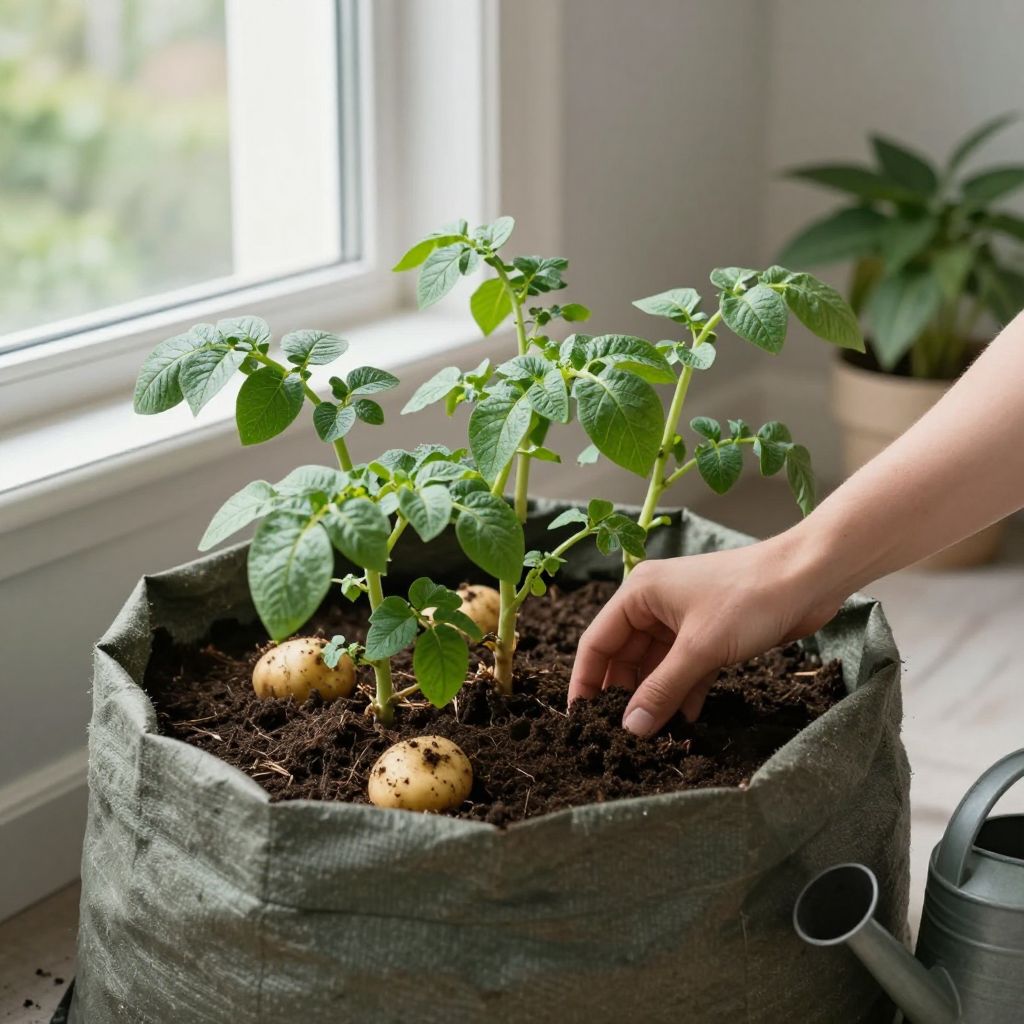
Can you grow potatoes indoors? Yes—you can grow potatoes indoors in a bright, cool spot if you give them enough light, a deep container, loose soil, and steady moisture. Indoor potatoes are usually grown for small harvests, not huge yields, but they can still produce usable tubers with the right care.
The biggest challenge is light. Potatoes need strong, direct light or a very powerful grow light, plus enough root space to form tubers below the soil. If you can match those basics and avoid overwatering, indoor potato growing is very doable for beginners.
Can you grow potatoes indoors?
Yes, potatoes (Solanum tuberosum) can be grown indoors in containers, grow bags, or buckets as long as they receive intense light, good drainage, and enough room for hilling. Indoor plants generally need more attention than outdoor potatoes, but they can still produce a modest crop if conditions stay consistent.
What potatoes need to grow well indoors
Potatoes are a cool-season crop that forms tubers underground, so the indoor setup has to support both leafy growth and root development. The plant needs light above the soil and darkness below the soil, along with loose, airy potting mix that drains quickly.
Light
Light is the most important factor. A sunny south-facing window may work for a few plants, but many homes do not provide enough direct light for strong growth.
- Best option: a full-spectrum grow light placed close to the foliage.
- Window option: several hours of direct sun, ideally from a bright, unobstructed window.
- Warning: weak light leads to tall, thin stems and poor tuber formation.
Container size
Choose a container that is deep enough for layering soil as the plant grows. A pot, bucket, or grow bag with drainage holes is essential.
- Use at least a 10- to 15-gallon container for a more practical indoor crop.
- Depth matters more than width for tuber development.
- Dark-colored containers can warm up faster, so monitor moisture carefully.
Soil and drainage
Potatoes do best in a loose, slightly acidic, well-draining mix. Heavy garden soil is a poor choice indoors because it compacts and stays wet too long.
- Use quality potting mix, not soil from the yard.
- Mix in compost if the potting mix is poor or very low in nutrients.
- Avoid dense mixes that hold water around the tubers.
How to plant potatoes indoors
Start with certified seed potatoes rather than grocery-store potatoes when possible. Seed potatoes are less likely to carry disease and are bred for planting, which gives you a better chance of healthy growth.
- Choose a container with drainage holes.
- Fill the bottom with 4 to 6 inches of moist potting mix.
- Place one or more seed potatoes on the soil surface, with sprouts or “eyes” facing up.
- Cover with 2 to 4 inches of soil.
- Water lightly to settle the mix.
- Move the container to strong light or under a grow light.
Should you cut seed potatoes?
You can cut larger seed potatoes into pieces if each piece has at least one or two healthy eyes, but many indoor gardeners prefer to plant whole small seed potatoes to reduce rot risk. If you do cut them, let the pieces dry and callus before planting.
Hilling potatoes indoors
Hilling means adding more soil around the stems as the plant grows. This is one of the most important steps because tubers form along buried stems, and exposed tubers turn green and become unusable.
- When stems are 6 to 8 inches tall, add more potting mix around them, leaving the top leaves exposed.
- Repeat every time the plant grows another several inches.
- Stop when the container is nearly full, leaving a little space at the top for watering.
Do not let developing tubers sit near the surface. Keep them covered with soil or an opaque growing container to prevent greening.
Watering and feeding indoor potatoes
Indoor potatoes need even moisture, but they should never sit in soggy soil. The goal is a mix that stays lightly moist, not wet.
How to water
- Water when the top inch of soil feels dry.
- Water thoroughly until excess drains out the bottom.
- Empty any saucer or tray after watering.
Irregular watering can cause misshapen tubers or stress the plant. Overwatering is especially risky indoors because pots dry more slowly than outdoor beds.
Feeding
Potatoes are moderate feeders, but too much nitrogen can produce lots of leaves and fewer tubers. A balanced, gentle approach works best indoors.
- Mix compost into the potting medium at planting if desired.
- Use a balanced fertilizer sparingly if the plant looks pale or growth stalls.
- Avoid heavy feeding once tubers are forming unless the plant clearly needs it.
Temperature and indoor growing conditions
Potatoes grow best in cool to moderate temperatures. Very warm indoor rooms can slow tuber formation and encourage weak growth.
- Keep the plant in a bright room that is not hot and stuffy.
- Avoid placing containers right next to heating vents or cold drafts.
- Good air circulation helps reduce disease problems.
If your home is warm, a grow light and a slightly cooler room may be better than a sunny windowsill that overheats the plant. Stable conditions matter more than chasing perfect temperatures.
Can you grow potatoes indoors year-round?
In many homes, yes, but indoor potato growing still depends on light and space. You can start a crop at different times of year if you can supply enough light and maintain a cool enough environment for healthy tuber growth.
That said, potatoes are not always the easiest indoor crop for continuous production. If your indoor setup is limited, you may get better results by growing one crop at a time and replanting after harvest.
Common indoor potato problems and fixes
Leggy, pale plants
This usually means the plant is not getting enough light. Move it closer to a strong light source or switch to a grow light positioned close enough to prevent stretching.
Soft stems or rotten tubers
Usually caused by excess moisture or poor drainage. Check that the pot has drainage holes and that the soil is airy, not compacted.
Green tubers
Green potatoes have been exposed to light. Hill the plant more often and keep the container opaque or well-covered with soil.
Few or no tubers
This can happen if the plant gets too much nitrogen, too little light, or too much heat. Reduce feeding, improve lighting, and keep the plant in a cooler room if possible.
Pests
Indoor potatoes can still attract aphids, fungus gnats, and occasionally spider mites. Inspect leaves regularly, especially the undersides, and remove affected growth early.
- Sticky leaves or clusters of tiny insects suggest aphids.
- Small flying insects around the soil may be fungus gnats.
- Fine webbing and speckled leaves can indicate spider mites.
When and how to harvest indoor potatoes
You can harvest baby potatoes earlier, or wait until the foliage begins to yellow and die back for a fuller crop. The exact timing depends on variety, light, and growing conditions, so use the plant itself as your guide.
- Stop watering heavily once the tops begin to yellow.
- Wait until the foliage has mostly died back for mature potatoes.
- Tip the container gently and sift through the soil to collect tubers.
- Handle potatoes carefully to avoid bruising or cutting the skins.
After harvest, let the potatoes dry briefly in a shaded, airy place before storing them. Avoid washing them before storage unless you plan to use them right away.
Best practices for better indoor yields
- Use certified seed potatoes when possible.
- Choose a deep container with excellent drainage.
- Provide strong light from the start.
- Hill regularly to keep tubers covered.
- Water evenly, but never let the soil stay soggy.
- Keep the plant in a cool, bright room.
- Watch for pests and remove damaged leaves early.
Is growing potatoes indoors worth it?
If you want a large potato harvest, outdoor growing is usually easier and more productive. But if you want a fun container crop, a winter gardening project, or a way to grow a few fresh potatoes in limited space, indoor growing can absolutely be worth trying.
The key is to think of it as a managed container crop, not a set-it-and-forget-it houseplant. Give it light, depth, drainage, and steady care, and you can grow potatoes indoors with good results. For more container-growing ideas, you may also enjoy reading about how to grow vegetables in containers and choosing the right potting mix for indoor plants.