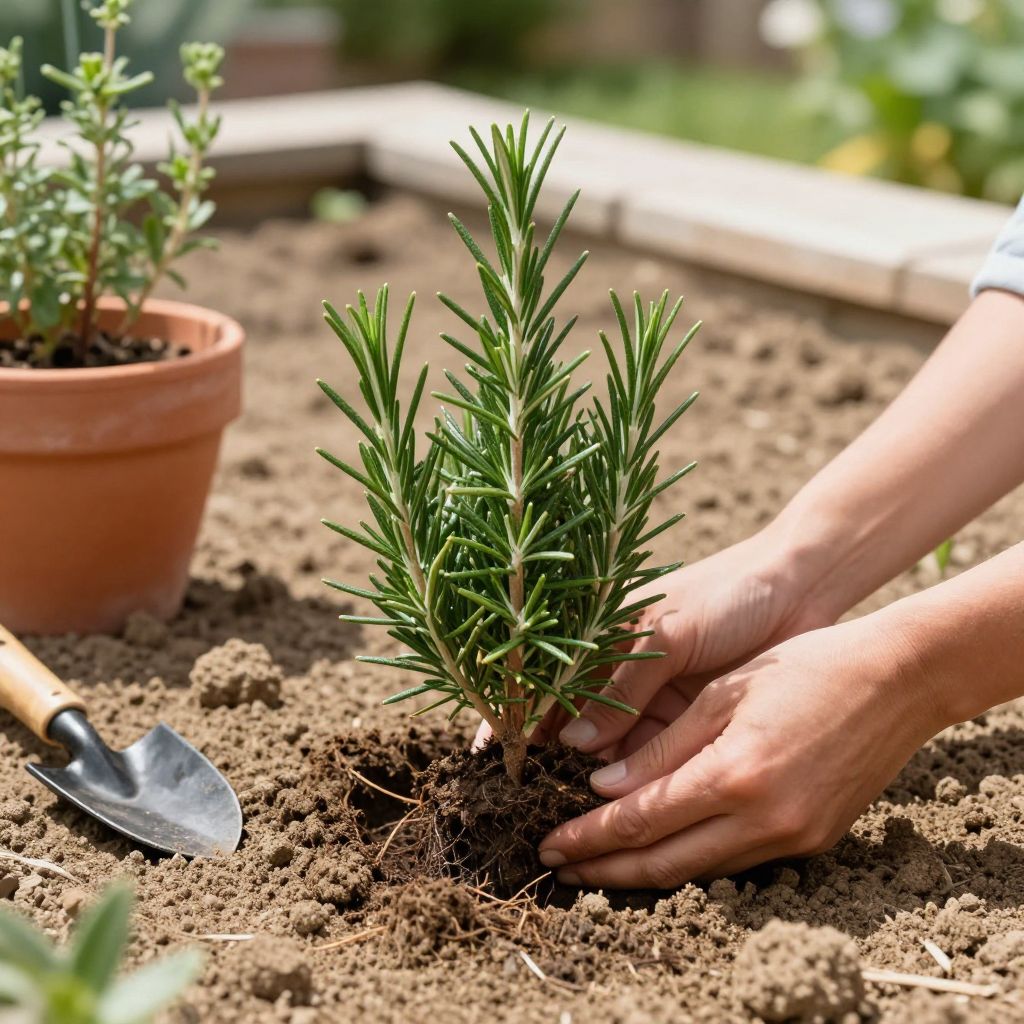
Wondering where to plant rosemary so it actually thrives? This Mediterranean herb is picky about drainage and sun, but once you place it well, it can become one of the easiest plants in the garden to maintain.
The right spot depends on your climate, soil, and whether you’re growing rosemary in the ground, in a raised bed, or in a container. Get those basics right first, and you’ll avoid the most common problems: root rot, weak growth, and sparse flavorless foliage.
Where to plant rosemary?
Plant rosemary in the sunniest, driest, and best-drained part of your garden. It grows best in full sun, loose soil, and a spot with good air circulation. If your soil stays wet or heavy, choose a raised bed, slope, or container instead of planting directly in the ground.
Best locations for rosemary
Full sun is the top priority
Rosemary needs at least 6 to 8 hours of direct sunlight each day. In cooler climates, more sun helps plants stay compact and productive. In very hot climates, a little afternoon shade can help, but too much shade usually leads to thin stems and weak growth.
If you only have one choice to make, choose sun over almost everything else. A bright, open location also helps leaves dry quickly after rain, which reduces disease problems.
Choose well-drained soil over rich soil
Rosemary hates soggy roots. It does best in sandy or loamy soil that drains quickly, even if the soil is not especially fertile. Heavy clay can work only if it is improved or planted in a raised bed.
Good drainage matters more than high fertility. In overly rich soil, rosemary often grows soft and leggy instead of sturdy and aromatic.
Pick a sheltered but airy spot
A location with some wind protection is helpful, especially in cold winters, but avoid cramped corners with stagnant air. Good air movement helps prevent fungal problems and keeps the plant healthier overall.
Near a south- or west-facing wall can be ideal in many gardens, as long as the soil does not dry out too extremely in summer or stay wet at the base of the wall.
Raised beds and slopes are excellent choices
If your garden soil is heavy or slow to drain, rosemary often performs better in a raised bed. Even a modest raised bed can improve drainage enough to keep the roots healthier.
A slope is another strong option because water naturally runs away from the root zone. This is especially useful in rainy climates or gardens with compacted soil.
Containers are best for difficult sites
Container growing is often the easiest solution if your yard has clay soil, poor drainage, or limited sun. Use a pot with drainage holes and a gritty potting mix designed for herbs or Mediterranean plants.
Containers also let you move rosemary to a brighter or more sheltered place as the seasons change. That flexibility is especially useful in cold-winter regions.
What rosemary needs to grow well
Soil and drainage
Rosemary prefers soil that drains fast and does not stay wet after watering or rain. If water pools in the planting area for more than a short time, the site is too wet.
To improve a borderline site, work in coarse organic matter or plant on a mound or raised bed. Avoid overloading the soil with compost, which can hold too much moisture if used heavily.
Sunlight and temperature
In most gardens, rosemary is happiest in warm, sunny conditions. It grows best when it can dry out between waterings and receive steady light through the day.
In colder areas, choose the warmest microclimate you have, such as a south-facing wall or a protected courtyard. In very hot inland areas, a little afternoon shade may reduce stress, but the plant still needs strong light.
Space for mature growth
Give rosemary room to spread. Crowding it too closely to other plants reduces airflow and makes pruning more difficult.
As a general rule, leave enough space for the plant’s mature width, not just its current size. If you are planting several rosemary plants, avoid creating a dense hedge unless you can prune and monitor it regularly.
Where not to plant rosemary
Avoid low spots and wet ground
Do not plant rosemary in places where water collects after rain. Low spots, the bottom of slopes, and compacted garden beds are common failure points.
Root rot is one of the most common reasons rosemary declines. If the lower stems turn brown and the plant wilts despite moist soil, poor drainage is often the cause.
Skip heavy shade
Rosemary in shade usually becomes thin, weak, and more prone to disease. It may survive, but it will not grow well or develop the dense, fragrant foliage most gardeners want.
If your only available space is partly shaded, choose the brightest possible location and expect slower growth.
Don’t place it where irrigation keeps the soil wet
Rosemary should not sit in the splash zone of a lawn sprinkler or automatic irrigation line that waters frequently. Constant moisture around the roots is a common mistake.
Keep it separate from thirstier plants that need regular watering, unless you can control each plant’s moisture needs individually.
How to plant rosemary in the right spot
- Test the drainage by watering the site and seeing how quickly the water disappears.
- Choose the sunniest location you have, preferably with at least 6 hours of direct sun.
- Loosen the soil and remove weeds, stones, and compacted roots.
- Improve heavy soil by planting in a raised bed or mixing in coarse material to open the texture.
- Set the plant at the same depth it was growing in its container.
- Water once after planting to settle the soil, then let the top layer dry before watering again.
- Mulch lightly if needed, but keep mulch away from the stem to avoid trapped moisture.
For container planting, use a pot with drainage holes and a mix that drains quickly. A standard potting mix can be too moisture-retentive on its own, so many gardeners blend in grit or coarse sand designed for container use.
Outdoor versus indoor placement
Growing rosemary outdoors
Outdoors, rosemary usually does best in the ground only if drainage is excellent. In milder climates, a sunny border, herb bed, or raised planter can work very well.
If winters are wet where you live, a protected raised position is often safer than a flat bed. Cold plus wet soil is especially hard on rosemary.
Growing rosemary indoors
Indoors, place rosemary in the brightest window you have, usually south-facing if possible. It needs strong light and good airflow to stay compact.
Indoor rosemary often struggles because light is too weak and air is too still. If your home is dim, a grow light can help, but avoid keeping the soil constantly damp.
Watering and feeding after planting
New rosemary plants need regular attention at first, but established plants prefer a lighter touch. Water deeply after planting, then wait until the top inch or two of soil dries before watering again.
Once established, rosemary is drought-tolerant compared with many herbs. Overwatering is usually a bigger problem than underwatering.
- Water more often in containers than in the ground.
- Water less often in cool, cloudy weather or during rainy periods.
- Check the soil before watering instead of following a fixed schedule.
Rosemary usually does not need heavy feeding. Too much fertilizer can reduce fragrance and encourage soft growth. If your soil is very poor, a small amount of compost at planting time is usually enough.
Pruning and maintenance where rosemary is planted
Prune rosemary lightly to keep it bushy and prevent it from becoming woody and open at the base. Regular trimming is easier than trying to rescue an overgrown plant later.
Remove dead tips, shape after flowering if needed, and avoid cutting far back into old leafless wood unless the plant is still actively growing from nearby green stems.
Common problems and fixes
- Yellowing leaves: often caused by too much water or poor drainage.
- Leggy growth: usually means not enough sun.
- Brown, dying stems at the base: may indicate root rot or overcrowding.
- Slow growth: can happen in shade, cold soil, or overly rich ground.
Companion planting and landscape uses
Rosemary works well in herb gardens, along sunny paths, in mixed borders, and near other drought-tolerant plants. It also makes a useful low hedge where the soil drains well.
Good companions are plants that like similar conditions: sun, airflow, and moderate to low watering. Avoid pairing rosemary with plants that need frequent irrigation right at the root zone.
Can you move rosemary if the spot is wrong?
Yes, and sometimes you should. If rosemary is declining in wet shade or a cramped bed, transplanting it to a sunnier, drier site can make a big difference.
Move it during mild weather if possible, and try to keep as much of the root ball intact as you can. After moving, water once to settle the soil, then let the plant dry slightly between waterings.
Conclusion
If you’re deciding where to plant rosemary, choose the sunniest, driest, best-drained spot you have. A raised bed, slope, or container is often better than heavy garden soil, especially in wet climates. Start with the right location, and rosemary will reward you with healthier growth and far fewer problems.
For more practical herb-growing guidance, you may also enjoy reading about herb garden basics and growing herbs in containers.