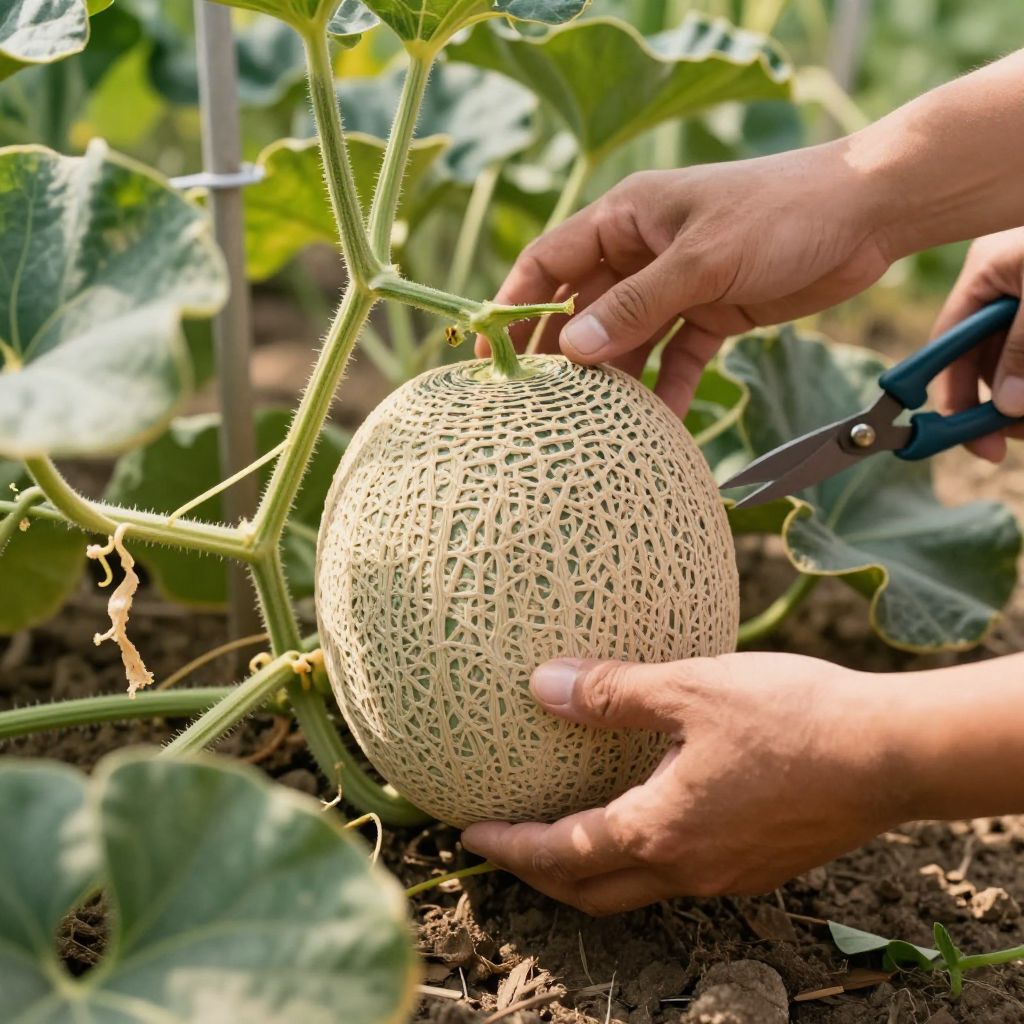
Wondering when to harvest cantaloupe so it tastes sweet instead of bland or overripe? The best time is usually when the fruit has reached full size, the rind changes color, the netting becomes pronounced, and the melon slips easily from the vine with a gentle tug.
Because ripening can vary with weather, variety, and growing conditions, the safest approach is to check several signs together rather than relying on days alone. A ripe cantaloupe should smell fragrant at the blossom end and feel slightly soft there, but not mushy.
When to harvest cantaloupe?
Harvest cantaloupe when the fruit is fully colored, strongly aromatic, and detaches from the vine with little effort. The rind should shift from greenish to tan or buff, the stem should crack near the fruit, and the blossom end should give slightly under gentle pressure. Taste and aroma matter more than calendar days.
How to tell a cantaloupe is ripe
Cantaloupe ripening is a combination of visual, tactile, and scent cues. One sign alone can mislead you, especially after cool nights, cloudy weather, or irregular watering.
Look for color changes
Most cantaloupes develop a more golden, tan, or creamy background color as they ripen. The exact shade depends on the variety, but a ripe melon usually looks less green and more warm-toned overall.
Check the netting and rind
The netted skin should look raised and well defined. The rind beneath the netting often becomes less glossy and more matte as the fruit matures.
Use the aroma test
A ripe cantaloupe often has a sweet, musky fragrance at the blossom end, which is the end opposite the stem. If there is little or no scent, the melon may need more time.
Try the stem test
When a cantaloupe is ready, it may “slip” from the vine with a gentle twist or light tug. If you have to pull hard, it is usually not ready yet. If the fruit is already loose on the vine, harvest it promptly.
Feel the blossom end
Press the blossom end lightly with your thumb. It should yield just a little, but still feel firm overall. A soft or spongy melon may be overripe or beginning to break down.
How many days after planting or flowering?
Days to harvest vary by cultivar and growing conditions, so use them only as a rough guide. Many cantaloupes mature in about 70 to 100 days from sowing, but cooler weather, poor pollination, or stress can delay ripening.
If you know when the flowers opened, fruit often ripens several weeks after pollination. Watch the fruit itself rather than counting days too rigidly, especially in areas with short summers or inconsistent heat.
Step-by-step: how to harvest cantaloupe
Harvesting is simple, but handling matters. A ripe cantaloupe bruises easily, and rough pulling can damage the vine or nearby fruit.
- Inspect the melon for color, aroma, and blossom-end softness.
- Lift the fruit gently and check whether the stem is starting to crack or separate.
- If the melon slips easily, harvest it with a short stem attached if possible.
- Use clean pruners or a knife if the stem does not detach cleanly.
- Place the fruit carefully in a shallow container to avoid bruising.
Do not yank the fruit off the vine. A clean cut or natural slip is better than tearing the stem, which can damage the melon and invite rot.
What to do if your cantaloupe is not quite ready
If the melon is close but not fully ripe, leave it on the vine and check again daily. Cantaloupe does not improve much after picking, so harvesting too early usually means less sweetness and weaker aroma.
If frost, heavy rain, or pest damage threatens the crop, you may need to pick slightly early. In that case, choose the most mature fruit and let it finish at room temperature for a short time, but understand that flavor may be less intense than vine-ripened fruit.
Common mistakes when harvesting cantaloupe
- Picking by size alone: Large fruit can still be immature.
- Relying only on days to maturity: Weather and care can speed up or slow down ripening.
- Harvesting too early: Unripe cantaloupe stays bland and may never develop full sweetness.
- Leaving overripe fruit too long: Fruit can soften, split, or attract pests.
- Pulling hard on the vine: This can damage the plant and bruise the melon.
Growing conditions that affect harvest timing
Healthy plants usually produce better-tasting fruit, and they often ripen more evenly. If your cantaloupe plants are stressed, harvest timing and flavor can both suffer.
Sunlight
Cantaloupe needs full sun to build sugars well. In partial shade, fruit may take longer to ripen and may taste less sweet.
Watering
Even moisture helps vines grow steadily, but overly wet soil can reduce flavor and increase disease risk. Water at the base of the plant and avoid soaking the foliage when possible.
Soil and drainage
Well-drained soil is important because waterlogged roots weaken the plant. Rich soil with added compost supports healthy vine growth, but too much nitrogen can produce lots of leaves and fewer quality fruits.
Pollination
Poor pollination can lead to misshapen fruit or fruit that never fully develops. If your vines flower but set few good melons, encourage pollinators by avoiding broad-spectrum insecticides and growing nearby flowering plants where appropriate.
Can you harvest cantaloupe before it slips?
Yes, but only if the fruit is clearly mature and you need to harvest it for weather or pest reasons. A melon cut too early will not become much sweeter after picking, so try to wait for the strongest maturity signs first.
If you must harvest a little early, keep the fruit at room temperature for a short period and check it daily. Do not refrigerate an unripe melon immediately if you are hoping for any additional ripening, because cold slows the process.
What to do after harvest
After picking, handle cantaloupe gently and keep it out of direct sun. If the fruit is fully ripe, you can cool it soon after harvest. If it is just barely mature, leave it at room temperature briefly and use it sooner rather than later.
Inspect harvested melons for soft spots, cracking, or signs of rot. Any damaged fruit should be used quickly or discarded if it is unsafe to eat.
Troubleshooting: why your cantaloupe may not be ripening
If your fruit seems stuck, the problem is often environmental rather than a single gardening mistake. Cool nights, too much shade, excessive nitrogen, drought stress, or poor pollination can all delay ripening.
- Cool weather: Wait for warmer conditions if possible; ripening slows in cool spells.
- Too much foliage growth: Reduce nitrogen-heavy feeding and focus on balanced care.
- Uneven watering: Keep moisture steady, especially while fruit is sizing up.
- Few pollinators: Hand-pollination can help in small gardens if flowers are abundant but fruit set is poor.
- Disease or pest stress: Check leaves and stems for powdery mildew, aphids, or vine borers that weaken the plant.
Practical tips for better harvests next season
Good harvest timing starts long before the fruit ripens. A strong planting site and healthy vines make it easier to recognize ripe melons and improve flavor.
- Plant in full sun with warm, well-drained soil.
- Add compost before planting to improve soil structure.
- Space vines so air can move around the plants.
- Mulch to help hold moisture and reduce soil splash.
- Watch for pests and disease early so vines stay vigorous.
- Keep notes on planting date, flowering time, and harvest signs for your local conditions.
Final harvest check
When to harvest cantaloupe comes down to a few reliable signs: color change, fragrance, slight blossom-end softness, and easy separation from the vine. If you check those cues together, you will get much better results than by guessing from size or date alone.
For more help with melon care, you may also want to read related gardening guidance on watering vegetables correctly and how to improve garden soil with compost.