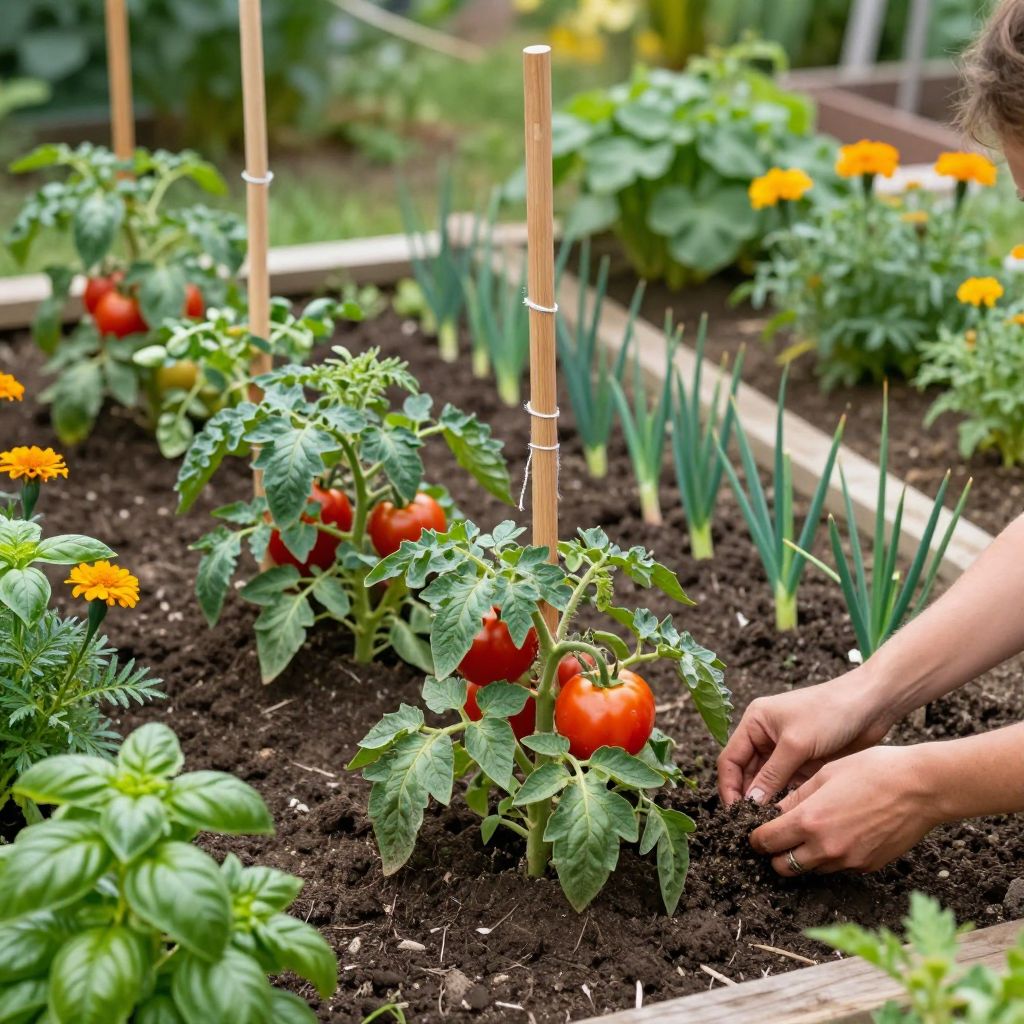
What should you grow with tomatoes so they stay healthy, productive, and easier to care for? The best companions are plants that share similar sun, soil, and watering needs without crowding the tomatoes or increasing pest and disease pressure.
Good companion planting is less about “magic pairings” and more about spacing, airflow, and choosing plants that fit your garden’s conditions. If you match tomatoes with the right herbs, flowers, and vegetables, you can make the bed more productive and easier to manage.
What to grow with tomatoes?
The best things to grow with tomatoes are plants that enjoy full sun, moderately rich soil, and regular watering without competing too aggressively for space. Good choices include basil, marigolds, onions, garlic, carrots, lettuce, parsley, and nasturtiums. Keep companions low-growing or well-spaced so tomatoes get enough light and airflow.
Best companion plants for tomatoes
Herbs that fit well around tomatoes
Many gardeners like to tuck herbs near tomatoes because they stay relatively compact and are easy to harvest while you tend the bed.
- Basil – A classic companion in warm weather. It grows well in similar conditions and can be planted between tomato plants if there is room.
- Parsley – Useful as an edging plant or in the front of a bed where it won’t shade tomatoes.
- Chives and green onions – Small alliums that take little space and are easy to slot into gaps.
- Dill – Best used carefully. Young dill can help attract beneficial insects, but mature plants can get tall and compete for light.
Herbs work best when you avoid overcrowding. If you plant too many in the same bed, humidity rises and tomatoes become more vulnerable to fungal problems.
Flowers that support the tomato bed
Flowers can add color and help attract pollinators and beneficial insects. They also make the bed easier to integrate into the rest of the garden.
- Marigolds – Often used around tomatoes because they are compact and easy to grow. They are best treated as a border plant, not a pest cure-all.
- Nasturtiums – These can act as a trap crop for aphids and are useful as a trailing edge plant if you have room.
- Alyssum – Low-growing and useful for attracting beneficial insects without crowding the tomatoes.
- Calendula – A cheerful option that fits well along bed edges in cooler conditions.
Use flowers as companions, not fillers. Leave enough space for tomato stems, pruning, staking, and airflow.
Vegetables that can share space with tomatoes
Some vegetables are excellent early-season or underplanting companions because they mature quickly or stay low.
- Lettuce – Grows well in the shade of tomato plants as summer heat builds, especially in cooler climates or spring plantings.
- Spinach – Best in cooler weather before tomatoes fully size up.
- Radishes – Fast-growing and useful for filling gaps early in the season.
- Carrots – A good choice if the soil is loose and not overly compacted by frequent tomato watering.
- Beets – Can work in wider beds where the tomatoes are staked and pruned.
These crops work best when tomatoes are trained upward on stakes, cages, or trellises. That vertical structure leaves more room for lower-growing plants.
Plants to avoid growing with tomatoes
Not every plant is a good neighbor. Some compete too much, share diseases, or create conditions tomatoes dislike.
- Potatoes – Avoid planting them near tomatoes because they share serious disease problems, including blight.
- Fennel – Often a poor companion for many vegetables and can inhibit nearby growth.
- Corn – Can compete heavily for nutrients and may increase pest pressure in some gardens.
- Large brassicas such as mature cabbage or broccoli – These can crowd tomatoes and compete for space and resources.
If you have limited room, it is better to keep tomato beds simple than to pack in too many mixed plants. Tomatoes perform best when air can move freely around the foliage.
How to plan a tomato companion bed
Start with sunlight and spacing
Tomatoes need full sun, and so do most good companions. Choose plants that will not shade the tomato canopy or block airflow.
A practical layout is to place tomatoes in the center or back of the bed and use low-growing companions along the edges. If you use indeterminate tomatoes, give them even more room because they keep growing and can quickly dominate a crowded bed.
Match water needs
Tomatoes like consistent moisture, but they do not want soggy soil. Choose companions that can handle the same rhythm of deep watering and drying slightly between waterings.
Avoid plants that prefer very dry, lean soil if they will be sharing the same root zone. Likewise, avoid moisture-loving plants that will encourage wet soil around tomato stems.
Use mulch wisely
Mulch helps tomatoes and their companions by reducing splash-up from soil, conserving moisture, and limiting weeds. Straw, shredded leaves, or untreated grass clippings used lightly can work well if they are kept a few inches away from the stem.
Do not pile mulch against tomato stems. That can trap moisture and invite rot or pests.
Step-by-step: planting tomatoes with companions
- Prepare the bed first. Work in compost or well-rotted organic matter if your soil needs improvement, and make sure drainage is good.
- Set tomato spacing correctly. Leave enough room for the mature plant size and the support system you plan to use.
- Install stakes, cages, or trellises early. It is much easier to support tomatoes before they become large.
- Place companions by height. Put taller or bushier plants only where they won’t shade tomato leaves.
- Keep access paths open. You should be able to prune, inspect, and harvest without crushing nearby plants.
- Water at the base. This helps reduce leaf wetness and lowers disease risk for tomatoes and nearby plants.
If you are planting in containers, use fewer companions. A tomato in a pot usually does best with one small herb or flower, not a crowded mix of vegetables.
What to grow with tomatoes in containers
Container gardening changes the rules because root space is limited. Tomatoes in pots need enough soil volume to stay evenly moist, and companions should be chosen carefully so they do not compete too much.
- One tomato plant per large container, with a small edging plant such as basil or alyssum.
- A trailing nasturtium in a separate nearby pot if you want a companion without root competition.
- A shallow tray or nearby planter of lettuce or radishes if you want a quick crop beside the tomato.
In containers, the biggest mistake is overcrowding. Too many plants in one pot can stress the tomato, reduce fruiting, and make watering difficult.
Common problems when companion planting tomatoes
Too much shade
If companions grow too tall, tomatoes may stretch, flower poorly, or produce less fruit. Keep taller plants on the north side of the bed in the Northern Hemisphere, or on the side where they will not block the strongest sun.
Poor airflow
Dense planting can trap humidity around tomato leaves. This increases the risk of fungal diseases such as early blight or leaf spot. Prune lower leaves as needed and avoid letting companion plants form a thick wall around the base.
Competition for nutrients
Fast-growing or sprawling plants can pull too much moisture and fertility from the same soil. If tomatoes look pale or stop setting fruit, thin nearby plants and top-dress with compost if your soil needs it.
Pest buildup
Companion planting does not eliminate pests. Aphids, whiteflies, hornworms, and flea beetles can still appear. Check the undersides of leaves regularly and remove heavily infested growth early.
Seasonal tips for better results
In cool spring weather, use quick crops such as lettuce, spinach, and radishes around young tomato plants. These can be harvested before the tomatoes reach full size.
In summer, switch your focus to airflow, mulching, and consistent watering. Heat-loving companions like basil and marigolds usually perform better once the soil is warm.
In late season, you may want to remove struggling companions that are no longer productive so the tomato plant gets more light and air. This is especially helpful if disease pressure rises in humid weather.
Simple companion planting combinations that work
- Tomatoes + basil + marigolds – A classic, low-maintenance mix for a sunny bed.
- Tomatoes + lettuce + parsley – Good for spring and early summer, especially in cooler climates.
- Tomatoes + nasturtiums + alyssum – Useful when you want beneficial insects and a softer garden edge.
- Tomatoes + chives + carrots – A tidy combination for a well-spaced vegetable bed.
These combinations work best when the tomato plant remains the main crop and the companions stay secondary.
Conclusion: choose companions that help, not crowd
When deciding what to grow with tomatoes, start with plants that share similar sun and moisture needs, then keep the layout open enough for pruning, watering, and harvest. Basil, marigolds, lettuce, carrots, onions, and nasturtiums are all practical choices when spaced well.
If you want to plan your tomato bed more confidently, next read about companion planting basics for vegetables and how to grow healthy tomatoes from planting to harvest.