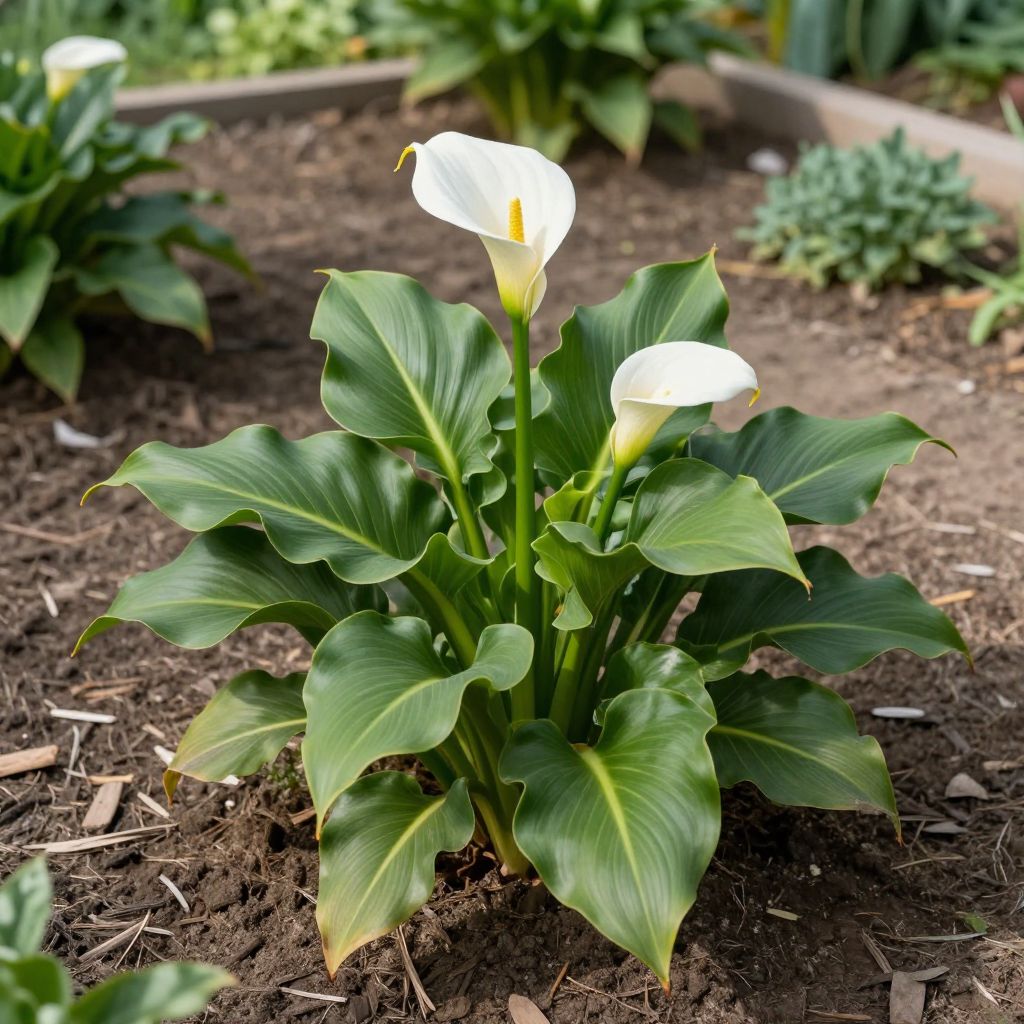
Are calla lilies annuals or perennials? The short answer is: it depends on your climate and how you grow them. In warm areas, calla lilies can return year after year as perennials. In colder regions, they are often treated as annuals outdoors unless you lift and store the rhizomes for winter.
That’s why many gardeners see them as “seasonal” plants even though the bulbs-like rhizomes are capable of coming back. With the right soil, moisture, and winter care, you can keep calla lilies healthy and blooming for more than one season.
Are Calla Lilies Annuals Or Perennials?
Calla lilies (Zantedeschia) are tender perennials, not true annuals. They survive year to year in frost-free or mild climates, but in cold-winter areas the rhizomes are damaged by freezing and are usually grown as annuals unless dug up and stored indoors for winter.
What “Annual” and “Perennial” Mean for Calla Lilies
Gardeners use these terms based on whether a plant naturally returns after winter. Calla lilies can do that, but only if their growing conditions stay within their comfort range.
Perennial in warm climates
In areas with mild winters, calla lilies may remain in the ground and resprout each spring. They often do best where the soil does not freeze deeply and drainage is good.
Annual in cold climates
Where winters are frosty or the ground freezes, calla lilies are commonly planted for one season and removed before cold weather. The plant itself is not “short-lived”; it is simply not winter-hardy in those conditions.
Why this matters to you
If you want repeat blooms, the key question is not just “annual or perennial?” but “can I protect the rhizomes through winter?” That answer depends on your local climate, your soil, and whether you can store them indoors.
Growing Conditions That Help Calla Lilies Return
Calla lilies are easier to keep as perennials when they grow in the right site. Good drainage and moderate moisture matter more than almost anything else.
- Light: Full sun in cooler climates; partial shade in hotter regions.
- Soil: Rich, loose, and well-drained soil.
- Moisture: Even moisture during active growth, but not soggy soil.
- Temperature: Warm growing season, protected from frost.
In very hot climates, afternoon shade can help prevent leaf scorch and stress. In cooler climates, more sun usually supports stronger flowering.
Soil and drainage
Calla lilies dislike heavy, waterlogged soil. If your garden holds water after rain, mix in compost and consider planting in raised beds or containers.
For container growing, use a pot with drainage holes and a quality potting mix that stays moist without becoming dense. A rich mix is helpful, but it should still drain freely.
How to Plant Calla Lilies for Best Return
You can plant calla lily rhizomes in the ground or in pots, depending on your climate. In colder regions, containers make winter storage easier.
- Choose a site with the right amount of sun for your climate.
- Prepare soil that is loose and drains well.
- Plant rhizomes with the growing points facing up.
- Cover them with about 2 to 4 inches of soil, depending on rhizome size and soil texture.
- Water thoroughly after planting, then keep the soil lightly moist as growth begins.
Do not bury rhizomes too deeply in heavy soil. Deep planting in poor drainage can delay sprouting and increase rot risk.
Container planting tip
If you grow calla lilies in pots, choose a container large enough for root growth and stable enough not to tip over. A wider pot is often better than a very deep one because it gives the rhizomes room to spread.
Seasonal Care: How to Keep Calla Lilies Coming Back
Whether calla lilies behave like annuals or perennials in your garden depends on how you manage them through the season. Their growth cycle is active in warmth and restive in cool weather.
Spring and early summer
As new shoots emerge, keep the soil evenly moist and remove weeds that compete for water and nutrients. This is the time when plants build energy for flowering and future regrowth.
During bloom
Calla lilies appreciate steady moisture while flowering. If the soil dries out too much, blooms may be fewer and foliage may look stressed. At the same time, avoid constant saturation.
Late summer and fall
As flowering slows, the plant may naturally begin to yellow and die back. This does not always mean it is failing; it may be entering dormancy.
If you garden in a frost-free area, you can leave the rhizomes in place and reduce watering as growth slows. In colder regions, plan ahead to lift them before the first hard freeze.
How to Overwinter Calla Lilies
This is the most important step if you want calla lilies to act like perennials in a cold climate. Rhizomes stored correctly can be replanted the next season.
- Wait until foliage yellows or dies back naturally, if possible.
- Lift the rhizomes carefully with a garden fork or trowel.
- Brush off excess soil and let them dry in a cool, shaded place for a few days.
- Remove dead foliage and inspect for soft or damaged spots.
- Store in a breathable medium such as dry peat, vermiculite, or paper-based packing material in a cool, dry location.
- Check occasionally through winter for rot or shriveling.
Important: Do not store calla lily rhizomes in airtight plastic if condensation is likely. Excess moisture can cause rot.
Where to store them
A cool garage, basement, or frost-free utility area often works well, as long as temperatures stay above freezing and the rhizomes do not dry out completely.
Common Problems That Make Calla Lilies Fail to Return
If your calla lilies disappear after one season, the cause is usually environmental rather than genetic. A few common mistakes are easy to avoid.
- Freezing temperatures: The most common reason they do not return in cold climates.
- Poor drainage: Wet soil can rot rhizomes before winter or during dormancy.
- Too much shade: Plants may survive but bloom poorly.
- Overwatering during dormancy: This can rot stored or in-ground rhizomes.
- Planting too deeply: Delays emergence and can weaken growth.
Pests and diseases
Calla lilies can sometimes be bothered by aphids, spider mites, slugs, and snails. In damp conditions, soft rot and fungal problems are more likely.
For pest control, start with simple steps: remove debris, improve airflow, avoid wetting foliage late in the day, and inspect plants regularly. If slugs are active, use physical barriers or hand-picking rather than letting damage build up.
Can You Make Calla Lilies Perennial in Pots?
Yes, and for many gardeners this is the easiest way to keep them year after year. Container growing gives you control over drainage, watering, and winter storage.
When the season ends, you can move the pot indoors or remove the rhizomes from the container and store them separately. This is especially useful if your garden freezes hard but you still want to replant the same rhizomes next year.
Container care basics
- Use a pot with drainage holes.
- Keep the mix evenly moist, not saturated.
- Feed lightly only during active growth if needed.
- Reduce watering when the plant goes dormant.
- Store rhizomes or pots in a frost-free location for winter.
Should You Treat Calla Lilies as Annuals?
Sometimes, yes. If you live in a cold climate and do not want to dig and store rhizomes, growing calla lilies as annuals is perfectly reasonable. They can still provide strong seasonal color in beds, borders, and containers.
That approach is often the simplest for busy gardeners, especially if the planting area is exposed to frost or has poor winter drainage. You can enjoy the flowers for the season and replace them the following year.
Quick Answer: Annual or Perennial?
Calla lilies are perennial plants in warm, frost-free conditions and annuals in cold climates unless you overwinter the rhizomes. If you want them back next year, give them well-drained soil, avoid freezing, and store the rhizomes properly where winters are harsh.
If you want to plan your next planting, it may also help to read more about container gardening basics and how to overwinter tender bulbs and rhizomes for more seasonal care ideas.