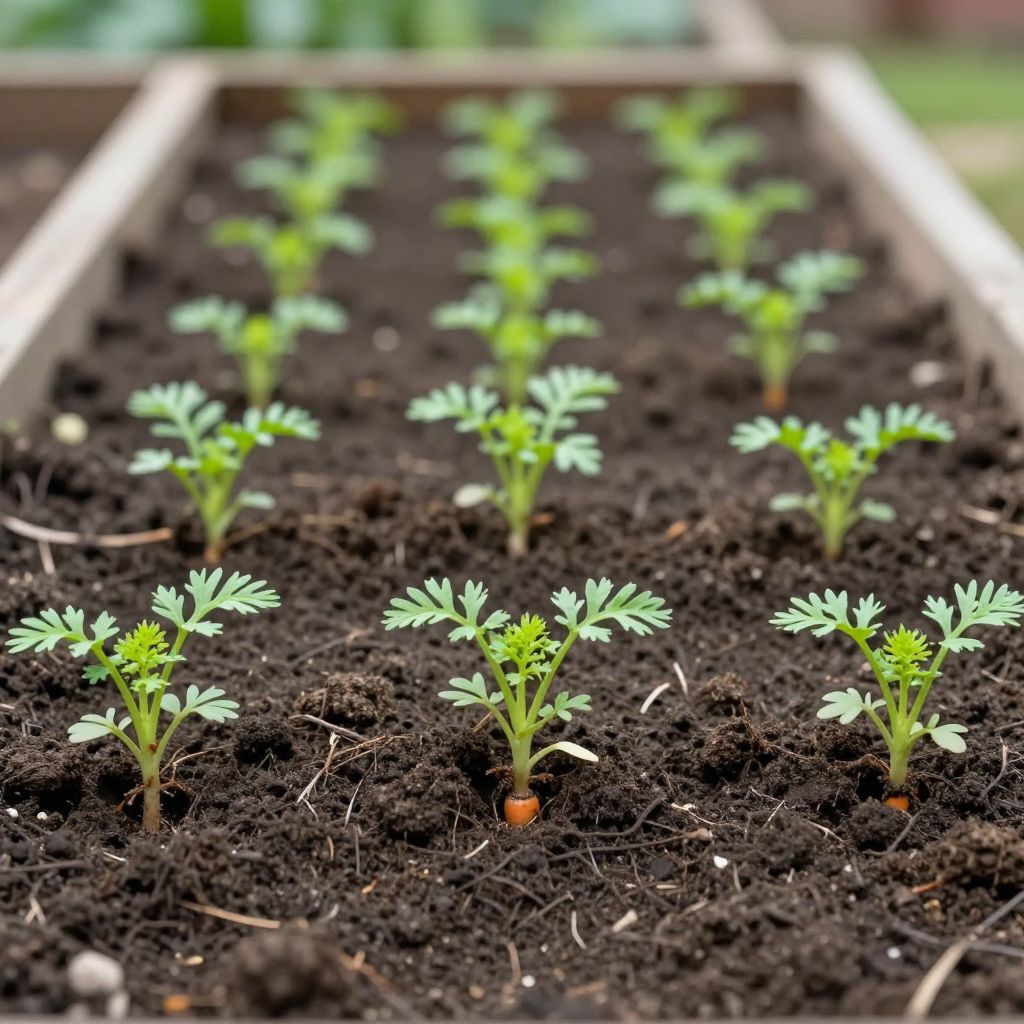
What do carrots look like when they sprout? If you’ve just sown carrot seed, the first seedlings can look surprisingly tiny and a little underwhelming. They emerge as very fine, grass-like green threads with narrow seed leaves, not as feathery carrot tops right away.
That early appearance often worries new gardeners, but it’s normal. Knowing what to expect helps you avoid pulling up healthy seedlings, overwatering the bed, or assuming the seeds failed when they are simply still developing.
What do carrots look like when they sprout?
Carrot seedlings first appear as two very narrow, smooth seed leaves on thin stems, often only a few millimeters wide. They look like delicate blades of grass or tiny green loops pushing through the soil. True carrot leaves come later and are more finely divided and fernlike.
How to recognize carrot seedlings at each stage
Stage 1: The first emergence
When carrot seed germinates, the seedling usually breaks the soil surface as a tiny hook or loop. Within a day or two, it straightens and opens into two seed leaves, also called cotyledons.
At this stage, the plant is easy to miss. The seedlings are short, thin, and pale to medium green, especially if the soil surface is uneven or crusted.
Stage 2: Seed leaves
The first leaves are narrow and simple, not shaped like mature carrot foliage. They are often about 1 to 2 inches long early on, though size varies with temperature, moisture, and light.
Important: carrot seedlings do not look like the mature plant right away. The familiar lacy leaves come later, so don’t expect instant feathery tops.
Stage 3: True leaves
After the seed leaves, the plant produces true leaves that look more like a young carrot top. These are finely divided and more recognizable, with a feathery texture.
Once you see true leaves, the seedling is easier to identify and less likely to be confused with nearby weeds.
What healthy carrot sprouts should look like
Healthy carrot sprouts are upright, even in color, and fairly uniform if the seed was sown evenly. They should not be limp, stretched, or yellowing.
- Color: light to medium green
- Shape: thin, straight, and delicate
- Growth: slow at first, then gradually stronger
- Spacing: often crowded unless thinned
If the seedlings are very long and floppy, they may be stretching for light. If they are sparse or patchy, germination may have been uneven because of dry soil, crusting, old seed, or temperature swings.
How long carrots take to sprout
Carrot seed can be slow to germinate. Depending on soil temperature and moisture, sprouts may appear in about 1 to 3 weeks, sometimes longer in cool weather.
Because carrots are slow starters, many gardeners think nothing is happening and accidentally disturb the row. Mark your planting area clearly so you can avoid stepping on it or weeding too aggressively.
Why carrot sprouts are easy to miss
Carrot seedlings are tiny, and their first leaves are much narrower than many common garden weeds. They can also emerge unevenly, so one section may sprout before another.
Several conditions make them harder to spot:
- Drying soil crust on top of the seed row
- Planting too deep
- Old seed with reduced viability
- Cool soil slowing germination
- Heavy rain compacting the surface
If you are unsure whether a seedling is a carrot, gently rub the leaf between your fingers. Carrot foliage has a distinct fresh, carrot-like scent once the true leaves develop.
Best conditions for strong carrot sprouting
Soil texture and depth
Carrots sprout best in fine, loose soil that stays evenly moist. A seedbed that is free of clods and stones helps the tiny seedlings push through without distortion.
For most gardens, sow seed shallowly, about 1/4 inch deep, then cover lightly. Deep planting can delay emergence or prevent the seedlings from reaching the surface.
Moisture
Even moisture is one of the biggest factors in successful carrot germination. If the top layer dries out before the seeds sprout, germination can stop or become patchy.
Water gently so you do not wash the seed away. A fine rose on a watering can or a light spray works better than a strong stream.
Temperature and light
Carrots germinate best when soil temperatures are moderate, though exact timing depends on your climate and season. Cooler soil slows sprouting, while very hot conditions can dry the seedbed too quickly.
Once seedlings emerge, they need full sun for the strongest growth. In very hot regions, light afternoon shade may help prevent the soil from drying too fast during establishment.
How to care for carrot sprouts after they emerge
Keep the surface evenly moist
Do not let the top layer of soil dry out completely while the seedlings are young. A shallow, consistent watering routine is better than soaking the bed and then letting it dry hard.
Mulch can help, but use it carefully. A very light mulch or a thin layer of fine compost around the row can reduce crusting, but heavy mulch may block tiny seedlings.
Thin crowded seedlings
Carrots are often sown too thickly, and crowded seedlings compete for light, water, and space. Thin them once they are large enough to handle, usually after they have a few true leaves.
Pulling too early can disturb nearby seedlings, so many gardeners snip extras at soil level with small scissors instead of tugging them out.
- Leave the strongest seedlings in place
- Thin gradually if the row is very crowded
- Water lightly after thinning to settle the soil
Weed carefully
Weeds can quickly outgrow carrot seedlings. Hand weed gently and often, especially before the carrot tops get larger and easier to identify.
Use a small hand fork or weeding tool only near the surface. Deep cultivation can damage the fine carrot roots before they have developed.
Common problems that make carrot sprouts look wrong
Seedlings look like grass or weeds
This is normal at first. Carrot sprouts are supposed to be thin and grass-like early on. The key difference is that carrot seedlings eventually form more finely divided true leaves.
If you are unsure, wait a few days before weeding. Many gardeners accidentally remove carrots because they expect them to look more obvious right away.
Seedlings are pale or stretched
Pale, leggy seedlings usually mean they are not getting enough light or are crowded. Move containers to brighter light if you started them indoors, or thin and open up the row outdoors.
Outdoor carrots should be in a sunny spot with minimal shading from taller crops.
Patchy germination
If sprouts appear in clumps or gaps, the cause is often uneven moisture or soil crusting. Old seed can also reduce germination, especially if it was stored in a warm, humid place.
To improve future sowings, prepare a finer seedbed, keep the surface damp, and sow a little extra seed to account for slow or uneven emergence.
Seedlings collapse or disappear
Very young sprouts can be lost to drying, heavy rain, birds, slugs, or accidental disturbance. A crusted soil surface can also trap seedlings before they fully emerge.
If crusting is a recurring issue, water more gently, use a fine mulch, and avoid making the bed overly compacted.
Indoor vs. outdoor carrot sprouting
Outdoor sowing
Carrots are usually best sown directly where they will grow, because transplanting can distort the roots. Outdoors, your main job is to keep the seedbed moist and weed-free until the seedlings establish.
Direct sowing also makes it easier to judge what do carrots look like when they sprout in their natural growing space.
Indoor starting
Starting carrots indoors is generally less practical than direct sowing, since the root can be disturbed during transplanting. If you do start them indoors, use deep containers and transplant very carefully while they are still very young.
Even then, direct sowing usually gives straighter roots and less stress.
Simple troubleshooting checklist
If you think your carrots are not sprouting correctly, check these basics first:
- Was the seed planted shallowly, not buried too deep?
- Has the top inch of soil stayed evenly moist?
- Is the bed in full sun or bright light?
- Is the soil loose enough for seedlings to emerge?
- Are weeds or crusted soil hiding the sprouts?
- Is the seed still within a reasonable storage age?
Most carrot germination problems come down to moisture, soil texture, or timing rather than a serious disease issue.
When to harvest after sprouting
Sprouting is only the beginning. Once the seedlings are established, the main goal is to grow a healthy root. Harvest timing depends on the variety, your climate, and how large you want the carrots to become.
For baby carrots, you can often begin checking size earlier. For full-size roots, wait until the shoulders at the soil line reach the size you want.
Final tips for identifying carrot sprouts correctly
Remember the three most important signs: carrot seedlings start as tiny, narrow seed leaves; they look delicate and grass-like at first; and the true feathery foliage appears later. If you keep the soil moist and the row weeded, you will have a much better chance of seeing healthy, uniform sprouts.
If you want to improve your next sowing, review your seedbed preparation and thinning method before planting again. For more practical growing help, you may also want to read about how to thin vegetable seedlings and improving garden soil for root crops.