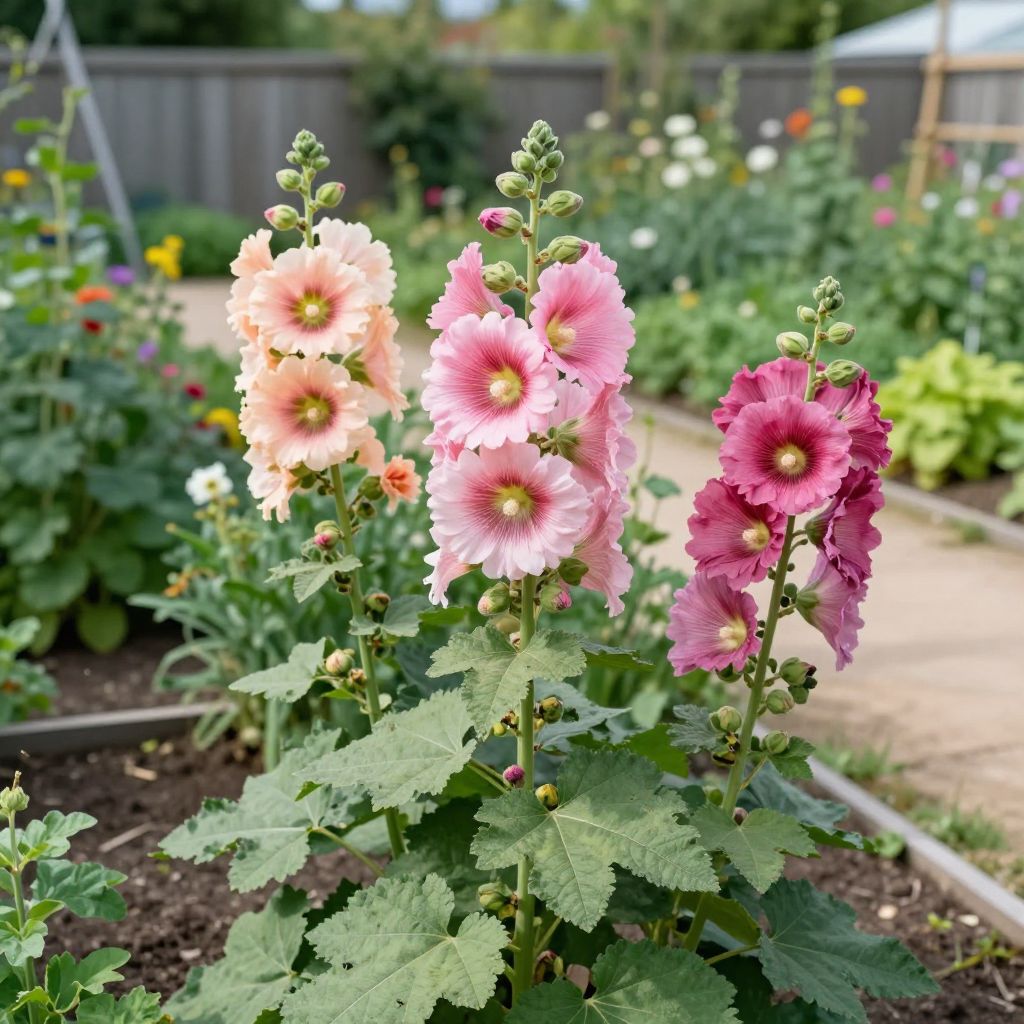
When do hollyhocks bloom? If you’re waiting for those tall spires of flowers to open, timing depends on when you sow or plant them, your climate, and whether the plants are first-year seedlings or established biennials. In most gardens, hollyhocks flower in early to midsummer, with blooms often lasting into late summer.
They’re classic cottage-garden plants, but they can be slow to settle in. Once you understand their growth cycle and care needs, it becomes much easier to predict flowering and keep them healthy enough to bloom well.
When do hollyhocks bloom?
Hollyhocks usually bloom in their second year, most often from late spring through summer, depending on your climate and planting time. Some varieties may flower later in the first year if started early indoors, while established plants often bloom more reliably and for longer.
Understanding the hollyhock bloom cycle
Most common hollyhocks, especially Alcea rosea, are grown as biennials or short-lived perennials. That means the plant often spends its first season building leaves and roots, then flowers the following season.
What to expect in year one and year two
- Year one: leafy growth and root development, with no flowers in many cases.
- Year two: tall stems and flower spikes, often beginning in late spring or early summer.
- Later years: some plants return and bloom again, but vigor may decline over time.
If you sow hollyhocks very early indoors or buy young plants that were started the previous season, you may see flowers sooner. In cooler climates, flowering may begin later; in warmer areas, it can start earlier and continue longer.
What affects the timing of hollyhock blooms?
Several growing conditions influence when hollyhocks bloom and how well they perform. The biggest factors are sunlight, soil drainage, moisture, and whether the plant has enough time to establish before winter or extreme heat.
Sunlight
Hollyhocks bloom best in full sun, which usually means at least 6 hours of direct light daily. In partial shade, they may grow tall but produce fewer flowers or bloom later.
Climate and season
In mild climates, hollyhocks may begin blooming in late spring. In colder regions, flowering is often pushed into midsummer after the plant has had time to recover from winter and send up strong stalks.
Plant age and size
Young plants may not bloom until they’ve built a strong root system. Mature plants with healthy crowns and stems are more likely to flower on schedule.
Soil and drainage
Well-drained soil matters a lot. Hollyhocks dislike soggy conditions, which can weaken roots and delay flowering. A moderately fertile soil with added compost usually supports good growth without pushing too much soft, leafy growth.
How to grow hollyhocks for reliable flowering
If your goal is blooms, start with the right site and give the plants time to settle in. Hollyhocks are not difficult, but they do best when you avoid crowding, overwatering, and poor air circulation.
Planting site
- Choose a sunny spot with room for tall stems.
- Plant near a fence, wall, or support if wind is common.
- Leave enough space for airflow to help reduce disease.
Soil preparation
Work in compost before planting if your soil is poor or very sandy. Aim for loose, well-drained soil that holds some moisture but doesn’t stay wet after rain.
Watering
Water newly planted hollyhocks regularly until established, then water deeply during dry spells. Avoid frequent shallow watering, which encourages weak roots and less resilient plants.
Mulching
A light mulch can help conserve moisture and keep roots cooler, especially in hot weather. Keep mulch a few inches away from the crown to reduce rot risk.
How to get hollyhocks to bloom sooner
If you want flowers as early as possible, the best strategy is to start with strong plants and give them a long growing season before cold weather arrives.
- Sow seeds early indoors or in a protected outdoor spot, depending on your climate.
- Transplant seedlings carefully once the soil is workable and frost risk has passed.
- Keep plants evenly watered while they establish.
- Provide full sun and avoid overcrowding.
- Protect young plants from slugs, rust, and wind damage.
In many gardens, direct-sown hollyhocks won’t bloom until the following year. If you want faster results, buy established nursery plants or start seeds early enough to give them a head start.
Common reasons hollyhocks don’t bloom
When hollyhocks fail to flower, the problem is often environmental rather than genetic. A plant may look healthy but still skip bloom if conditions are off.
Too much shade
Hollyhocks in shade often grow tall and leafy without setting many flowers. Move them to a brighter location if possible.
Too much nitrogen
Rich, high-nitrogen soil can produce lush foliage at the expense of flowers. If your plants are all leaves and no blooms, avoid heavy feeding and focus on balanced soil improvement instead.
Planting too late
If seedlings are started very late in the season, they may not have enough time to establish before winter. That can delay flowering until the following year.
Stress from drought or poor drainage
Both extremes can interfere with blooming. Dry soil can stunt growth, while wet soil can damage roots and invite disease.
Pruning, staking, and deadheading
These simple maintenance tasks can help hollyhocks look better and sometimes extend the flowering display.
Staking tall stems
Hollyhocks can grow quite tall and may need support in windy sites. Use a discreet stake or support early, before stems lean or break.
Deadheading spent flowers
Removing faded blooms can tidy the plant and may encourage additional flowers on some stems. If you want self-seeding, leave a few spent blooms in place later in the season.
Cutting back after bloom
After flowering, you can cut stems down if the plant is finished for the season or if rust and other diseases have made the foliage unattractive. Healthy plants may return the next year if they are perennial in your climate.
Pests and diseases that affect blooming
Hollyhocks are especially known for hollyhock rust, a fungal disease that can weaken plants and reduce flowering. Good airflow and prompt cleanup are important.
Hollyhock rust
Look for orange, yellow, or brown spots on the undersides of leaves. Affected leaves may yellow and drop early, which can reduce bloom quality and plant strength.
- Remove infected leaves promptly.
- Water at the base, not overhead.
- Space plants to improve air circulation.
- Clean up fallen debris at the end of the season.
Insects
Chewing insects and aphids can stress plants, especially young ones. Check stems and leaf undersides regularly so you can catch problems before they affect flowering.
Propagating hollyhocks for more blooms
Hollyhocks often self-seed if you let some flowers go to seed. This can help keep a patch going from year to year without replanting every time.
Saving seed
Let seed pods dry on the plant, then collect them once they turn brown and papery. Store seed in a cool, dry place and sow according to your local season.
Self-seeding
Self-sown seedlings may appear near the parent plant. Thin them if they’re crowded, because good spacing helps reduce rust and supports better flowering.
Best uses in the garden when hollyhocks bloom
Because hollyhocks bloom on tall stems, they work well at the back of borders, along fences, and in cottage-style plantings. Their vertical form helps add height where lower flowers need a backdrop.
- Plant behind shorter perennials for layered color.
- Use them to soften walls, sheds, or fences.
- Group several together for a stronger visual impact.
Quick bloom-timing checklist
- Plant in full sun.
- Use well-drained soil enriched with compost.
- Give young plants time to establish.
- Water consistently, but don’t keep soil soggy.
- Watch for rust and remove affected leaves early.
- Expect many hollyhocks to bloom in their second year.
Conclusion
So, when do hollyhocks bloom? Most bloom from late spring to midsummer, with the best display often coming in the plant’s second year. If you want stronger, earlier flowers, give them sun, drainage, and steady care from the start. Check your plants now for rust, spacing, and light, and you’ll be in a much better position for blooms next season.
If you’d like to keep improving your flower border, look for more gardening reading on biennial flowers, cottage-garden planting, and managing common leaf diseases in ornamentals.